Han Hye-Sook, Kang Geon, Kim Jun Seok, Choi Byeong Hoon, Koo Seung-Hoi
Division of Life Sciences, College of Life Sciences & Biotechnology, Korea University, Seoul, 136-713, Korea.
Exp Mol Med. 2016 Mar 11;48(3):e218. doi: 10.1038/emm.2015.122.
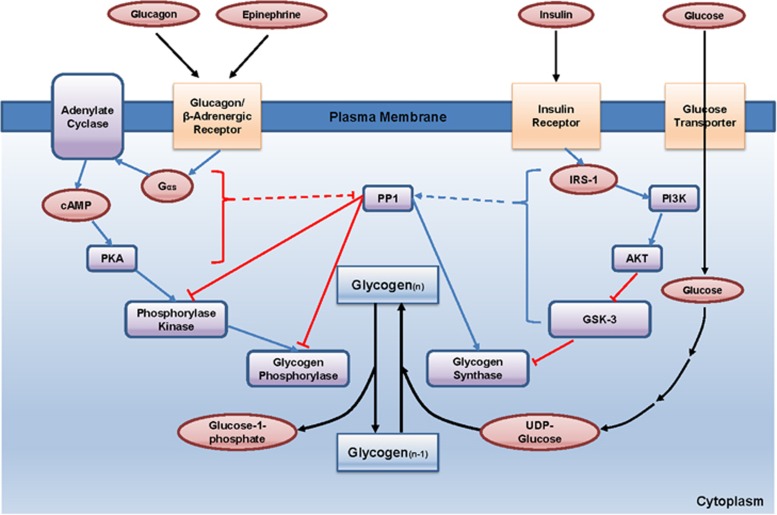
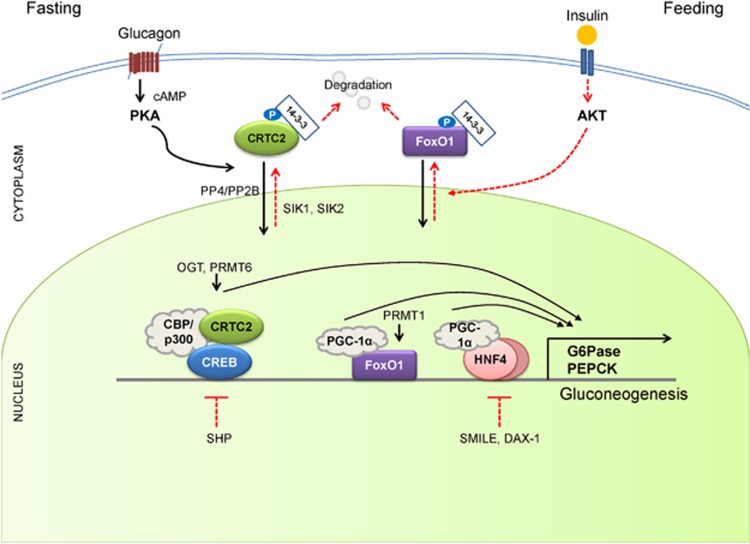
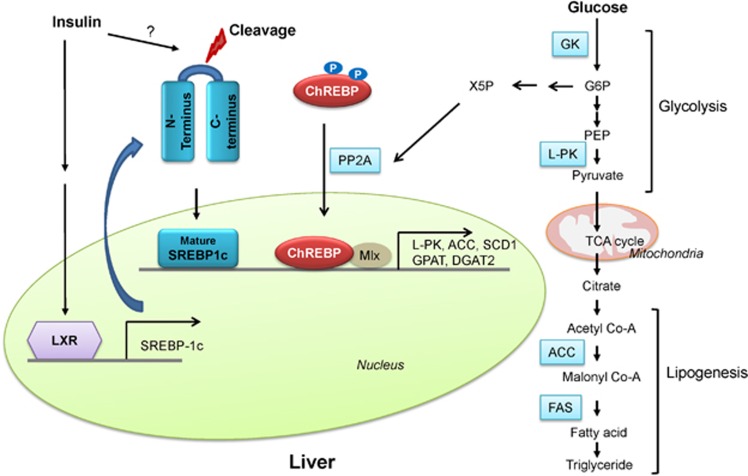
Glucose homeostasis is tightly regulated to meet the energy requirements of the vital organs and maintain an individual's health. The liver has a major role in the control of glucose homeostasis by controlling various pathways of glucose metabolism, including glycogenesis, glycogenolysis, glycolysis and gluconeogenesis. Both the acute and chronic regulation of the enzymes involved in the pathways are required for the proper functioning of these complex interwoven systems. Allosteric control by various metabolic intermediates, as well as post-translational modifications of these metabolic enzymes constitute the acute control of these pathways, and the controlled expression of the genes encoding these enzymes is critical in mediating the longer-term regulation of these metabolic pathways. Notably, several key transcription factors are shown to be involved in the control of glucose metabolism including glycolysis and gluconeogenesis in the liver. In this review, we would like to illustrate the current understanding of glucose metabolism, with an emphasis on the transcription factors and their regulators that are involved in the chronic control of glucose homeostasis.
葡萄糖稳态受到严格调控,以满足重要器官的能量需求并维持个体健康。肝脏在控制葡萄糖稳态方面发挥着主要作用,它通过控制葡萄糖代谢的各种途径,包括糖原合成、糖原分解、糖酵解和糖异生。这些复杂交织系统的正常运作需要对参与这些途径的酶进行急性和慢性调节。各种代谢中间体的变构控制以及这些代谢酶的翻译后修饰构成了这些途径的急性控制,而编码这些酶的基因的受控表达对于介导这些代谢途径的长期调节至关重要。值得注意的是,已表明几种关键转录因子参与肝脏中葡萄糖代谢(包括糖酵解和糖异生)的控制。在本综述中,我们将阐述对葡萄糖代谢的当前理解,重点关注参与葡萄糖稳态慢性控制的转录因子及其调节因子。