Yuan Zhenjie, Chen Yuxia, Chen Qiuyue, Guo Miao, Kang Li, Zhu Guiyu, Jiang Yunliang
Department of Genetics, College of Agronomy, Shandong Agricultural University, Taian 271018, China.
Department of Animal Genetics, Breeding and Reproduction, College of Animal Science and Veterinary Medicine, Shandong Agricultural University, Taian 271018, China.
G3 (Bethesda). 2016 May 3;6(5):1305-12. doi: 10.1534/g3.116.027755.
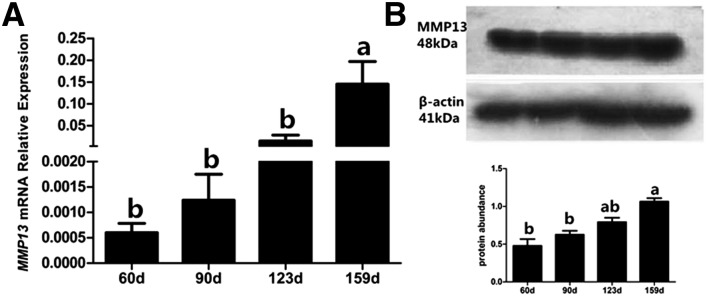
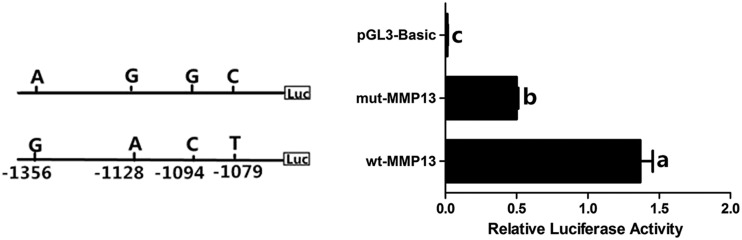
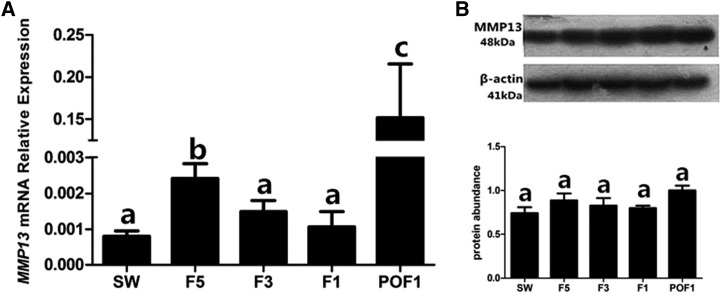
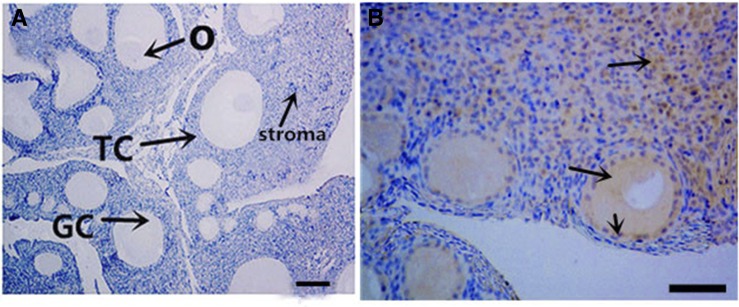
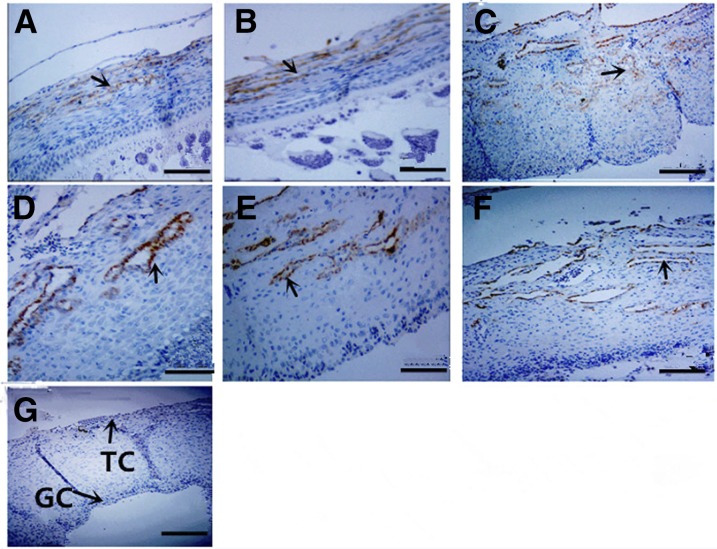
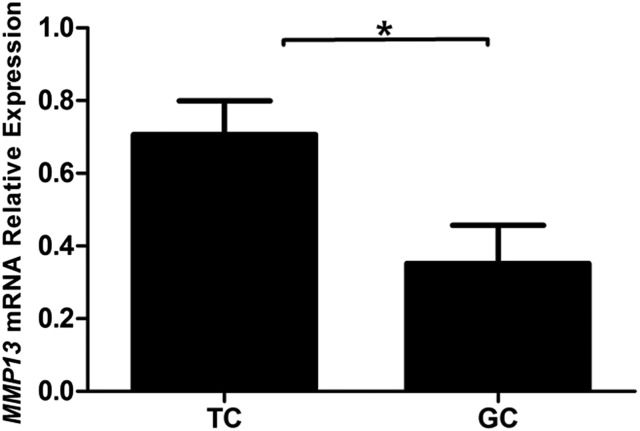
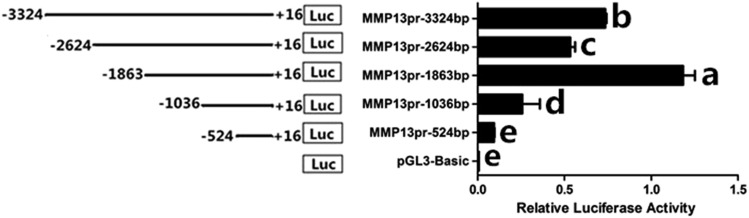
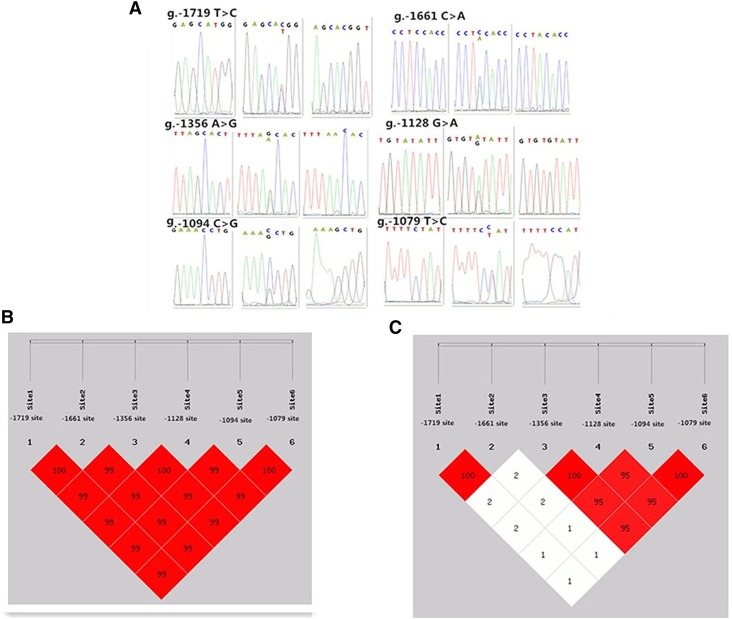
Extracelluar matrix undergoes constant remodeling, cell-cell, and cell-matrix interactions during chicken ovarian follicle growth, which is coordinated by matrix metalloproteinases (MMPs), and their associated endogenous inhibitors (TIMPs). Transcriptome analysis revealed upregulation of MMP13 in sexually mature chicken ovaries. In this study, we found that the expression of MMP13 in chicken ovary was stably elevated from 60 d to 159 d, and was significantly higher at 159 d than at the other three developmental stages (P < 0.05). The expression of MMP13 mRNA increased from SW (small white follicles) to F5 (fifth largest follicles), then decreased to F1 (first largest follicles), and dramatically increased again in POF1 (newly postovulatory follicles) follicles (P < 0.05). The MMP13 protein was localized in stroma cells and primordial follicles of sexually immature chicken ovaries, in the theca cell layers of all sized follicles of sexually mature chicken ovaries. Furthermore, we identified a positive element (positions -1863 to -1036) controlling chicken MMP13 transcription, and, in this region, six single nucleotide polymorphisms were found and genotyped in chicken populations. In the White Recessive Rock population, hens with A(-1356)-C(-1079)/A(-1356)-C(-1079) genotype had earlier "age at first laying" than those with G(-1356)-T(-1079)/G(-1356)-T(-1079) genotype (P < 0.05), and exhibited significantly lower transcriptional activity (P < 0.01). Collectively, chicken MMP13 plays an important role in ovarian follicle growth and regression, and polymorphisms in its promoter region could be used as molecular markers for improving the trait "age at first laying" in chicken breeding.
在鸡卵巢卵泡生长过程中,细胞外基质不断进行重塑、细胞间以及细胞与基质的相互作用,这一过程由基质金属蛋白酶(MMPs)及其相关的内源性抑制剂(TIMPs)协调。转录组分析显示,性成熟鸡卵巢中MMP13表达上调。在本研究中,我们发现鸡卵巢中MMP13的表达从60日龄到159日龄稳定升高,且在159日龄时显著高于其他三个发育阶段(P < 0.05)。MMP13 mRNA的表达从SW(小白卵泡)到F5(第五大卵泡)增加,然后下降到F1(第一大卵泡),并在POF1(新排卵后卵泡)中再次显著增加(P < 0.05)。MMP13蛋白定位于性未成熟鸡卵巢的基质细胞和原始卵泡中,以及性成熟鸡卵巢所有大小卵泡的卵泡膜细胞层中。此外,我们鉴定了一个控制鸡MMP13转录的正调控元件(位置-1863至-1036),并且在该区域发现了六个单核苷酸多态性,并在鸡群体中进行了基因分型。在白隐性洛克鸡群体中,具有A(-1356)-C(-1079)/A(-1356)-C(-1079)基因型的母鸡比具有G(-1356)-T(-1079)/G(-1356)-T(-1079)基因型的母鸡“初产年龄”更早(P < 0.05),并且转录活性显著更低(P < 0.01)。总之,鸡MMP13在卵巢卵泡生长和退化中起重要作用,其启动子区域的多态性可作为分子标记用于改善鸡育种中的“初产年龄”性状。