Xirouchaki Chrysovalantou E, Mangiafico Salvatore P, Bate Katherine, Ruan Zheng, Huang Amy M, Tedjosiswoyo Bing Wilari, Lamont Benjamin, Pong Wynne, Favaloro Jenny, Blair Amy R, Zajac Jeffrey D, Proietto Joseph, Andrikopoulos Sofianos
University of Melbourne, Department of Medicine (Austin Health), Heidelberg, Victoria, 3084, Australia.
University of Melbourne, Department of Medicine (Austin Health), Heidelberg, Victoria, 3084, Australia.
Mol Metab. 2016 Jan 21;5(3):221-232. doi: 10.1016/j.molmet.2016.01.004. eCollection 2016 Mar.
Muscle glucose storage and muscle glycogen synthase (gys1) defects have been associated with insulin resistance. As there are multiple mechanisms for insulin resistance, the specific role of glucose storage defects is not clear. The aim of this study was to examine the effects of muscle-specific gys1 deletion on glucose metabolism and exercise capacity.
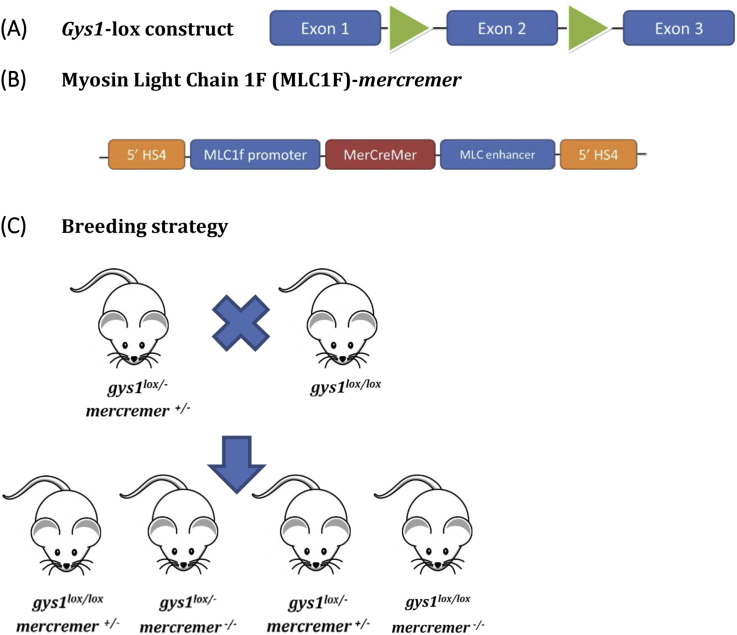
Tamoxifen inducible and muscle specific gys-1 KO mice were generated using the Cre/loxP system. Mice were subjected to glucose tolerance tests, euglycemic/hyperinsulinemic clamps and exercise tests.
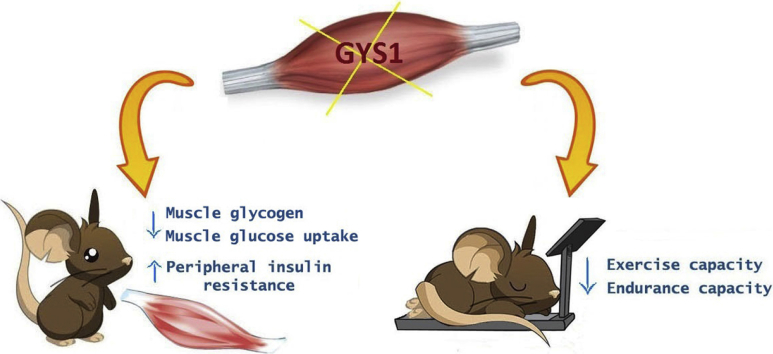
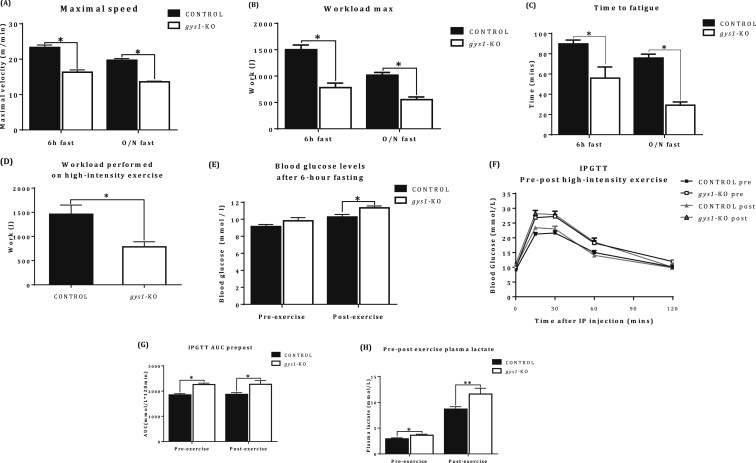
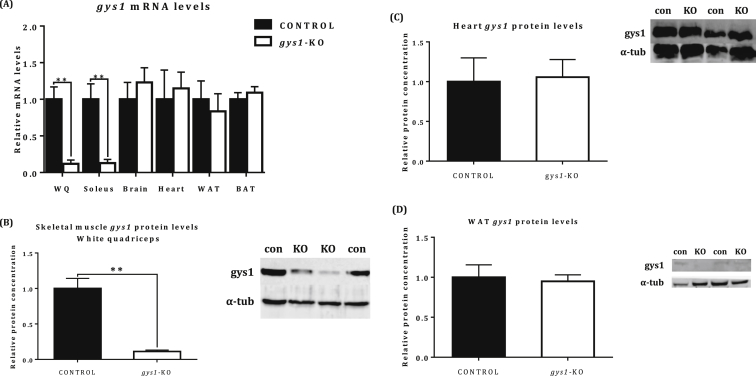
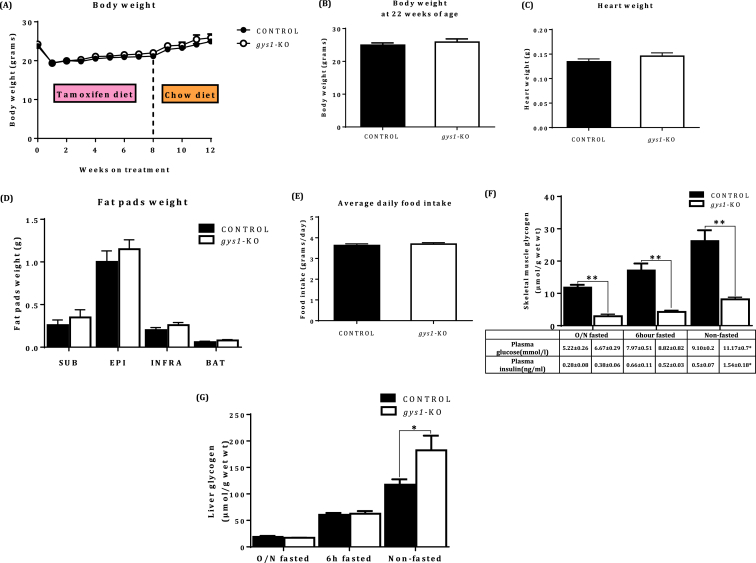
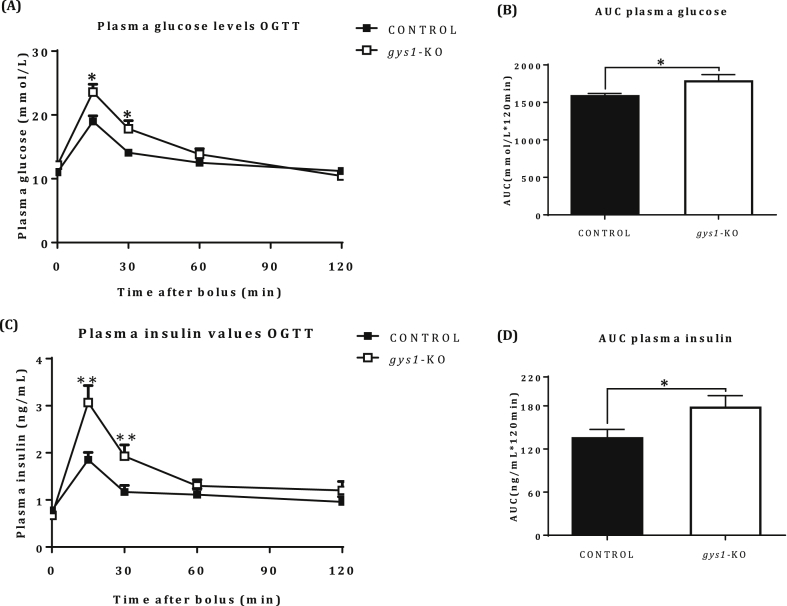
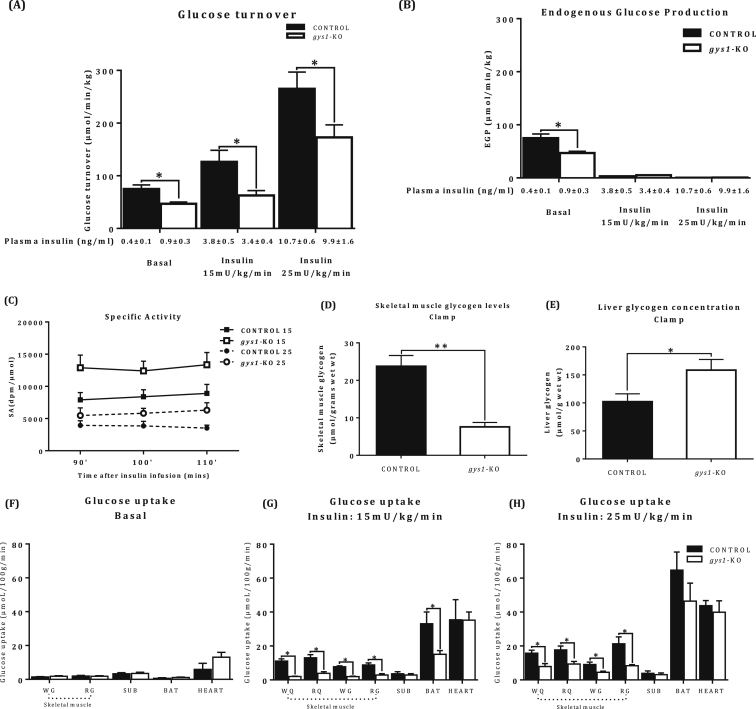
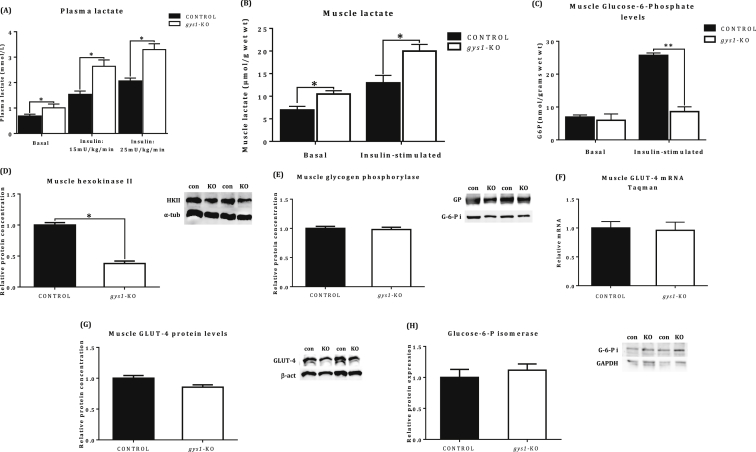
gys1-KO mice showed ≥85% reduction in muscle gys1 mRNA and protein concentrations, 70% reduction in muscle glycogen levels, postprandial hyperglycaemia and hyperinsulinaemia and impaired glucose tolerance. Under insulin-stimulated conditions, gys1-KO mice displayed reduced glucose turnover and muscle glucose uptake, indicative of peripheral insulin resistance, as well as increased plasma and muscle lactate levels and reductions in muscle hexokinase II levels. gys1-KO mice also exhibited markedly reduced exercise and endurance capacity.
Thus, muscle-specific gys1 deletion in adult mice results in glucose intolerance due to insulin resistance and reduced muscle glucose uptake as well as impaired exercise and endurance capacity.
This study demonstrates why the body prioritises muscle glycogen storage over liver glycogen storage despite the critical role of the liver in supplying glucose to the brain in the fasting state and shows that glycogen deficiency results in impaired glucose metabolism and reduced exercise capacity.
肌肉葡萄糖储存和肌肉糖原合酶(gys1)缺陷与胰岛素抵抗有关。由于胰岛素抵抗存在多种机制,葡萄糖储存缺陷的具体作用尚不清楚。本研究的目的是研究肌肉特异性gys1缺失对葡萄糖代谢和运动能力的影响。
使用Cre/loxP系统构建他莫昔芬诱导的肌肉特异性gys-1基因敲除小鼠。对小鼠进行葡萄糖耐量试验、正常血糖/高胰岛素钳夹试验和运动试验。
gys1基因敲除小鼠的肌肉gys1 mRNA和蛋白浓度降低≥85%,肌肉糖原水平降低70%,出现餐后高血糖和高胰岛素血症,葡萄糖耐量受损。在胰岛素刺激条件下,gys1基因敲除小鼠的葡萄糖周转率和肌肉葡萄糖摄取减少,表明存在外周胰岛素抵抗,同时血浆和肌肉乳酸水平升高,肌肉己糖激酶II水平降低。gys1基因敲除小鼠的运动和耐力能力也明显降低。
因此,成年小鼠肌肉特异性gys1缺失会导致葡萄糖不耐受,原因是胰岛素抵抗、肌肉葡萄糖摄取减少以及运动和耐力能力受损。
本研究揭示了尽管肝脏在空腹状态下向大脑供应葡萄糖方面起着关键作用,但身体为何优先将肌肉糖原储存而非肝脏糖原储存作为重点,并且表明糖原缺乏会导致葡萄糖代谢受损和运动能力下降。