Pugach Irina, Matveev Rostislav, Spitsyn Viktor, Makarov Sergey, Novgorodov Innokentiy, Osakovsky Vladimir, Stoneking Mark, Pakendorf Brigitte
Department of Evolutionary Genetics, Max Planck Institute for Evolutionary Anthropology, Leipzig, Germany
Max Planck Institute for Mathematics in the Sciences, Leipzig, Germany.
Mol Biol Evol. 2016 Jul;33(7):1777-95. doi: 10.1093/molbev/msw055. Epub 2016 Mar 18.
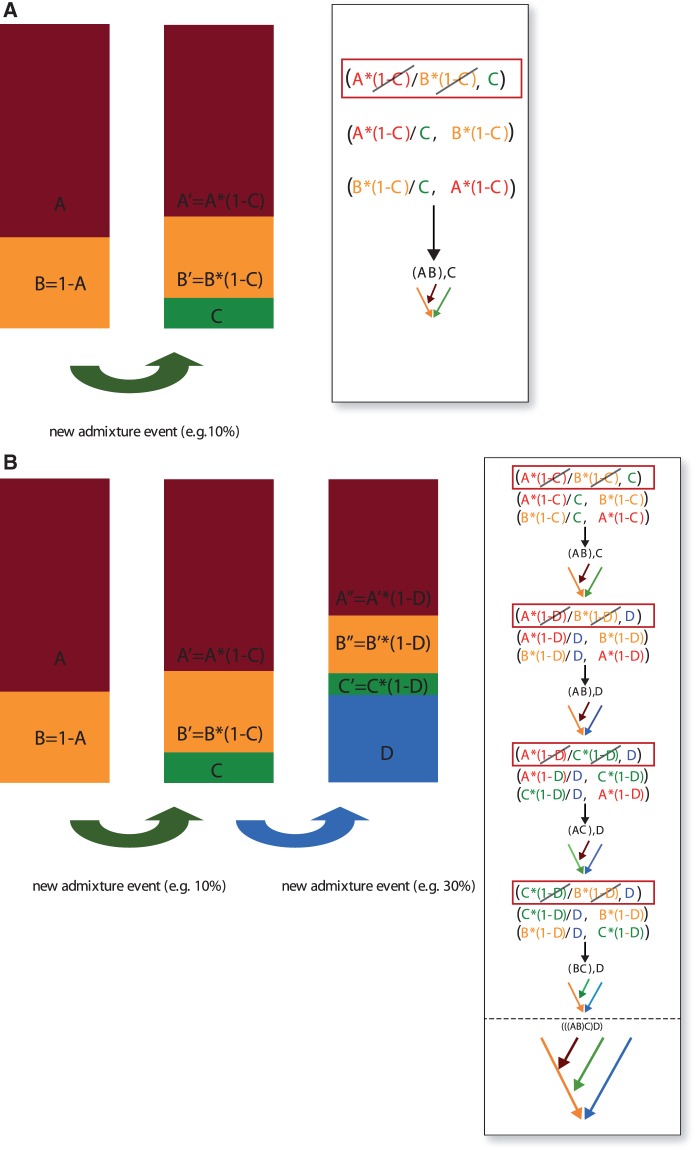
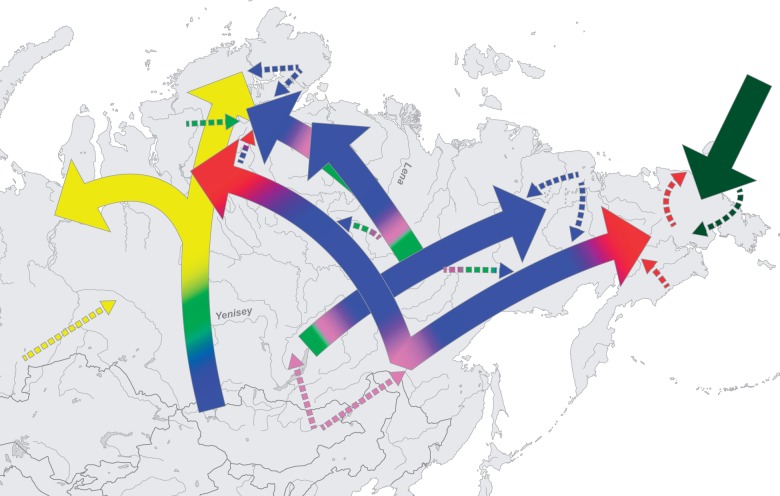
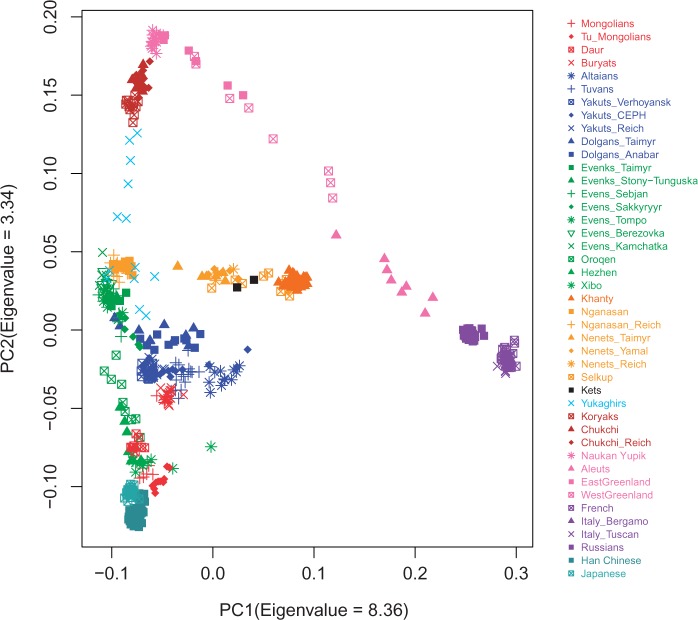
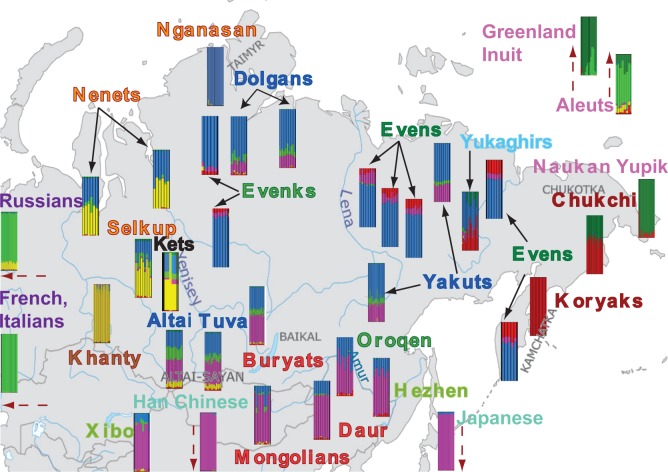
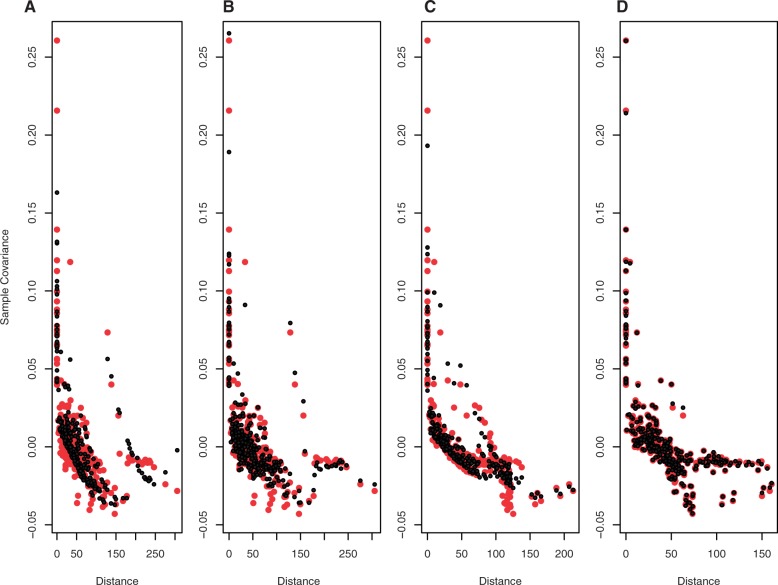
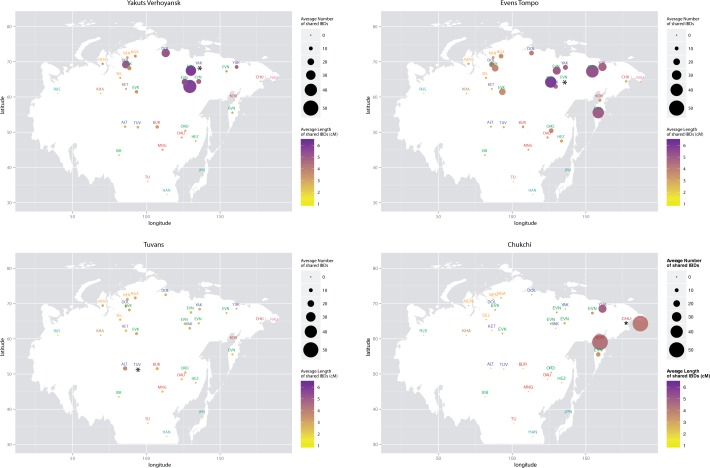
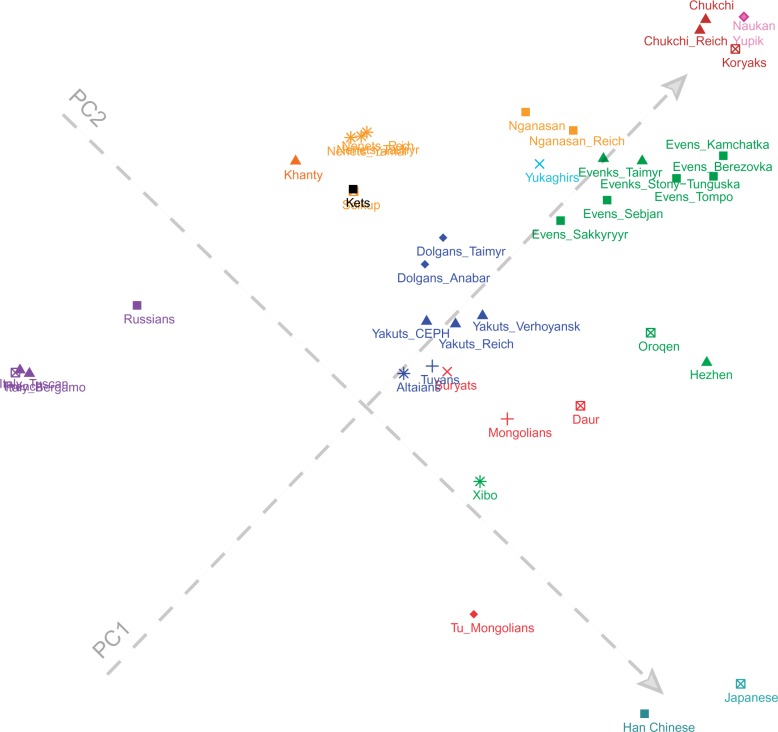
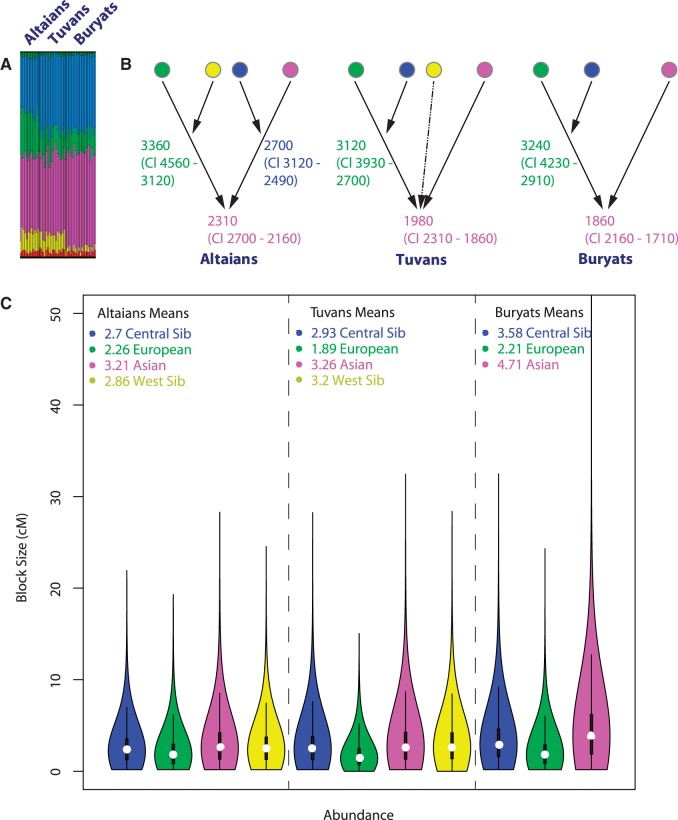
Although Siberia was inhabited by modern humans at an early stage, there is still debate over whether it remained habitable during the extreme cold of the Last Glacial Maximum or whether it was subsequently repopulated by peoples with recent shared ancestry. Previous studies of the genetic history of Siberian populations were hampered by the extensive admixture that appears to have taken place among these populations, because commonly used methods assume a tree-like population history and at most single admixture events. Here we analyze geogenetic maps and use other approaches to distinguish the effects of shared ancestry from prehistoric migrations and contact, and develop a new method based on the covariance of ancestry components, to investigate the potentially complex admixture history. We furthermore adapt a previously devised method of admixture dating for use with multiple events of gene flow, and apply these methods to whole-genome genotype data from over 500 individuals belonging to 20 different Siberian ethnolinguistic groups. The results of these analyses indicate that there have been multiple layers of admixture detectable in most of the Siberian populations, with considerable differences in the admixture histories of individual populations. Furthermore, most of the populations of Siberia included here, even those settled far to the north, appear to have a southern origin, with the northward expansions of different populations possibly being driven partly by the advent of pastoralism, especially reindeer domestication. These newly developed methods to analyze multiple admixture events should aid in the investigation of similarly complex population histories elsewhere.
尽管西伯利亚在早期就有现代人居住,但对于在末次盛冰期的极端寒冷时期它是否仍适宜居住,或者后来是否由有着近期共同祖先的人群重新定居,仍存在争议。此前对西伯利亚人群遗传历史的研究受到这些人群间广泛混合的阻碍,因为常用方法假定种群历史呈树状,且至多只有单一混合事件。在这里,我们分析地质遗传图谱并使用其他方法,以区分共同祖先的影响与史前迁徙和接触的影响,并基于祖先成分的协方差开发一种新方法,来研究潜在复杂的混合历史。我们还对先前设计的混合年代测定方法进行调整,以用于多次基因流动事件,并将这些方法应用于来自20个不同西伯利亚民族语言群体的500多名个体的全基因组基因型数据。这些分析结果表明,在大多数西伯利亚人群中可检测到多层混合,不同人群的混合历史存在显著差异。此外,这里纳入的大多数西伯利亚人群,即使是那些定居在遥远北方的人群,似乎都起源于南方,不同人群向北扩张可能部分是由畜牧业的出现,特别是驯鹿驯化推动的。这些新开发的分析多次混合事件的方法应有助于研究其他地方类似复杂的种群历史。