Wong Emily H M, Khrunin Andrey, Nichols Larissa, Pushkarev Dmitry, Khokhrin Denis, Verbenko Dmitry, Evgrafov Oleg, Knowles James, Novembre John, Limborska Svetlana, Valouev Anton
Division of Bioinformatics, Department of Preventive Medicine, University of Southern California, Keck School of Medicine, Los Angeles, California 90089, USA.
Department of Molecular Bases of Human Genetics, Institute of Molecular Genetics, Russian Academy of Sciences, Moscow, 123182 Russian Federation.
Genome Res. 2017 Jan;27(1):1-14. doi: 10.1101/gr.202945.115. Epub 2016 Dec 13.
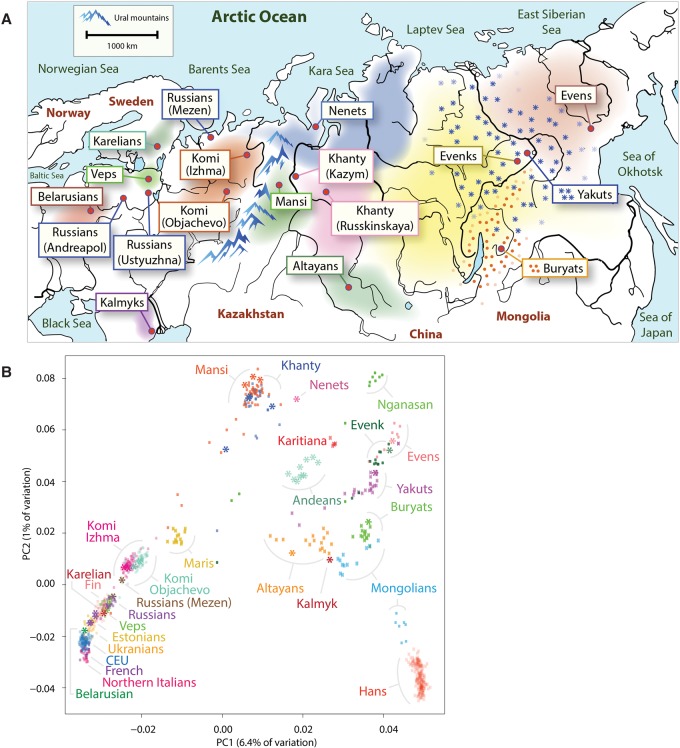
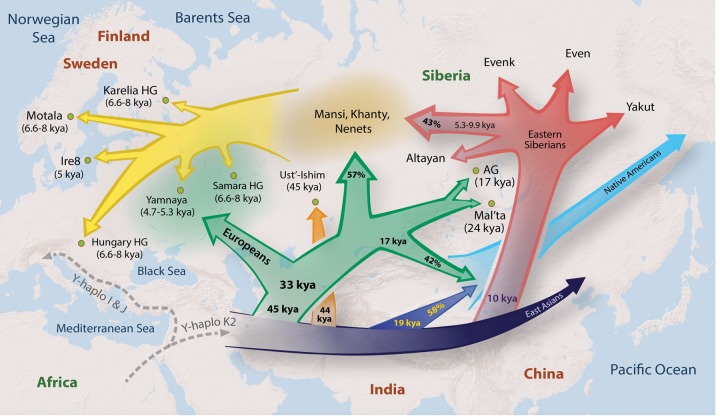
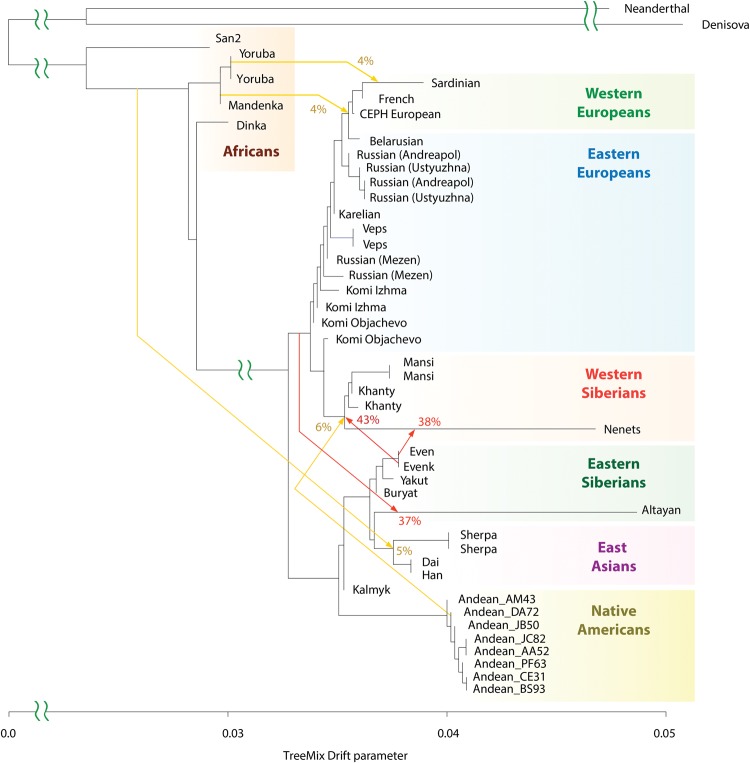
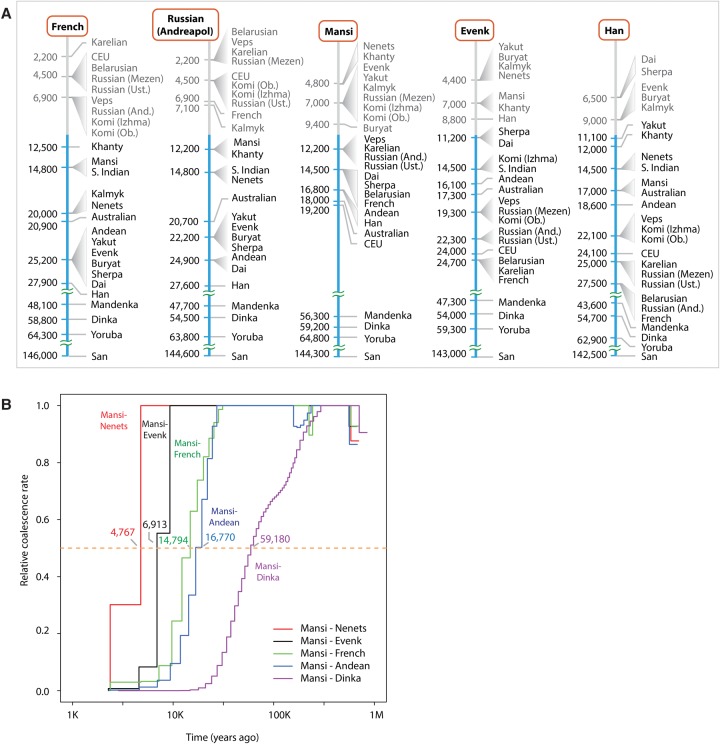
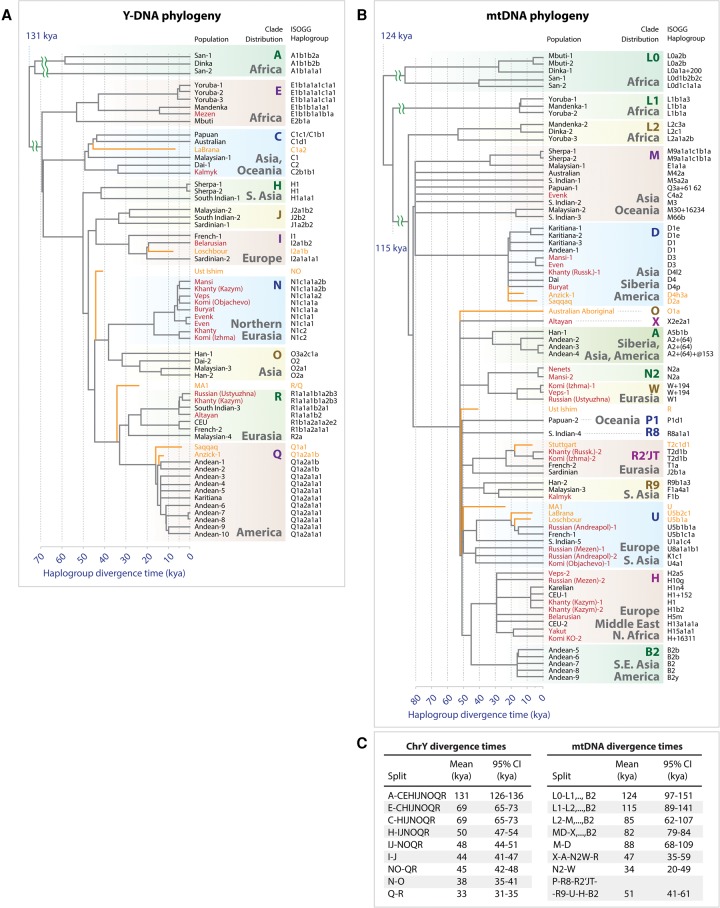
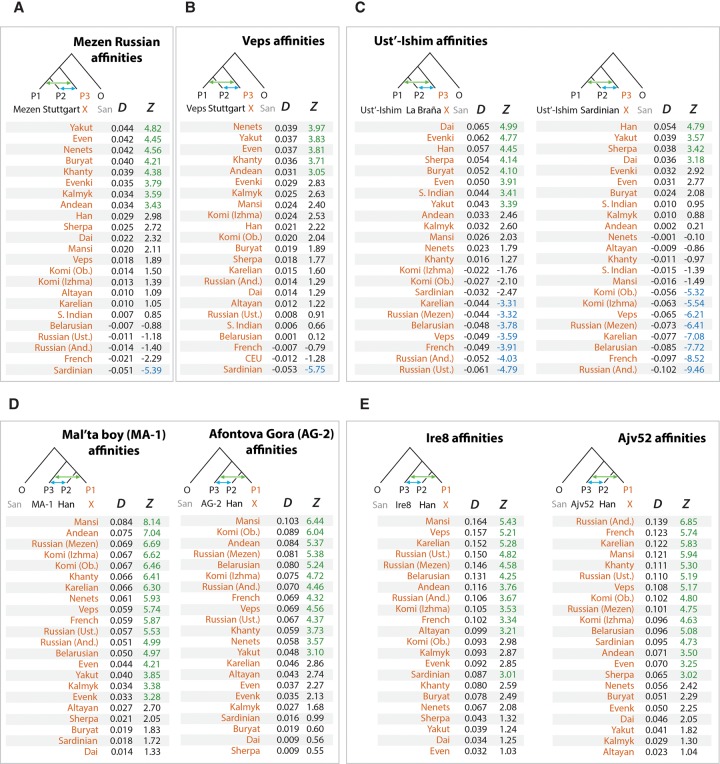
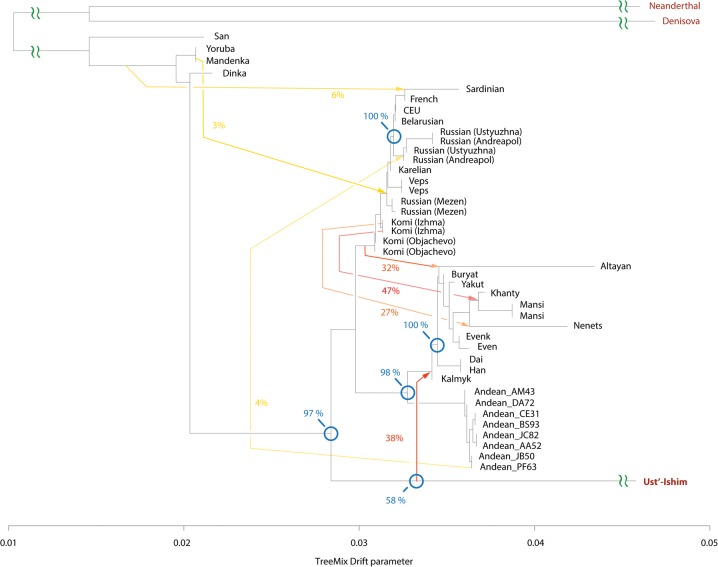
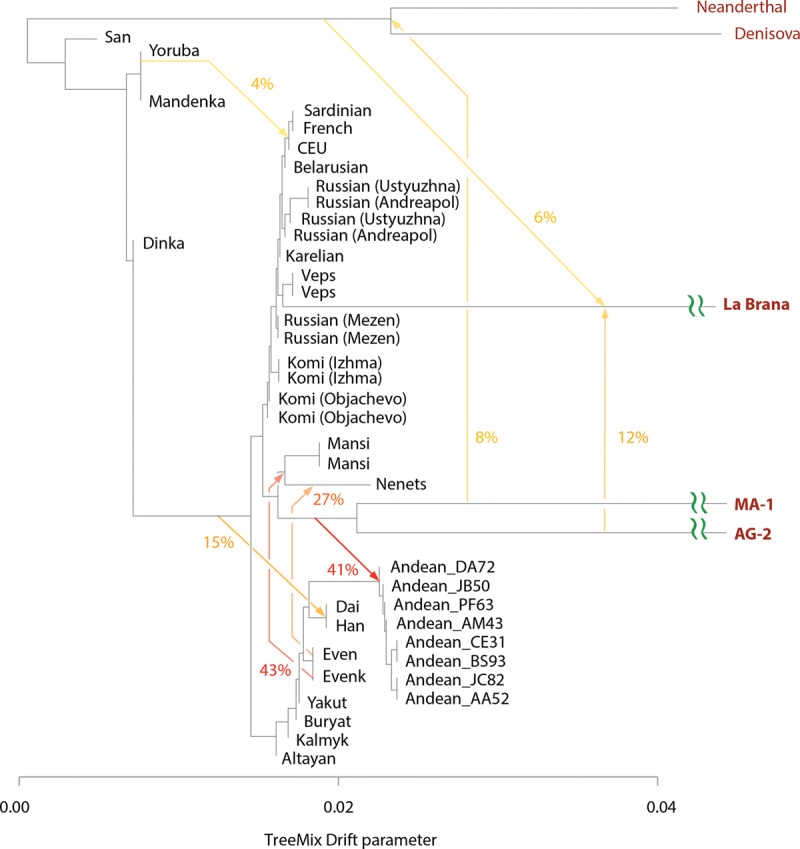
Siberia and Northwestern Russia are home to over 40 culturally and linguistically diverse indigenous ethnic groups, yet genetic variation and histories of peoples from this region are largely uncharacterized. We present deep whole-genome sequencing data (∼38×) from 28 individuals belonging to 14 distinct indigenous populations from that region. We combined these data sets with additional 32 modern-day and 46 ancient human genomes to reconstruct genetic histories of several indigenous Northern Eurasian populations. We found that Siberian and East Asian populations shared 38% of their ancestry with a 45,000-yr-old Ust'-Ishim individual who was previously believed to have no modern-day descendants. Western Siberians trace 57% of their ancestry to ancient North Eurasians, represented by the 24,000-yr-old Siberian Mal'ta boy MA-1. Eastern Siberian populations formed a distinct sublineage that separated from other East Asian populations ∼10,000 yr ago. In addition, we uncovered admixtures between Siberians and Eastern European hunter-gatherers from Samara, Karelia, Hungary, and Sweden (from 8000-6600 yr ago); Yamnaya people (5300-4700 yr ago); and modern-day Northeastern Europeans. Our results provide new insights into genetic histories of Siberian and Northeastern European populations and evidence of ancient gene flow from Siberia into Europe.
西伯利亚和俄罗斯西北部是40多个文化和语言各异的原住民群体的家园,但该地区人群的基因变异和历史在很大程度上仍未得到描述。我们展示了来自该地区14个不同原住民群体的28个人的深度全基因组测序数据(约38倍覆盖度)。我们将这些数据集与另外32个现代人和46个古代人类基因组相结合,以重建几个欧亚大陆北部原住民群体的遗传历史。我们发现,西伯利亚和东亚人群与一名生活在45000年前的乌斯季-伊希姆个体共享38%的祖先基因,该个体此前被认为没有现代后裔。西西伯利亚人57%的祖先基因可追溯至古代北欧亚人,以生活在24000年前的西伯利亚马尔他男孩MA-1为代表。东西伯利亚人群形成了一个独特的亚谱系,在约10000年前与其他东亚人群分离。此外,我们还发现了西伯利亚人与来自萨马拉、卡累利阿、匈牙利和瑞典的东欧狩猎采集者(8000 - 6600年前)、颜那亚人(5300 - 4700年前)以及现代东北欧人之间的基因混合情况。我们的研究结果为西伯利亚和东北欧人群的遗传历史提供了新的见解,并证明了古代基因从西伯利亚流入欧洲。