Liu Chia-Ying, Han Yin-Yi, Shih Po-Han, Lian Wei-Nan, Wang Huai-Hsien, Lin Chi-Hung, Hsueh Po-Ren, Wang Juen-Kai, Wang Yuh-Lin
Department of Internal Medicine, Far Eastern Memorial Hospital, New Taipei City, Taiwan.
Department of Traumatology, National Taiwan University Hospital, Taipei, Taiwan.
Sci Rep. 2016 Mar 21;6:23375. doi: 10.1038/srep23375.
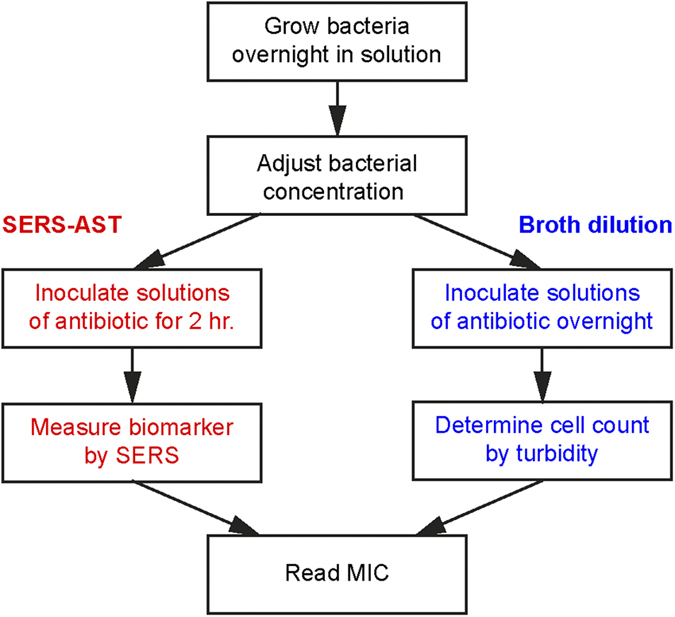
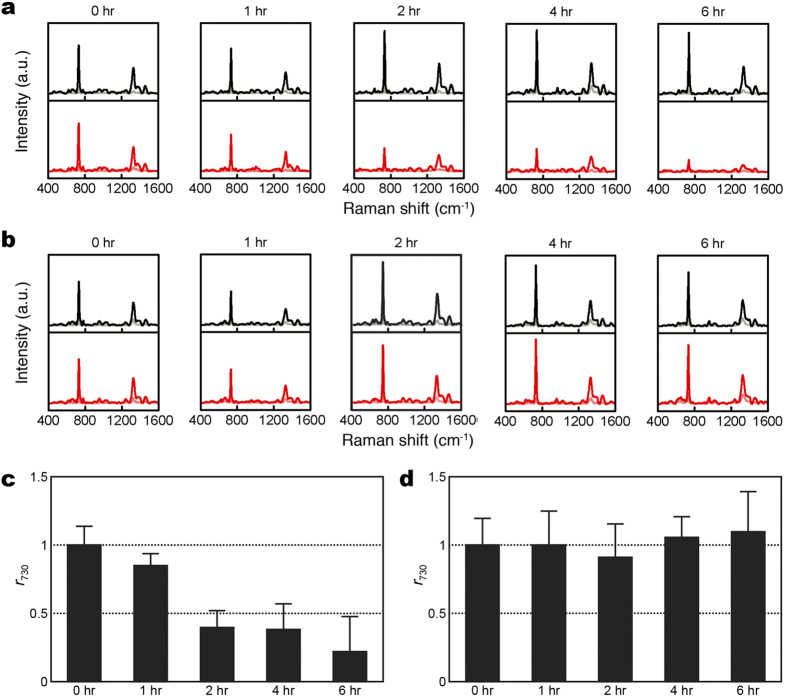
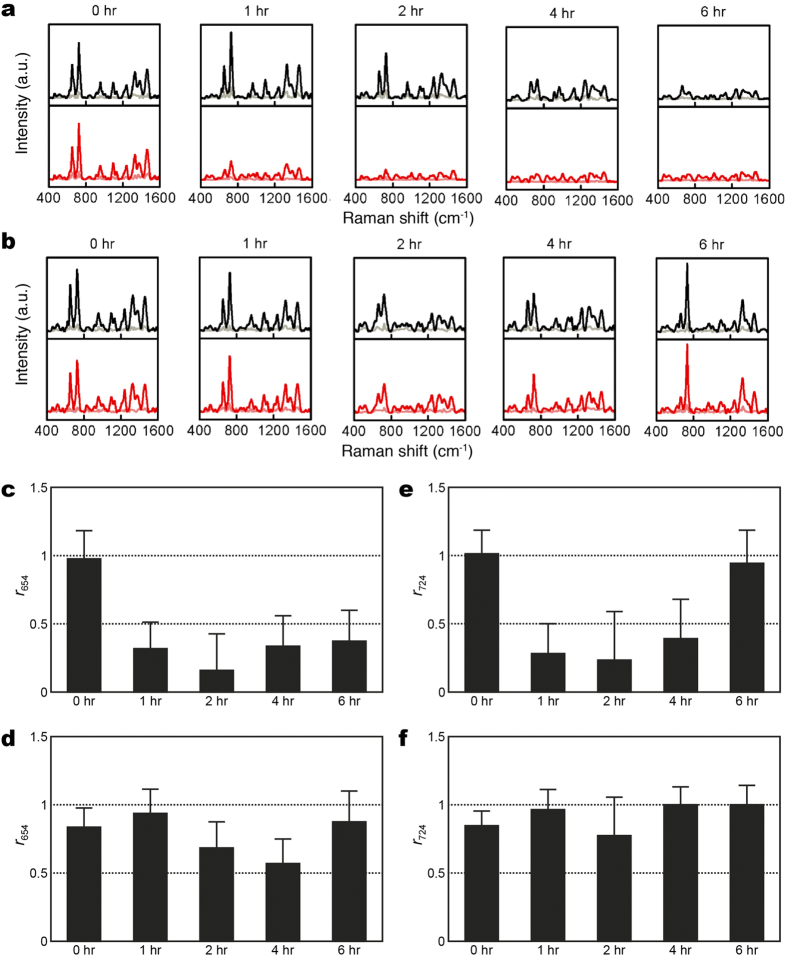
Rapid bacterial antibiotic susceptibility test (AST) and minimum inhibitory concentration (MIC) measurement are important to help reduce the widespread misuse of antibiotics and alleviate the growing drug-resistance problem. We discovered that, when a susceptible strain of Staphylococcus aureus or Escherichia coli is exposed to an antibiotic, the intensity of specific biomarkers in its surface-enhanced Raman scattering (SERS) spectra drops evidently in two hours. The discovery has been exploited for rapid AST and MIC determination of methicillin-susceptible S. aureus and wild-type E. coli as well as clinical isolates. The results obtained by this SERS-AST method were consistent with that by the standard incubation-based method, indicating its high potential to supplement or replace existing time-consuming methods and help mitigate the challenge of drug resistance in clinical microbiology.
快速细菌抗生素敏感性测试(AST)和最低抑菌浓度(MIC)测量对于帮助减少抗生素的广泛滥用以及缓解日益严重的耐药性问题至关重要。我们发现,当金黄色葡萄球菌或大肠杆菌的敏感菌株接触抗生素时,其表面增强拉曼散射(SERS)光谱中特定生物标志物的强度在两小时内会明显下降。这一发现已被用于对甲氧西林敏感金黄色葡萄球菌和野生型大肠杆菌以及临床分离株进行快速AST和MIC测定。通过这种SERS-AST方法获得的结果与基于标准培养方法的结果一致,表明其具有很高的潜力来补充或取代现有的耗时方法,并有助于应对临床微生物学中耐药性的挑战。