Lee Se-Yeon, Lee Seahyoung, Choi Eunhyun, Ham Onju, Lee Chang Youn, Lee Jiyun, Seo Hyang-Hee, Cha Min-Ji, Mun Bohyun, Lee Yunmi, Yoon Cheesoon, Hwang Ki-Chul
Brain Korea 21 PLUS Project for Medical Science, Yonsei University College of Medicine, Seoul 120-752, Republic of Korea.
Department of Biomedical Sciences, College of Medicine, Catholic Kwandong University, Gangneung, Gangwon-do 210-701, Republic of Korea.
Sci Rep. 2016 Mar 24;6:23472. doi: 10.1038/srep23472.
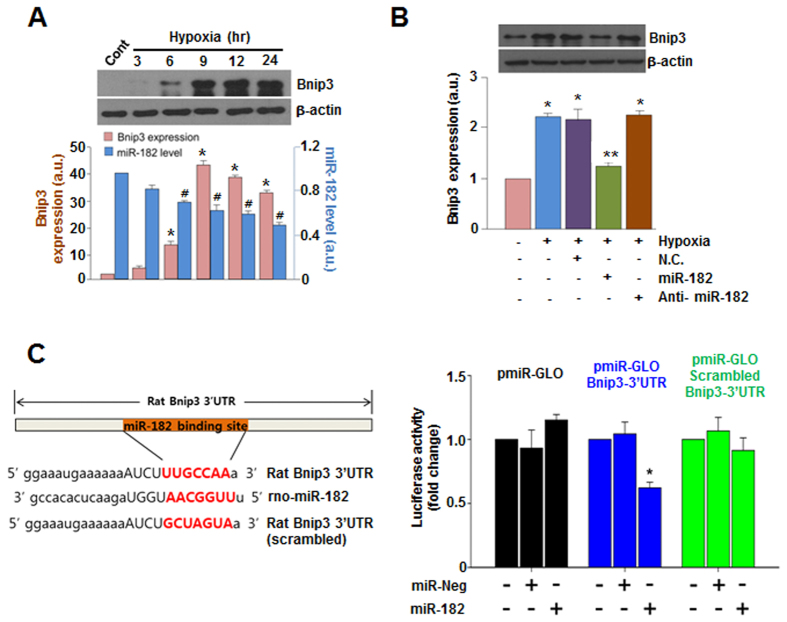
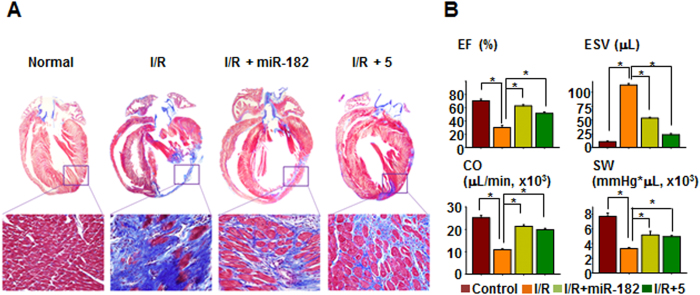
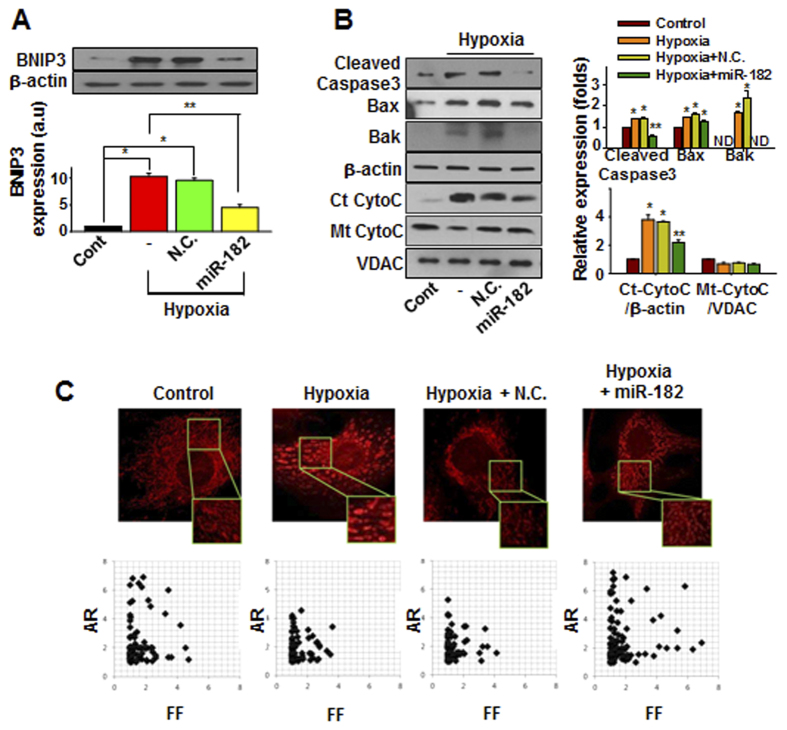
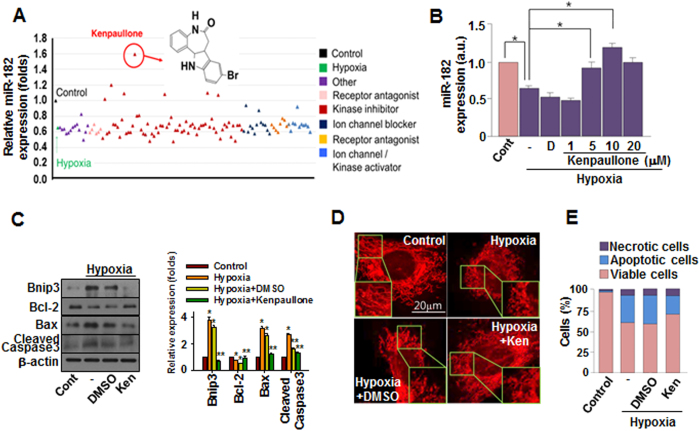
Genetic ablation of BCL2/adenovirus E1B 19 kDa protein-interacting protein 3 (BNIP3), an essential regulator of cardiac cell death, is an effective way to prevent cardiac cell death triggered by pathologic conditions. However, currently there exists no known means, such as inhibitors, to down-regulate BNIP3 in mature heart. Here, we report that a small molecule inducer of microRNA-182 (miR-182) suppressed ischemia/reperfusion (I/R)-induced cardiac cell death by down-regulating BNIP3. We first selected miR-182 as a potent BNIP3-targeting miRNA based on miRNA-target prediction databases and empirical data. The subsequent screening of small molecules for inducing miR-182 expression identified Kenpaullone as a hit compound. Both exogenous miR-182 and Kenpaullone significantly suppressed hypoxia-induced cardiomyocyte death in vitro. To investigate the effect of changing substituents of Kenpaullone on miR-182 expression, we synthesized 9 derivatives of Kenpaullone. Among these derivatives, compound 5 showed significantly improved ability to induce miR-182 expression. The results of the in vivo study showed that compound 5 significantly improved heart function following I/R-injury in rats. Our study provides strong evidence that the small molecule-mediated up-regulation of miRNAs is a viable strategy to down-regulate target proteins with no known chemical inhibitor and that compound 5 may have potential to prevent I/R-inflicted cardiac cell death.