Reid William C, Casas Rafael, Papadakis Georgios Z, Muthusamy Siva, Lee Dianne E, Ibrahim Wael G, Nair Anand, Koziol Deloris, Maric Dragan, Hammoud Dima A
Center for Infectious Disease Imaging (CIDI), Radiology and Imaging Sciences, National Institutes of Health, Bethesda, Maryland, United States of America.
Biostatistics and Clinical Epidemiology Service, Clinical Center, National Institutes of Health, Bethesda, Maryland, United States of America.
PLoS One. 2016 Mar 24;11(3):e0152265. doi: 10.1371/journal.pone.0152265. eCollection 2016.
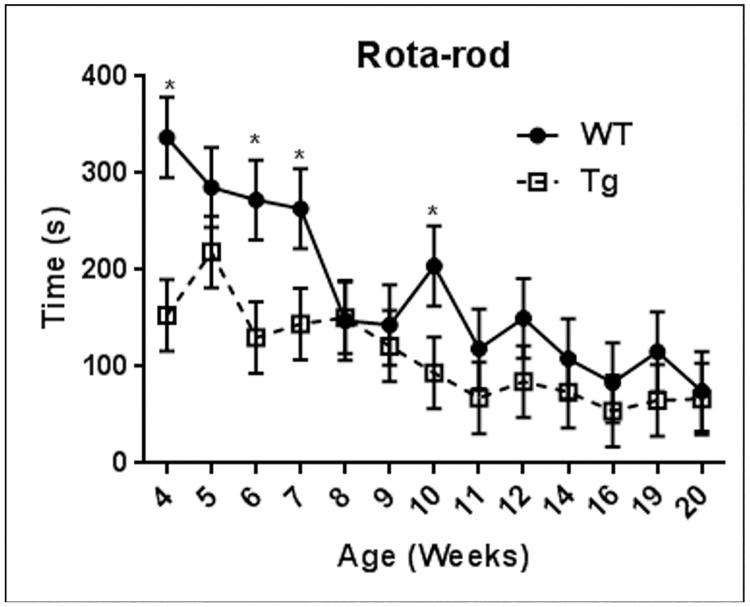
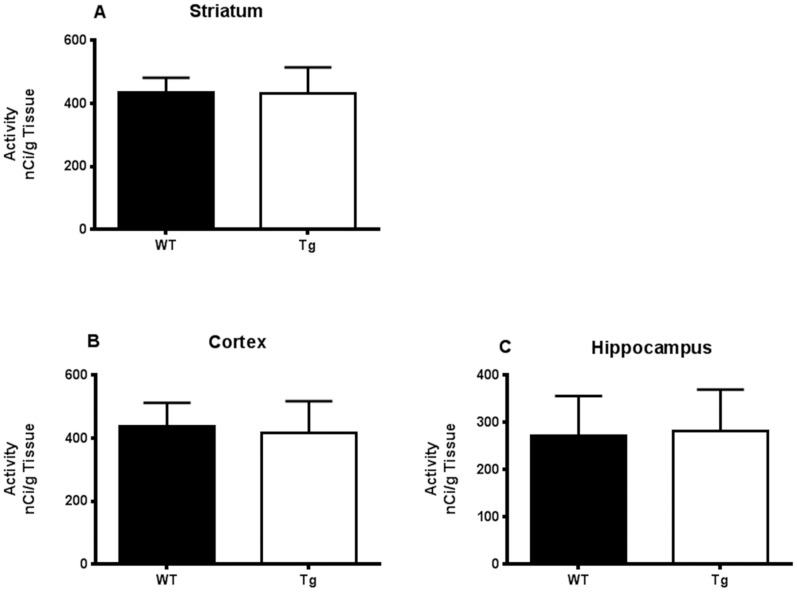
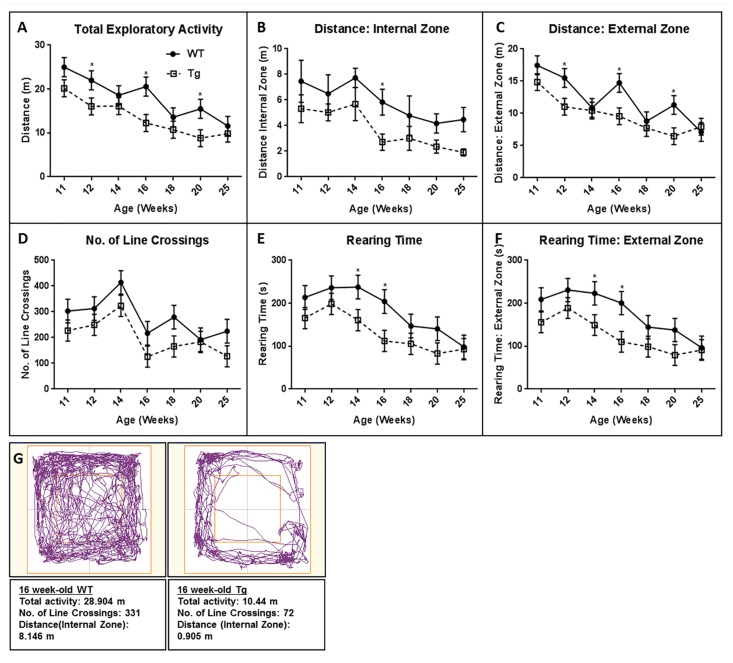
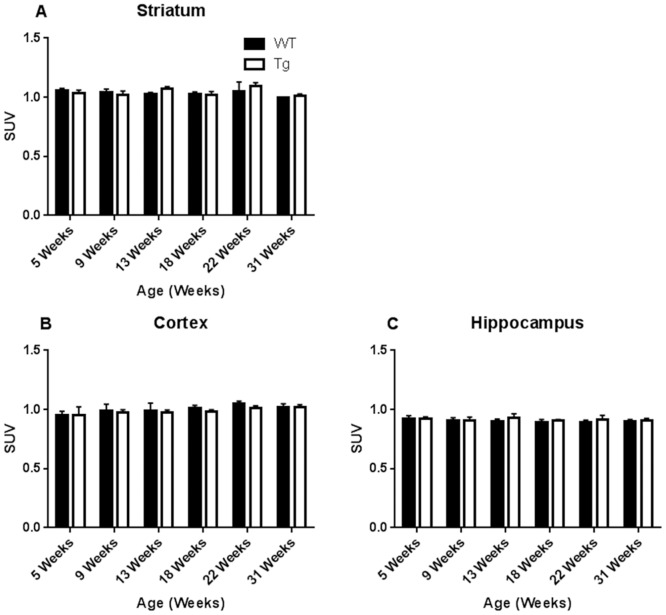
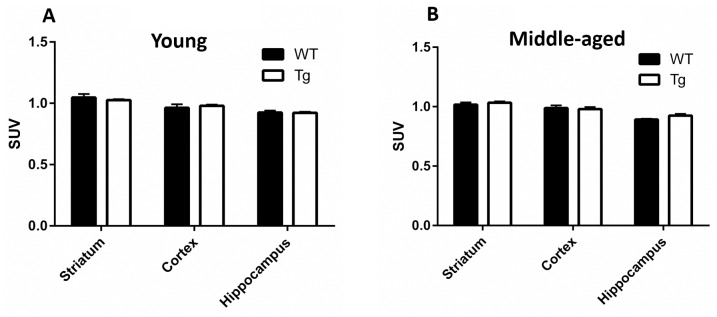
Motor and behavioral abnormalities are common presentations among individuals with HIV-1 associated neurocognitive disorders (HAND). We investigated whether longitudinal motor and behavioral performance in the HIV-1 transgenic rat (Tg), a commonly used neuro-HIV model, corresponded to in vivo neuronal death/dysfunction, by using rotarod and open field testing in parallel to [18F] 2-fluoro-2-deoxy-D-glucose (FDG) positron emission tomography (PET). We demonstrated that age-matched non-Tg wild type (WT) rats outperformed the HIV-1 Tg rats at most time points on rotarod testing. Habituation to rotarod occurred at 8 weeks of age (fifth weekly testing session) in the WT rats but it never occurred in the Tg rats, suggesting deficits in motor learning. Similarly, in open field testing, WT rats outperformed the Tg rats at most time points, suggesting defective exploratory/motor behavior and increased emotionality in the Tg rat. Despite the neurobehavioral abnormalities, there were no concomitant deficits in 18F-FDG uptake in Tg rats on PET compared to age-matched WT rats and no significant longitudinal loss of FDG uptake in either group. The negative PET findings were confirmed using 14C- Deoxy-D-glucose autoradiography in 32 week-old Tg and WT rats. We believe that the neuropathology in the HIV-1 Tg rat is more likely a consequence of neuronal dysfunction rather than overt neurodegeneration/neuronal cell death, similar to what is seen in HIV-positive patients in the post-ART era.
运动和行为异常是HIV-1相关神经认知障碍(HAND)患者的常见表现。我们通过将转棒试验和旷场试验与[18F]2-氟-2-脱氧-D-葡萄糖(FDG)正电子发射断层扫描(PET)并行使用,研究了常用的神经HIV模型——HIV-1转基因大鼠(Tg)的纵向运动和行为表现是否与体内神经元死亡/功能障碍相对应。我们证明,在转棒试验的大多数时间点,年龄匹配的非Tg野生型(WT)大鼠的表现优于HIV-1 Tg大鼠。WT大鼠在8周龄时(每周第五次测试 session)对转棒试验产生了习惯化,但Tg大鼠从未出现过,这表明其运动学习存在缺陷。同样,在旷场试验中,WT大鼠在大多数时间点的表现也优于Tg大鼠,这表明Tg大鼠的探索/运动行为存在缺陷且情绪性增加。尽管存在神经行为异常,但与年龄匹配的WT大鼠相比,Tg大鼠在PET上的18F-FDG摄取没有相应的缺陷,且两组中FDG摄取均无明显的纵向损失。在32周龄的Tg和WT大鼠中使用14C-脱氧-D-葡萄糖放射自显影证实了PET的阴性结果。我们认为,HIV-1 Tg大鼠的神经病理学更可能是神经元功能障碍的结果,而不是明显的神经退行性变/神经元细胞死亡,这与抗逆转录病毒治疗时代HIV阳性患者的情况类似。