Witkowski Travis A, Grice Alison N, Stinnett DeAnna B, Wells Whitney K, Peterson Megan A, Hare Janelle M
Department of Biology and Chemistry, Morehead State University, Morehead, KY, United States of America.
PLoS One. 2016 Mar 24;11(3):e0152013. doi: 10.1371/journal.pone.0152013. eCollection 2016.
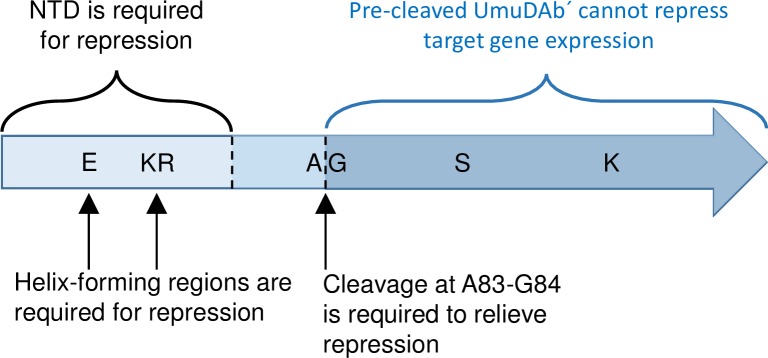
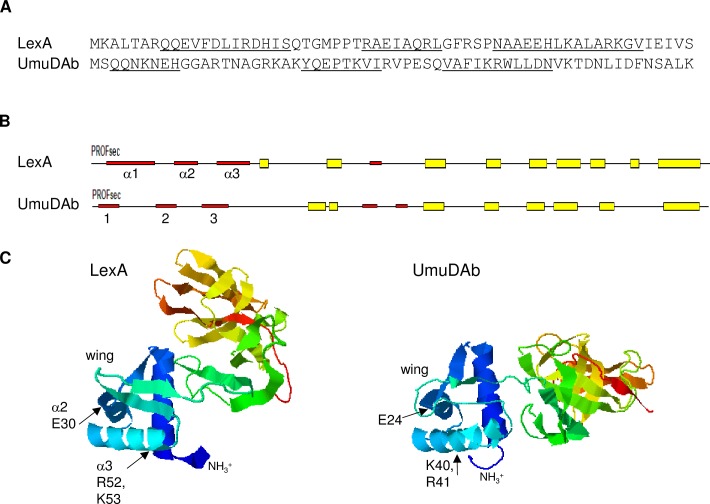
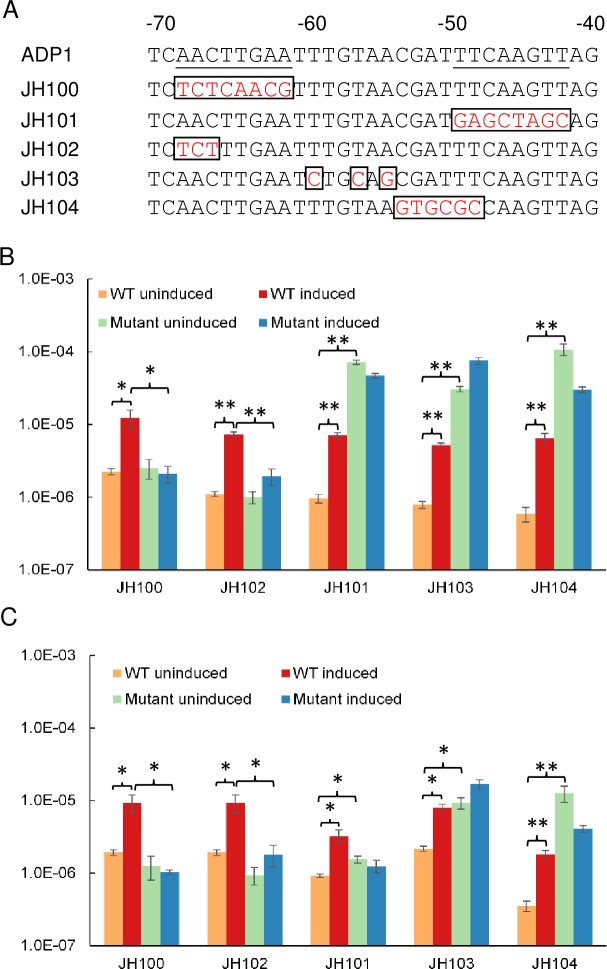
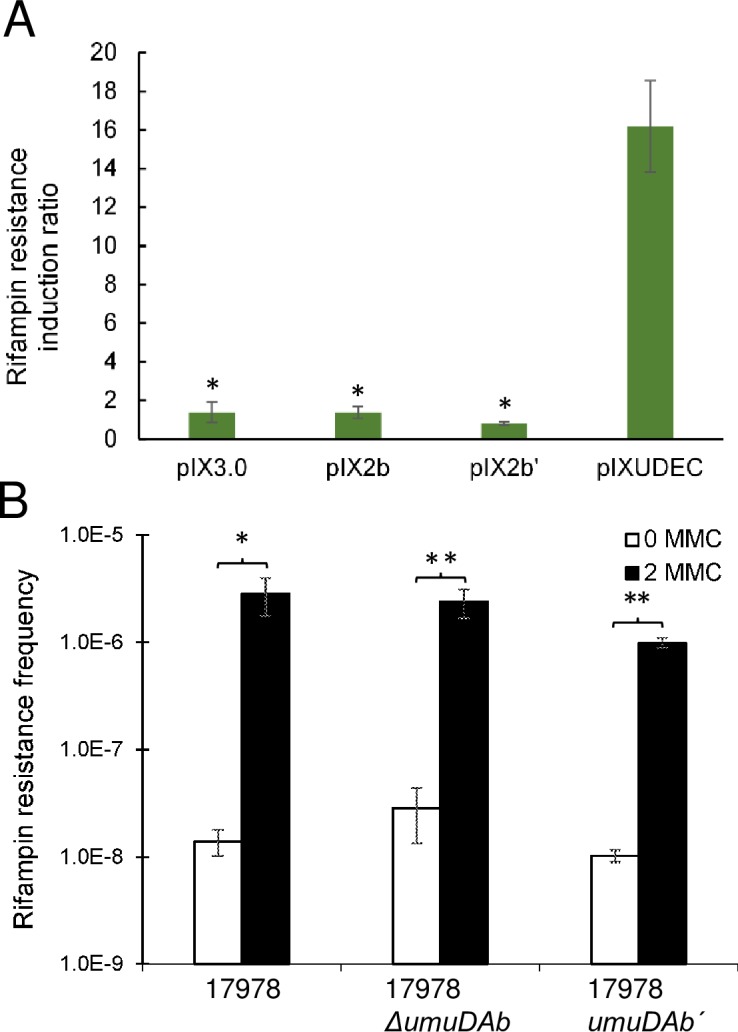
In many bacteria, the DNA damage response induces genes (SOS genes) that were repressed by LexA. LexA represses transcription by binding to SOS promoters via a helix-turn-helix motif in its N-terminal domain (NTD). Upon DNA damage, LexA cleaves itself and allows induction of transcription. In Acinetobacter baumannii and Acinetobacter baylyi, multiple genes are induced by DNA damage, and although the Acinetobacter genus lacks LexA, a homolog of the error-prone polymerase subunit UmuD, called UmuDAb, regulates some DNA damage-induced genes. The mechanism of UmuDAb regulation has not been determined. We constructed UmuDAb mutant strains of A. baylyi to test whether UmuDAb mediates gene regulation through LexA-like repressor actions consisting of relief of repression through self-cleavage after DNA damage. Real-time quantitative PCR experiments in both a null umuDAb mutant and an NTD mutant showed that the DNA damage-inducible, UmuDAb-regulated gene ddrR was highly expressed even in the absence of DNA damage. Protein modeling identified a potential LexA-like helix-turn-helix structure in the UmuDAb NTD, which when disrupted, also relieved ddrR and umuDAb repression under non-inducing conditions. Mutations in a putative SOS box in the shared umuDAb-ddrR promoter region similarly relieved these genes' repression under non-inducing conditions. Conversely, cells possessing a cleavage-deficient UmuDAb were unable to induce gene expression after MMC-mediated DNA damage. This evidence of a UmuDAb repressor mechanism was contrasted with the failure of umuDAb to complement an Escherichia coli umuD mutant for UmuD error-prone DNA replication activity. Similarly, A. baumannii null umuDAb mutant cells did not have a reduced UmuD'2UmuC-mediated mutation rate after DNA damage, suggesting that although this UmuDAb protein may have evolved from a umuDC operon in this genus, it now performs a LexA-like repressor function for a sub-set of DNA damage-induced genes.
在许多细菌中,DNA损伤反应会诱导那些原本被LexA抑制的基因(SOS基因)。LexA通过其N端结构域(NTD)中的螺旋-转角-螺旋基序与SOS启动子结合来抑制转录。DNA损伤时,LexA会自我切割,从而允许转录的诱导。在鲍曼不动杆菌和拜氏不动杆菌中,多个基因会被DNA损伤诱导,尽管不动杆菌属缺乏LexA,但易错聚合酶亚基UmuD的一个同源物UmuDAb会调控一些DNA损伤诱导的基因。UmuDAb的调控机制尚未确定。我们构建了拜氏不动杆菌的UmuDAb突变菌株,以测试UmuDAb是否通过类似LexA的阻遏作用介导基因调控,这种作用包括DNA损伤后通过自我切割解除抑制。在umuDAb基因缺失突变体和NTD突变体中进行的实时定量PCR实验表明,即使在没有DNA损伤的情况下,DNA损伤诱导的、受UmuDAb调控的基因ddrR也会高表达。蛋白质建模在UmuDAb的NTD中发现了一个潜在的类似LexA的螺旋-转角-螺旋结构,当该结构被破坏时,在非诱导条件下也会解除对ddrR和umuDAb的抑制。在共用的umuDAb-ddrR启动子区域中一个假定的SOS框中的突变同样会在非诱导条件下解除对这些基因的抑制。相反,拥有切割缺陷型UmuDAb的细胞在丝裂霉素C介导的DNA损伤后无法诱导基因表达。这种UmuDAb阻遏机制的证据与UmuDAb不能补充大肠杆菌umuD突变体的UmuD易错DNA复制活性形成对比。同样,鲍曼不动杆菌的umuDAb基因缺失突变体细胞在DNA损伤后UmuD'2UmuC介导的突变率并没有降低,这表明尽管这种UmuDAb蛋白可能是从该属的一个umuDC操纵子进化而来,但它现在对一部分DNA损伤诱导的基因执行类似LexA的阻遏功能。