Yin Qiuyuan, Ge Hanxiao, Liao Chen-Chong, Liu Di, Zhang Shuyi, Pan Yi-Hsuan
Laboratory of Molecular Ecology and Evolution, Shanghai Engineering Research Center of Molecular Therapeutics and New Drug Development, East China Normal University, Shanghai, China.
Proteomic Research Center, National Yang-Ming University, Taipei, Taiwan.
PLoS One. 2016 Mar 24;11(3):e0152135. doi: 10.1371/journal.pone.0152135. eCollection 2016.
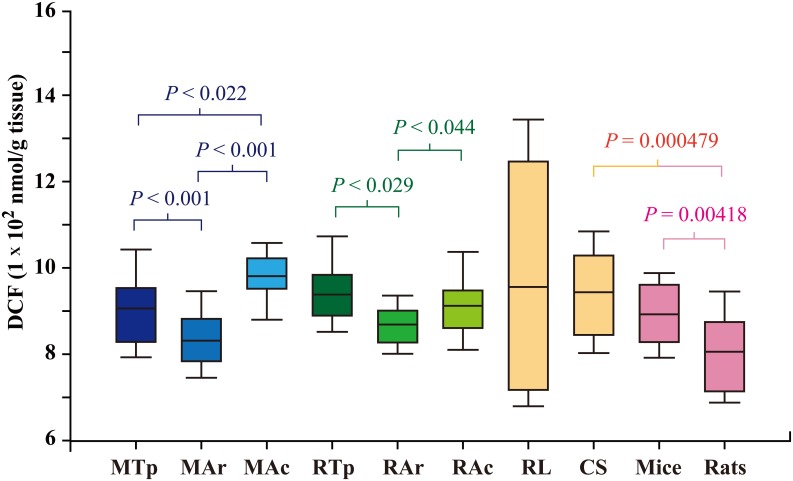
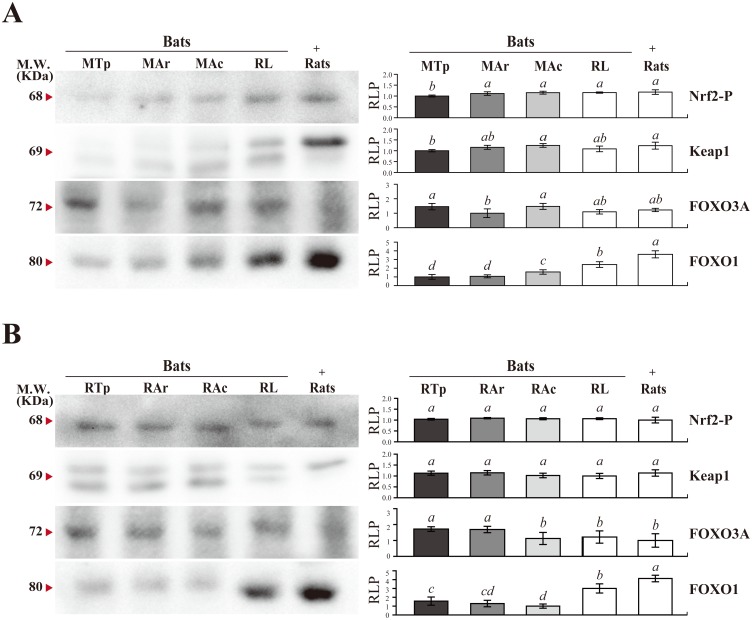
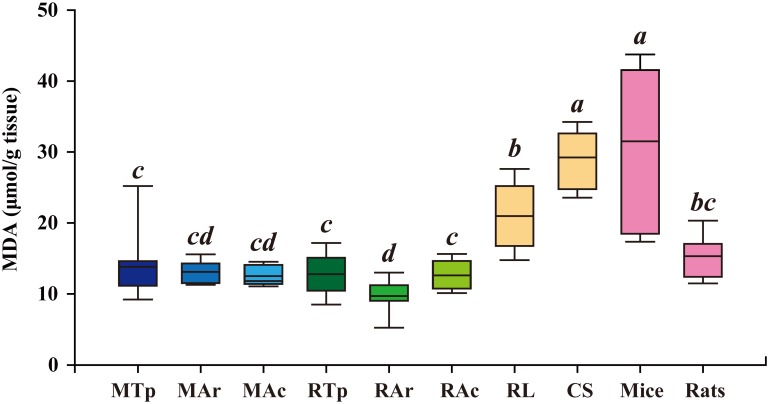
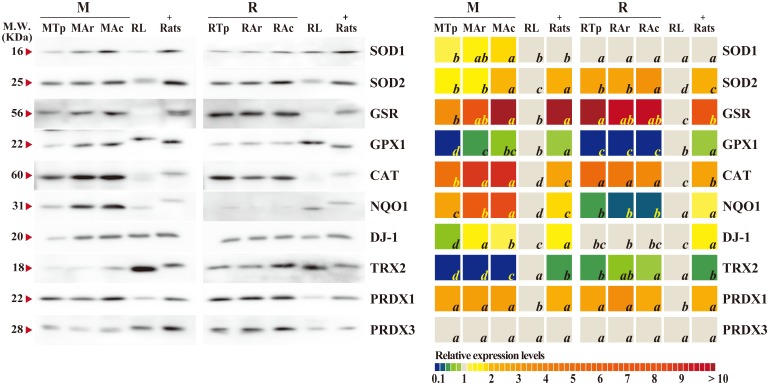
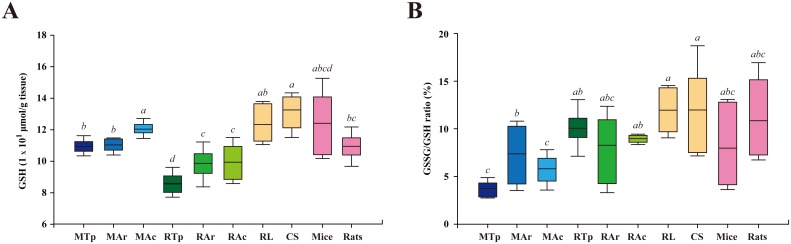
Hibernation is a strategy used by some mammals to survive a cold winter. Small hibernating mammals, such as squirrels and hamsters, use species- and tissue-specific antioxidant defenses to cope with oxidative insults during hibernation. Little is known about antioxidant responses and their regulatory mechanisms in hibernating bats. We found that the total level of reactive oxygen species (ROS) and reactive nitrogen species (RNS) in the brain of each of the two distantly related hibernating bats M. ricketti and R. ferrumequinum at arousal was lower than that at torpid or active state. We also found that the levels of malondialdehyde (product of lipid peroxidation) of the two hibernating species of bats were significantly lower than those of non-hibernating bats R. leschenaultia and C. sphinx. This observation suggests that bats maintain a basal level of ROS/RNS that does no harm to the brain during hibernation. Results of Western blotting showed that hibernating bats expressed higher amounts of antioxidant proteins than non-hibernating bats and that M. ricketti bats upregulated the expression of some enzymes to overcome oxidative stresses, such as superoxide dismutase, glutathione reductase, and catalase. In contrast, R. ferrumequinum bats maintained a relatively high level of superoxide dismutase 2, glutathione reductase, and thioredoxin-2 throughout the three different states of hibernation cycles. The levels of glutathione (GSH) were higher in M. ricketti bats than in R. ferrumequinum bats and were significantly elevated in R. ferrumequinum bats after torpor. These data suggest that M. ricketti bats use mainly antioxidant enzymes and R. ferrumequinum bats rely on both enzymes and low molecular weight antioxidants (e.g., glutathione) to avoid oxidative stresses during arousal. Furthermore, Nrf2 and FOXOs play major roles in the regulation of antioxidant defenses in the brains of bats during hibernation. Our study revealed strategies used by bats against oxidative insults during hibernation.
冬眠是一些哺乳动物用来度过寒冷冬天的一种策略。小型冬眠哺乳动物,如松鼠和仓鼠,会利用物种和组织特异性的抗氧化防御机制来应对冬眠期间的氧化损伤。关于冬眠蝙蝠的抗氧化反应及其调节机制,我们所知甚少。我们发现,在两种亲缘关系较远的冬眠蝙蝠——大足鼠耳蝠和马铁菊头蝠苏醒时,它们大脑中的活性氧(ROS)和活性氮(RNS)的总水平低于蛰伏或活跃状态时。我们还发现,这两种冬眠蝙蝠的丙二醛(脂质过氧化产物)水平显著低于非冬眠蝙蝠——印度假吸血蝠和皱唇犬吻蝠。这一观察结果表明,蝙蝠在冬眠期间维持着对大脑无害的ROS/RNS基础水平。蛋白质免疫印迹结果显示,冬眠蝙蝠比非冬眠蝙蝠表达更多的抗氧化蛋白,并且大足鼠耳蝠上调了一些酶的表达以克服氧化应激,如超氧化物歧化酶、谷胱甘肽还原酶和过氧化氢酶。相比之下,马铁菊头蝠在冬眠周期的三种不同状态下,超氧化物歧化酶2、谷胱甘肽还原酶和硫氧还蛋白-2的水平相对较高。大足鼠耳蝠的谷胱甘肽(GSH)水平高于马铁菊头蝠,且马铁菊头蝠在蛰伏后GSH水平显著升高。这些数据表明,大足鼠耳蝠主要利用抗氧化酶,而马铁菊头蝠则依靠酶和低分子量抗氧化剂(如谷胱甘肽)来避免苏醒期间的氧化应激。此外,Nrf2和FOXOs在冬眠期间蝙蝠大脑抗氧化防御的调节中起主要作用。我们的研究揭示了蝙蝠在冬眠期间抵御氧化损伤的策略。