Bennet Kevin E, Tomshine Jonathan R, Min Hoon-Ki, Manciu Felicia S, Marsh Michael P, Paek Seungleal B, Settell Megan L, Nicolai Evan N, Blaha Charles D, Kouzani Abbas Z, Chang Su-Youne, Lee Kendall H
Division of Engineering, Mayo ClinicRochester, MN, USA; Neurologic Surgery, Mayo ClinicRochester, MN, USA; School of Engineering, Deakin UniversityMelbourne, VIC, Australia.
Division of Engineering, Mayo ClinicRochester, MN, USA; Neurologic Surgery, Mayo ClinicRochester, MN, USA.
Front Hum Neurosci. 2016 Mar 15;10:102. doi: 10.3389/fnhum.2016.00102. eCollection 2016.
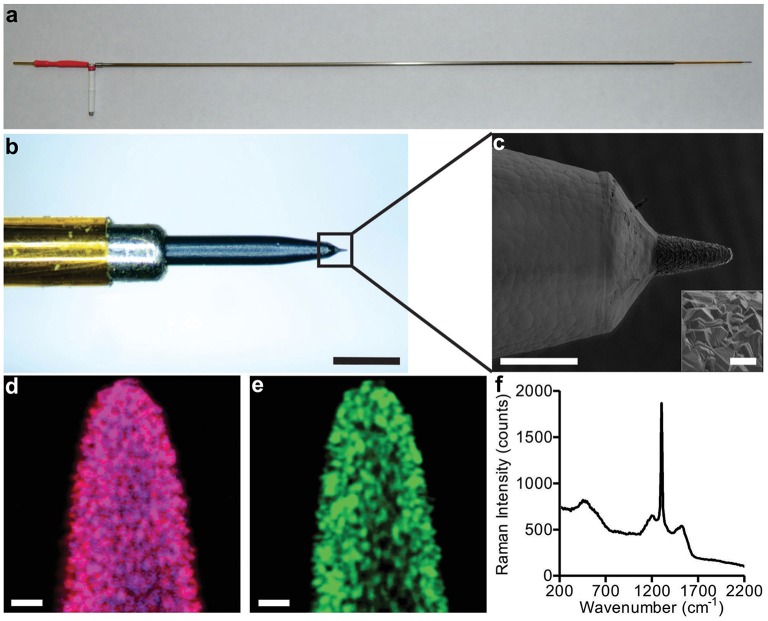
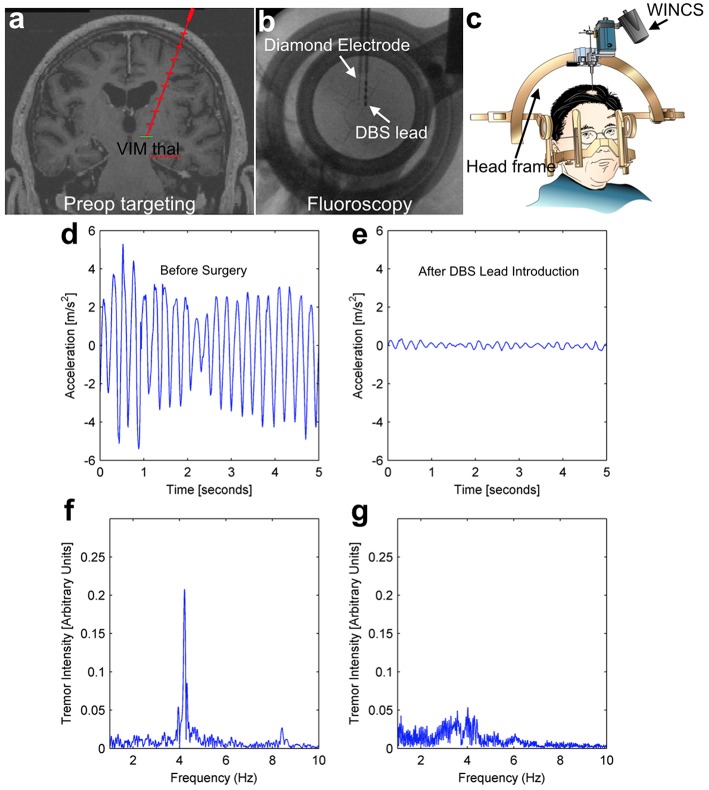
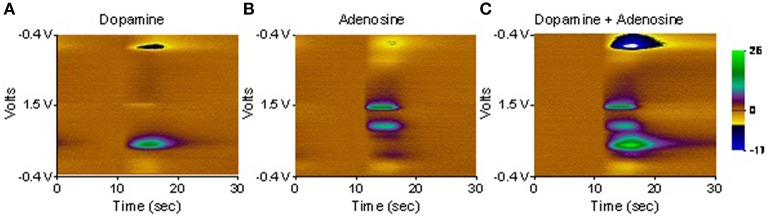
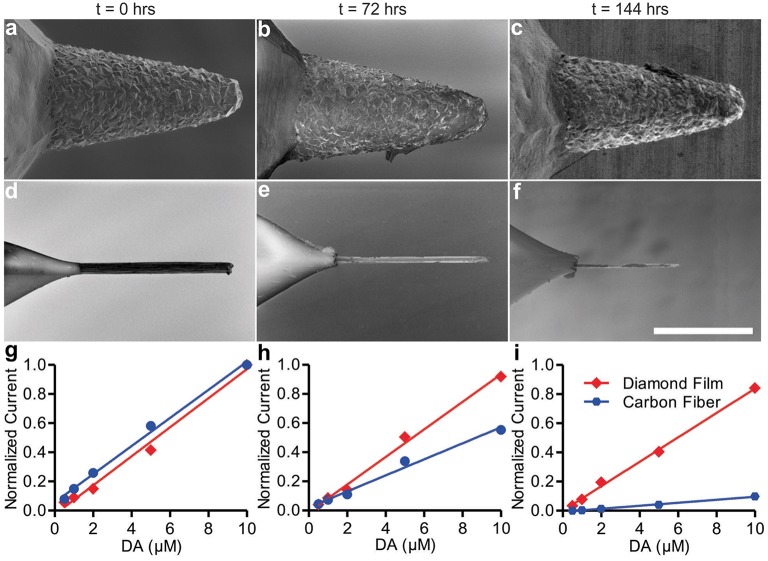
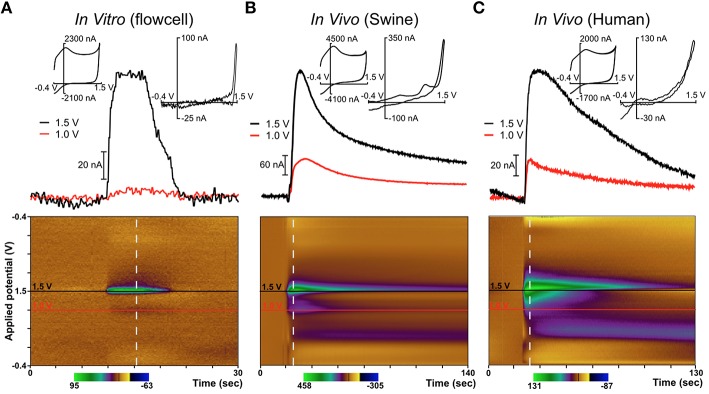
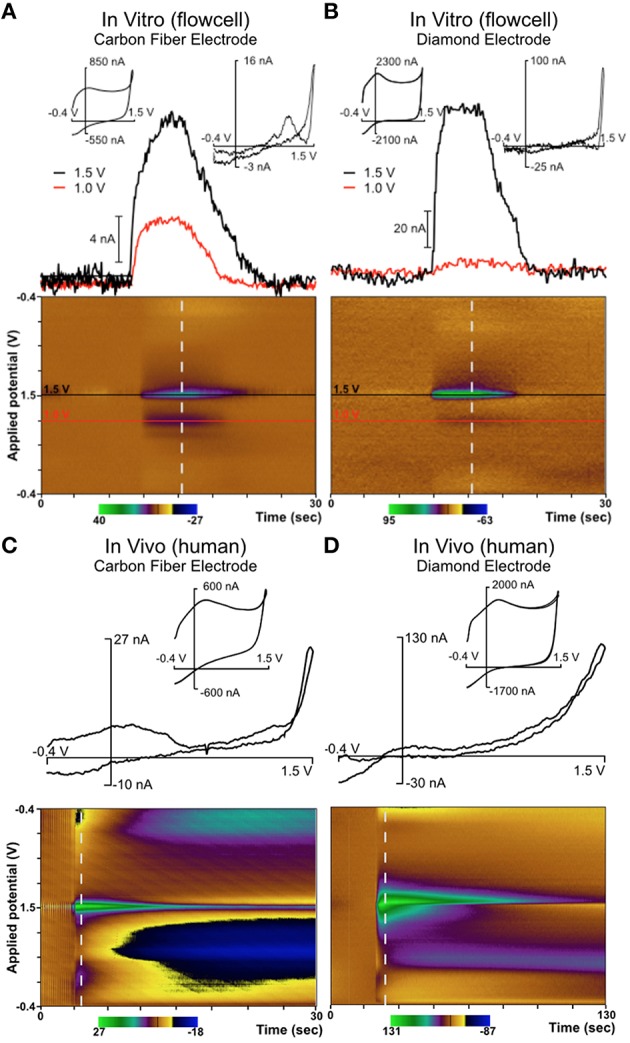
Deep brain stimulation (DBS), a surgical technique to treat certain neurologic and psychiatric conditions, relies on pre-determined stimulation parameters in an open-loop configuration. The major advancement in DBS devices is a closed-loop system that uses neurophysiologic feedback to dynamically adjust stimulation frequency and amplitude. Stimulation-driven neurochemical release can be measured by fast-scan cyclic voltammetry (FSCV), but existing FSCV electrodes rely on carbon fiber, which degrades quickly during use and is therefore unsuitable for chronic neurochemical recording. To address this issue, we developed durable, synthetic boron-doped diamond-based electrodes capable of measuring neurochemical release in humans. Compared to carbon fiber electrodes, they were more than two orders-of-magnitude more physically-robust and demonstrated longevity in vitro without deterioration. Applied for the first time in humans, diamond electrode recordings from thalamic targets in patients (n = 4) undergoing DBS for tremor produced signals consistent with adenosine release at a sensitivity comparable to carbon fiber electrodes. (Clinical trials # NCT01705301).
深部脑刺激(DBS)是一种治疗某些神经和精神疾病的外科技术,它在开环配置中依赖于预先确定的刺激参数。DBS设备的主要进步是一种闭环系统,该系统使用神经生理学反馈来动态调整刺激频率和幅度。刺激驱动的神经化学物质释放可以通过快速扫描循环伏安法(FSCV)来测量,但现有的FSCV电极依赖于碳纤维,在使用过程中会迅速降解,因此不适合慢性神经化学记录。为了解决这个问题,我们开发了耐用的、基于合成硼掺杂金刚石的电极,能够测量人体中的神经化学物质释放。与碳纤维电极相比,它们在物理上的坚固程度高出两个多数量级,并且在体外显示出长寿而不劣化。首次应用于人体时,对4例因震颤接受DBS治疗的患者丘脑靶点进行的金刚石电极记录产生的信号与腺苷释放一致,其灵敏度与碳纤维电极相当。(临床试验编号:NCT01705301)