Rombouts Sofie, Volckaert Anneleen, Venneman Sofie, Declercq Bart, Vandenheuvel Dieter, Allonsius Camille N, Van Malderghem Cinzia, Jang Ho B, Briers Yves, Noben Jean P, Klumpp Jochen, Van Vaerenbergh Johan, Maes Martine, Lavigne Rob
Laboratory of Gene Technology, Department of Biosystems, KU LeuvenLeuven, Belgium; Unit Plant- Crop Protection, Institute for Agricultural and Fisheries ResearchMerelbeke, Belgium.
Vegetable Research Centre (PCG) Kruishoutem, Belgium.
Front Microbiol. 2016 Mar 15;7:279. doi: 10.3389/fmicb.2016.00279. eCollection 2016.
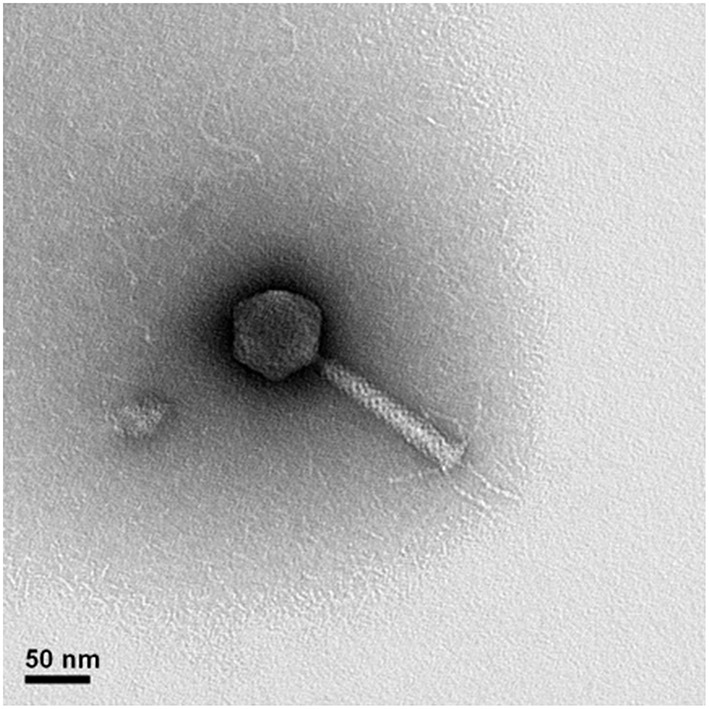
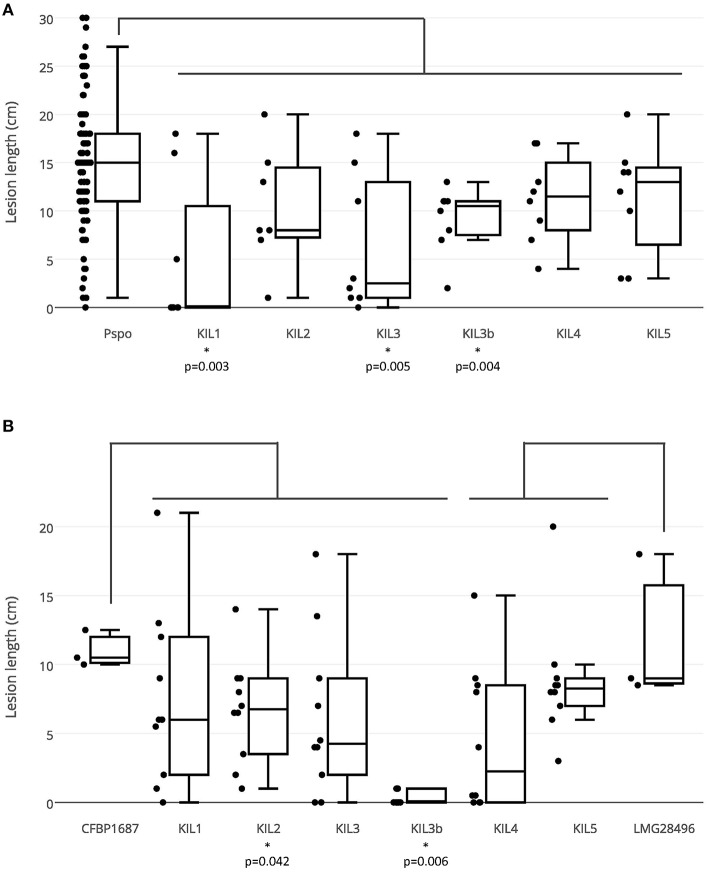
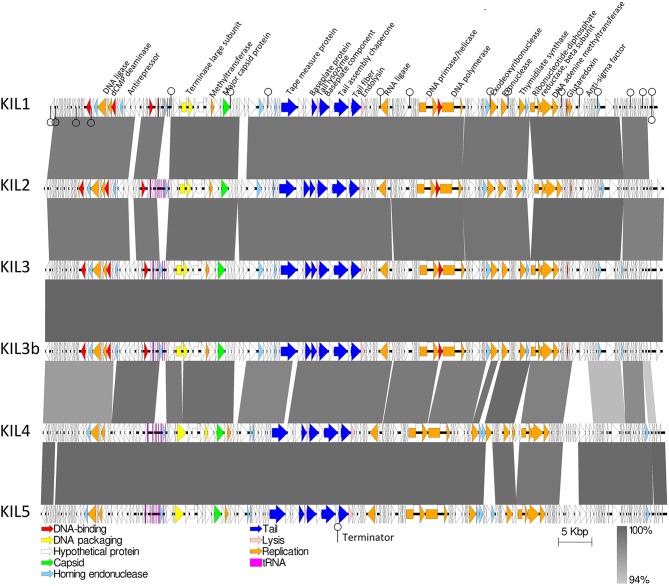
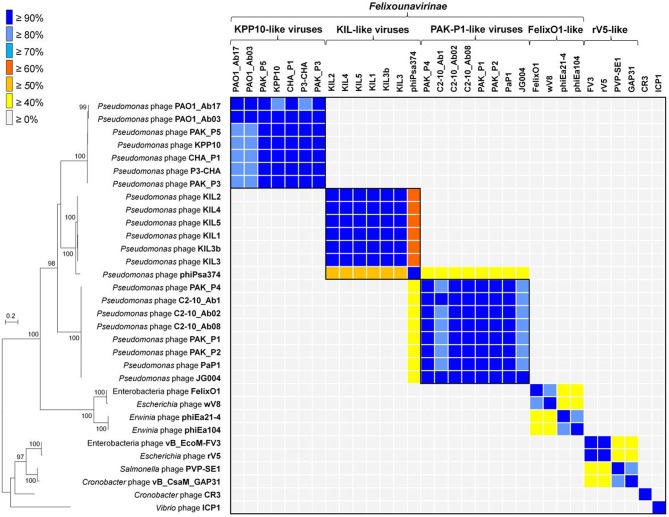
Pseudomonas syringae pv. porri, the causative agent of bacterial blight in leek (Allium porrum), is increasingly frequent causing problems in leek cultivation. Because of the current lack of control measures, novel bacteriophages were isolated to control this pathogen using phage therapy. Five novel phages were isolated from infected fields in Flanders (vB_PsyM_KIL1, vB_PsyM_KIL2, vB_PsyM_KIL3, vB_PsyM_KIL4, and vB_PsyM_KIL5), and were complemented with one selected host range mutant phage (vB_PsyM_KIL3b). Genome analysis of the phages revealed genome sizes between 90 and 94 kb and an average GC-content of 44.8%. Phylogenomic networking classified them into a novel clade, named the "KIL-like viruses," related to the Felixounalikevirus genus, together with phage phiPsa374 from P. syringae pv. actinidiae. In vitro characterization demonstrated the stability and lytic potential of these phages. Host range analysis confirmed heterogeneity within P. syringae pv. porri, leading to the development of a phage cocktail with a range that covers the entire set of 41 strains tested. Specific bio-assays demonstrated the in planta efficacy of phages vB_PsyM_KIL1, vB_PsyM_KIL2, vB_PsyM_KIL3, and vB_PsyM_KIL3b. In addition, two parallel field trial experiments on three locations using a phage cocktail of the six phages showed variable results. In one trial, symptom development was attenuated. These data suggest some potential for phage therapy in controlling bacterial blight of leek, pending optimization of formulation and application methods.
葱假单胞菌丁香致病变种(Pseudomonas syringae pv. porri)是韭菜细菌性疫病的病原体,在韭菜种植中引发问题的频率日益增加。由于目前缺乏控制措施,人们通过噬菌体疗法分离出新型噬菌体来控制这种病原体。从佛兰德的感染田地中分离出了五种新型噬菌体(vB_PsyM_KIL1、vB_PsyM_KIL2、vB_PsyM_KIL3、vB_PsyM_KIL4和vB_PsyM_KIL5),并补充了一种选定的宿主范围突变噬菌体(vB_PsyM_KIL3b)。对这些噬菌体的基因组分析显示,基因组大小在90至94 kb之间,平均GC含量为44.8%。系统发育基因组网络分析将它们归类为一个名为“KIL样病毒”的新分支,与费利克斯样病毒属相关,同时还有来自猕猴桃假单胞菌丁香致病变种的噬菌体phiPsa374。体外特性分析证明了这些噬菌体的稳定性和裂解潜力。宿主范围分析证实了葱假单胞菌丁香致病变种内的异质性,从而开发出一种噬菌体混合物,其范围涵盖了所测试的全部41个菌株。特定的生物测定证明了噬菌体vB_PsyM_KIL1、vB_PsyM_KIL2、vB_PsyM_KIL3和vB_PsyM_KIL3b在植物体内的功效。此外,在三个地点使用这六种噬菌体的混合物进行的两项平行田间试验结果不一。在一项试验中,症状发展得到了缓解。这些数据表明,在优化制剂和应用方法之前,噬菌体疗法在控制韭菜细菌性疫病方面具有一定潜力。