Nardy Ana F F R, Freire-de-Lima Celio G, Pérez Ana R, Morrot Alexandre
Institute of Microbiology, Federal University of Rio de Janeiro Rio de Janeiro, Brazil.
Carlos Chagas Filho Institute of Biophysics, Federal University of Rio de Janeiro Rio de Janeiro, Brazil.
Front Microbiol. 2016 Mar 23;7:348. doi: 10.3389/fmicb.2016.00348. eCollection 2016.
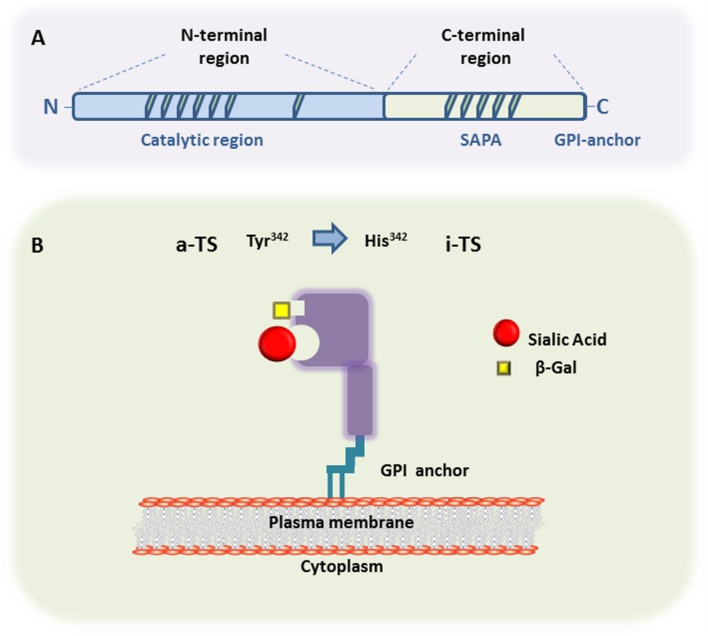
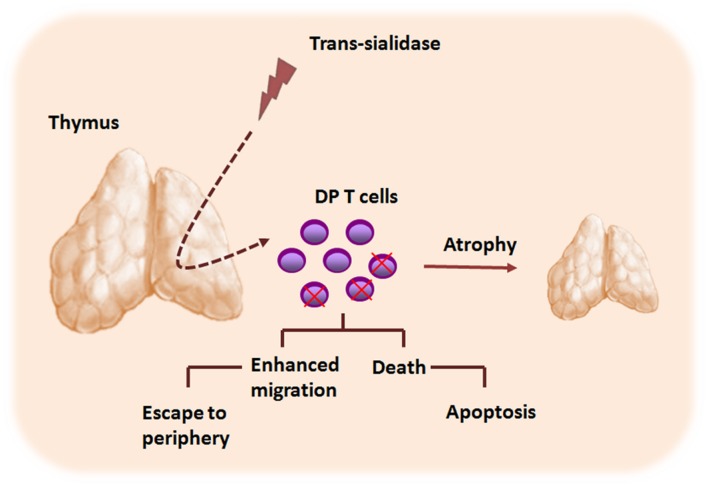
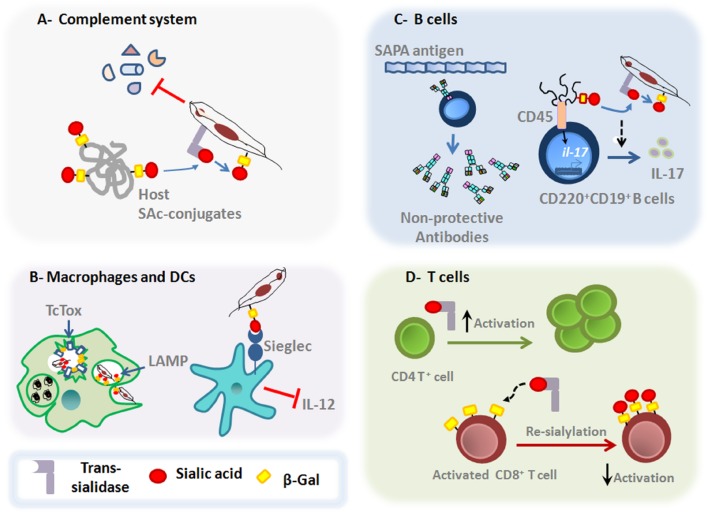
Chagas disease is caused by the flagellate protozoan Trypanosoma cruzi, affecting millions of people throughout Latin America. The parasite dampens host immune response causing modifications in diverse lymphoid compartments, including the thymus. T. cruzi trans-sialidase (TS) seems to play a fundamental role in such immunopathological events. This unusual enzyme catalyses the transference of sialic acid molecules from host glycoconjugates to acceptor molecules placed on the parasite surface. TS activity mediates several biological effects leading to the subversion of host immune system, hence favoring both parasite survival and the establishment of chronic infection. This review summarizes current findings on the roles of TS in the immune response during T. cruzi infection.
恰加斯病由鞭毛虫原生动物克氏锥虫引起,影响拉丁美洲数百万人口。该寄生虫会抑制宿主免疫反应,导致包括胸腺在内的多种淋巴组织发生变化。克氏锥虫转唾液酸酶(TS)似乎在此类免疫病理事件中发挥着重要作用。这种特殊的酶催化唾液酸分子从宿主糖缀合物转移至位于寄生虫表面的受体分子。TS活性介导多种生物学效应,导致宿主免疫系统被颠覆,从而有利于寄生虫存活及慢性感染的形成。本综述总结了目前关于TS在克氏锥虫感染期间免疫反应中作用的研究结果。