Krüger Janine, Wellnhofer Ernst, Meyborg Heike, Stawowy Philipp, Östman Arne, Kintscher Ulrich, Kappert Kai
Center for Cardiovascular Research/CCR Institute of Laboratory Medicine Clinical Chemistry and Pathobiochemistry Charité - Universitätsmedizin Germany.
Department of Medicine/Cardiology Deutsches Herzzentrum Germany.
FEBS Open Bio. 2016 Jan 4;6(3):179-89. doi: 10.1002/2211-5463.12000. eCollection 2016 Mar.
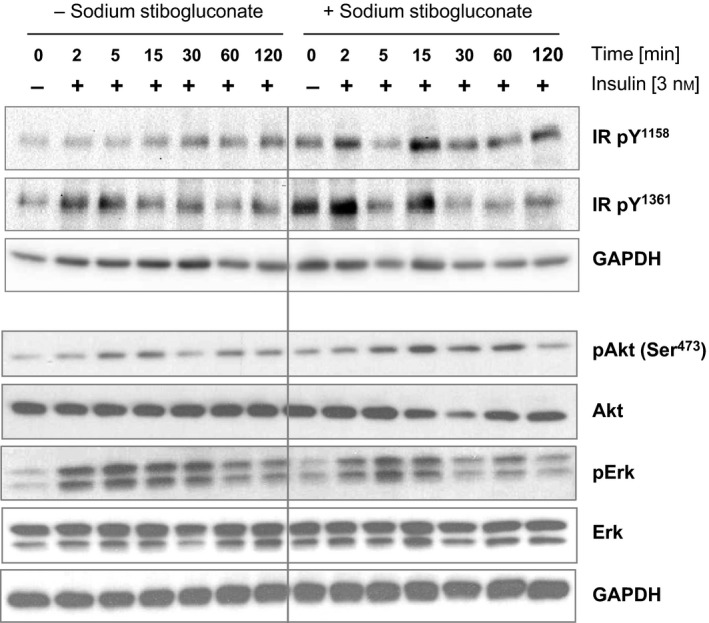
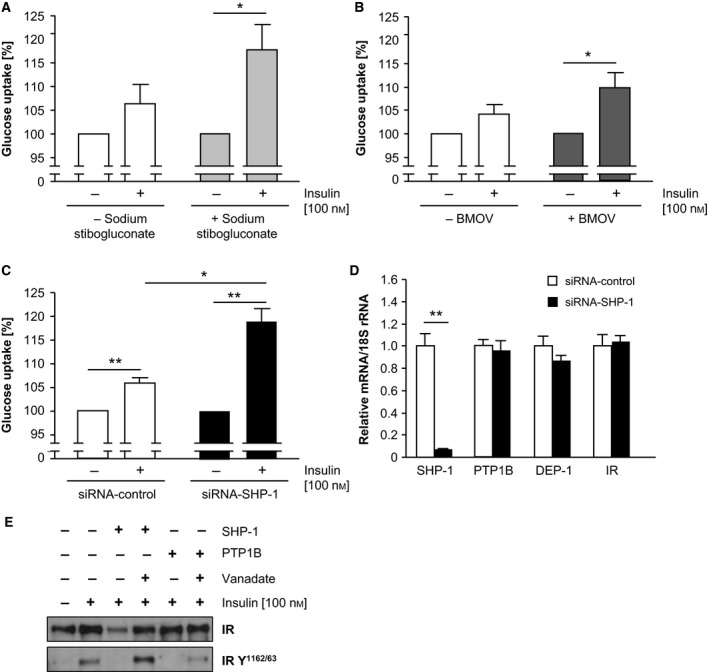
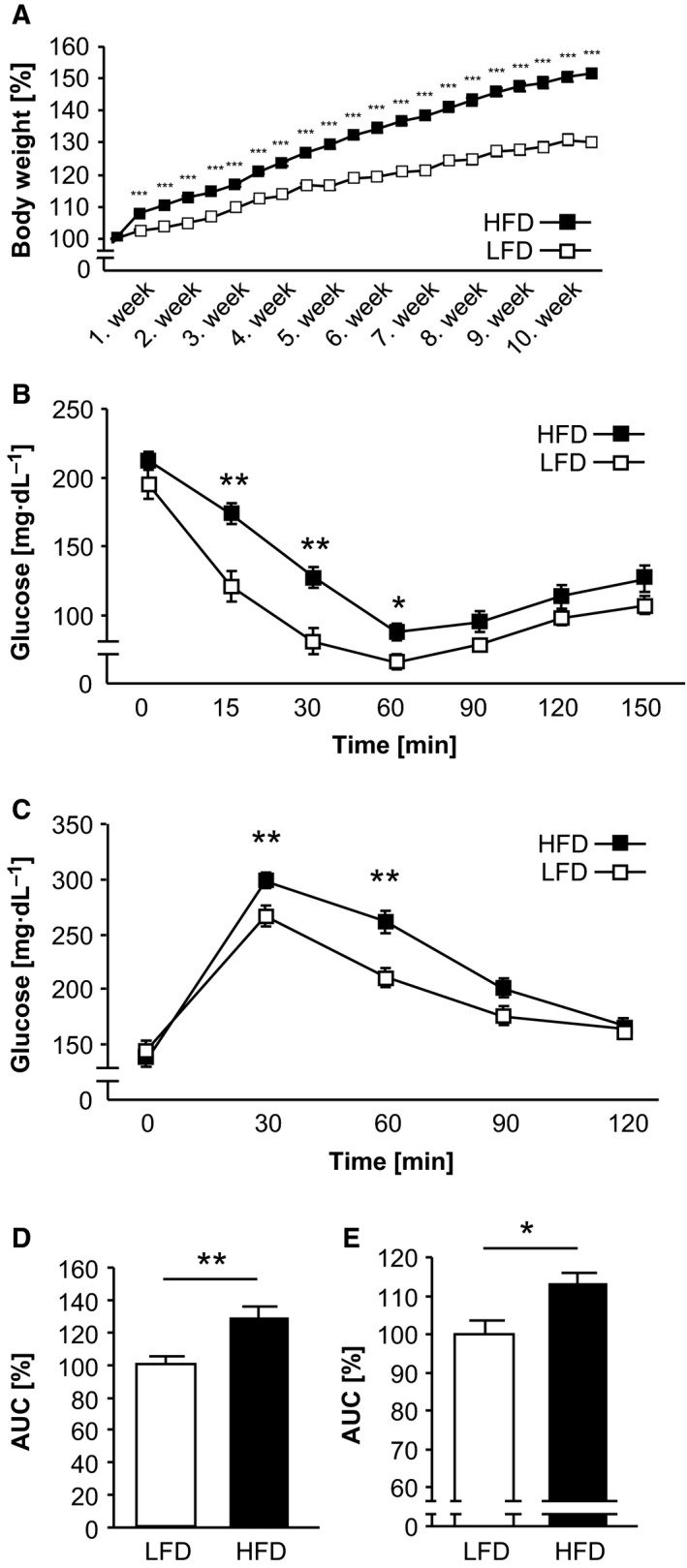
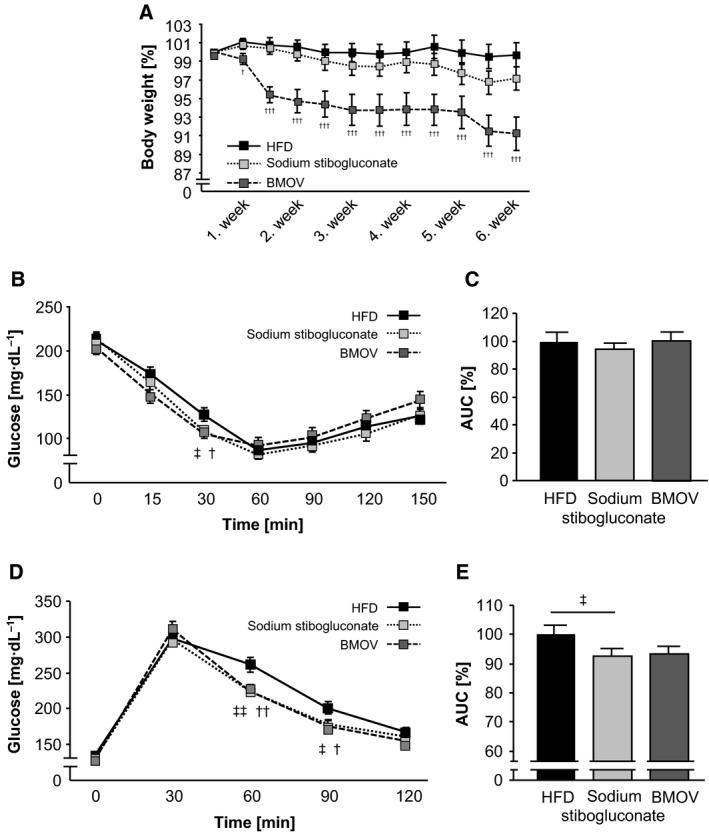
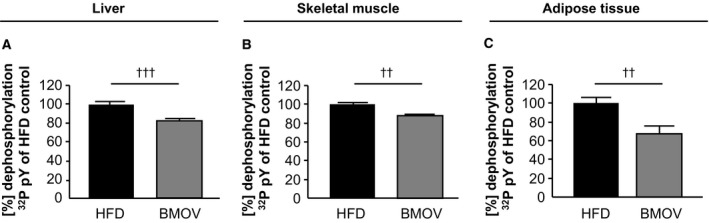
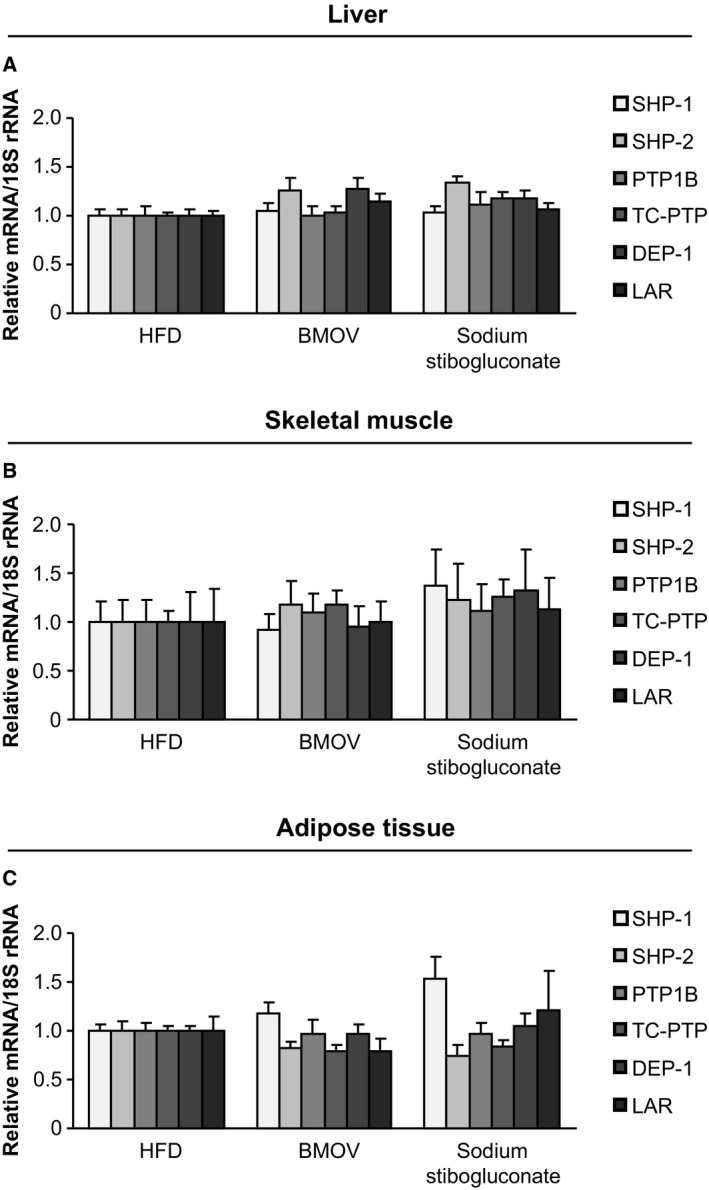
Insulin resistance plays a crucial role in the development of type 2 diabetes. Insulin receptor signalling is antagonized and tightly controlled by protein tyrosine phosphatases (PTPs). However, the precise role of the PTP src homology 2 domain-containing phosphatase 1 (SHP-1) in insulin resistance has not been explored. Male C57BL/6J mice were fed a high-fat diet (HFD, 60% kcal from fat), to induce insulin resistance, or a low-fat diet (LFD, 10% kcal from fat) for 10 weeks. Afterwards, HFD-fed mice were pharmacologically treated with the SHP-1 (Ptpn6) inhibitor sodium stibogluconate and the broad spectrum pan-PTP inhibitor bis(maltolato)oxovanadium(IV) (BMOV). Both inhibitors ameliorated the metabolic phenotype, as evidenced by reduced body weight, improved insulin sensitivity and glucose tolerance, which was not due to altered PTP gene expression. In parallel, phosphorylation of the insulin receptor and of the insulin signalling key intermediate Akt was enhanced, and both PTP inhibitors and siRNA-mediated SHP-1 downregulation resulted in an increased glucose uptake in vitro. Finally, recombinant SHP-1 was capable of dephosphorylating the ligand-induced tyrosine-phosphorylated insulin receptor. These results indicate a central role of SHP-1 in insulin signalling during obesity, and SHP-1 inhibition as a potential therapeutic approach in metabolic diseases.
胰岛素抵抗在2型糖尿病的发展中起关键作用。胰岛素受体信号传导受到蛋白酪氨酸磷酸酶(PTP)的拮抗和严格调控。然而,含Src同源2结构域的磷酸酶1(SHP-1)在胰岛素抵抗中的确切作用尚未得到研究。给雄性C57BL/6J小鼠喂食高脂饮食(HFD,60%千卡来自脂肪)以诱导胰岛素抵抗,或喂食低脂饮食(LFD,10%千卡来自脂肪),持续10周。之后,对喂食HFD的小鼠用SHP-1(Ptpn6)抑制剂葡萄糖酸锑钠和广谱泛PTP抑制剂双(麦芽醇)氧钒(IV)(BMOV)进行药物治疗。两种抑制剂均改善了代谢表型,表现为体重减轻、胰岛素敏感性和葡萄糖耐量提高,这并非由于PTP基因表达改变所致。同时,胰岛素受体和胰岛素信号关键中间体Akt的磷酸化增强,两种PTP抑制剂和siRNA介导的SHP-1下调均导致体外葡萄糖摄取增加。最后,重组SHP-1能够使配体诱导的酪氨酸磷酸化胰岛素受体去磷酸化。这些结果表明SHP-1在肥胖期间的胰岛素信号传导中起核心作用,抑制SHP-1作为代谢疾病的一种潜在治疗方法。