Neves Ana Rute, Queiroz Joana Fontes, Reis Salette
UCIBIO/REQUIMTE, Department of Chemical Sciences, Faculty of Pharmacy, University of Porto, Rua de Jorge Viterbo Ferreira, 228, 4050-313, Porto, Portugal.
J Nanobiotechnology. 2016 Apr 9;14:27. doi: 10.1186/s12951-016-0177-x.
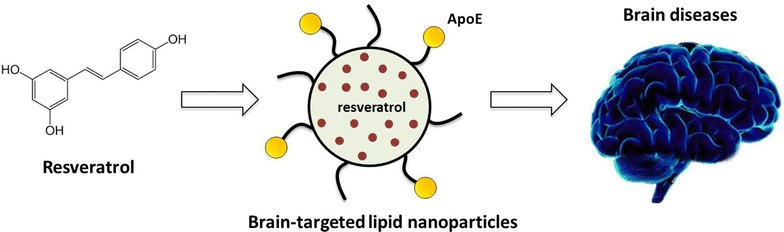
The present study takes advantage of the beneficial effects of resveratrol as a neuroprotective compound. Resveratrol-loaded solid lipid nanoparticles were functionalized with apolipoprotein E which can be recognized by the LDL receptors overexpressed on the blood-brain barrier.
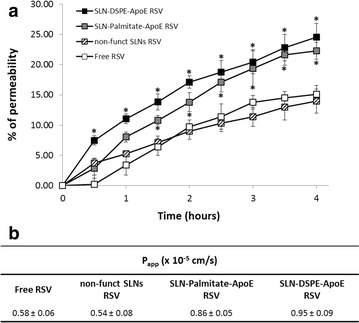
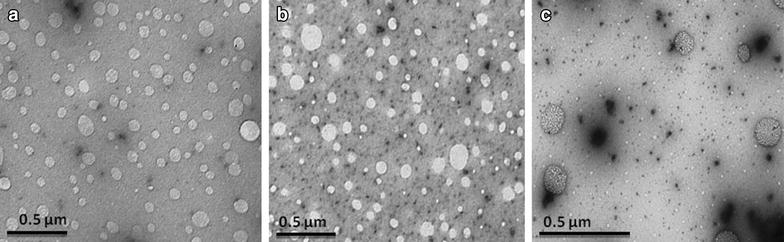
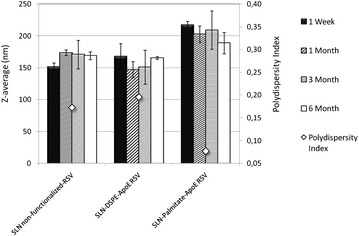
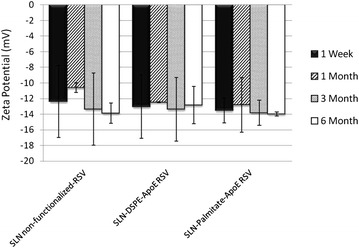
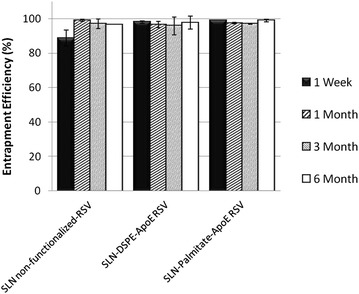
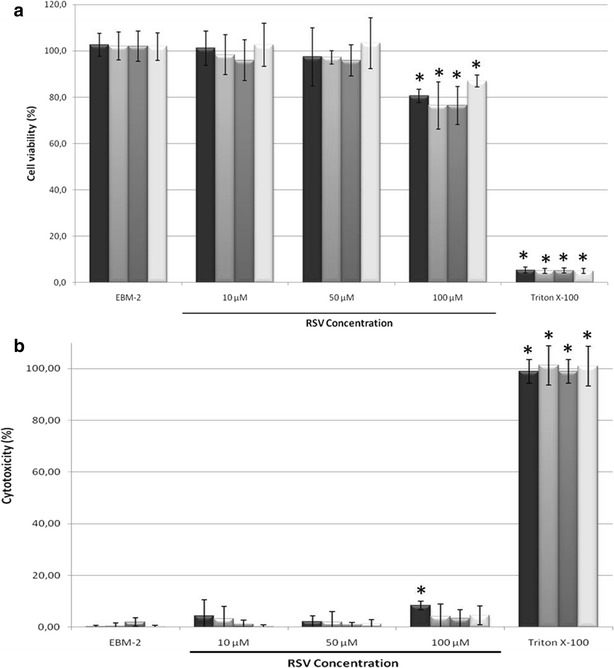
Transmission electron microscopy images revealed spherical nanoparticles, dynamic light scattering gave a Z-average lower than 200 nm, and a zeta potential of around -13 mV and very high resveratrol entrapment efficiency (ca. 90 %). In vitro cytotoxic effects were assessed by MTT and LDH assays in hCMEC/D3 cell line and revealed no toxicity up to 50 μM over 4 h of incubation. The permeability through hCMEC/D3 monolayers showed a significant increase (1.8-fold higher) for resveratrol-loaded solid lipid nanoparticles functionalized with apolipoprotein E when compared to non-functionalized ones.
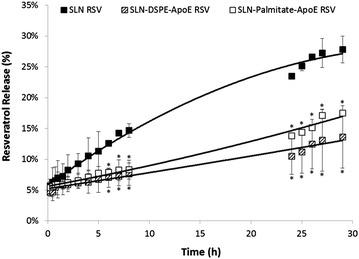
In conclusion, these nanosystems might be a promising strategy for resveratrol delivery into the brain, while protecting it from degradation in the blood stream. Graphical abstract .
本研究利用白藜芦醇作为神经保护化合物的有益作用。载有白藜芦醇的固体脂质纳米颗粒用载脂蛋白E进行功能化,载脂蛋白E可被血脑屏障上过度表达的低密度脂蛋白受体识别。
透射电子显微镜图像显示为球形纳米颗粒,动态光散射给出的Z平均直径低于200 nm,zeta电位约为 -13 mV,白藜芦醇包封效率非常高(约90%)。通过MTT和LDH测定法在hCMEC/D3细胞系中评估体外细胞毒性作用,发现在长达4小时的孵育过程中,浓度高达50 μM时均无毒性。与未功能化的载白藜芦醇固体脂质纳米颗粒相比,用载脂蛋白E功能化的载白藜芦醇固体脂质纳米颗粒通过hCMEC/D3单层的渗透率显著增加(高1.8倍)。
总之,这些纳米系统可能是将白藜芦醇递送至大脑的一种有前景的策略,同时保护其在血流中不被降解。图形摘要 。