Brouwers Sue, Wiggins Mark W, Helton William, O'Hare David, Griffin Barbara
Macquarie University Sydney, NSW, Australia.
University of Canterbury Christchurch, New Zealand.
Front Psychol. 2016 Mar 29;7:435. doi: 10.3389/fpsyg.2016.00435. eCollection 2016.
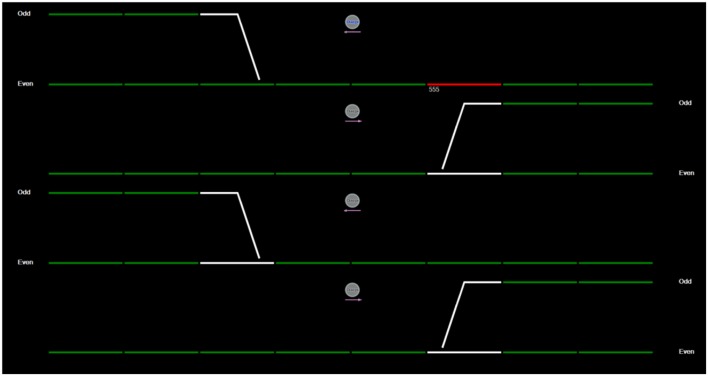
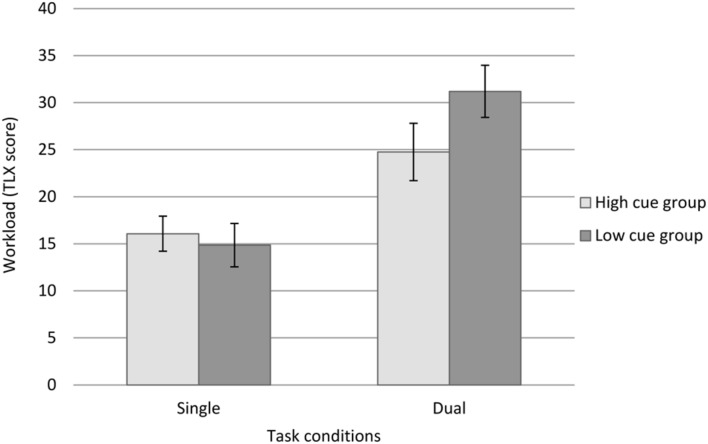
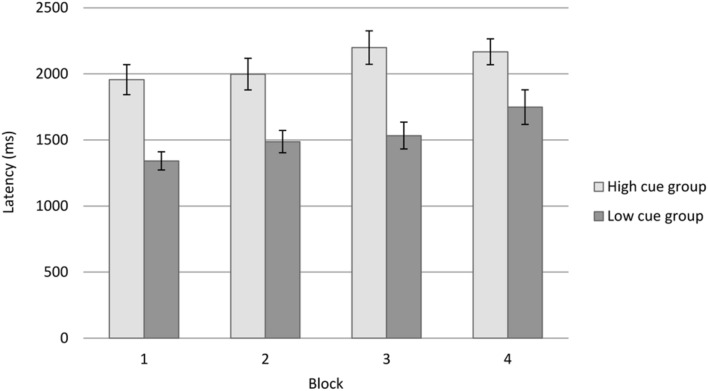
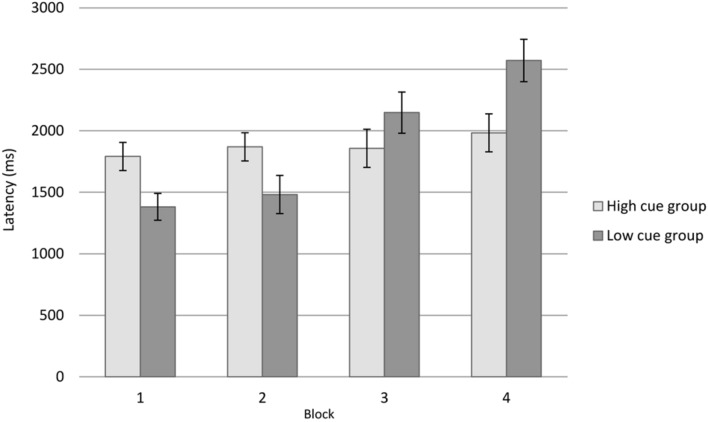
This study was designed to examine whether differences in cue utilization were associated with differences in performance during a novel, simulated rail control task, and whether these differences reflected a reduction in cognitive load. Two experiments were conducted, the first of which involved the completion of a 20-min rail control simulation that required participants to re-route trains that periodically required a diversion. Participants with a greater level of cue utilization recorded a consistently greater response latency, consistent with a strategy that maintained accuracy, but reduced the demands on cognitive resources. In the second experiment, participants completed the rail task, during which a concurrent, secondary task was introduced. The results revealed an interaction, whereby participants with lesser levels of cue utilization recorded an increase in response latency that exceeded the response latency recorded for participants with greater levels of cue utilization. The relative consistency of response latencies for participants with greater levels of cue utilization, across all blocks, despite the imposition of a secondary task, suggested that those participants with greater levels of cue utilization had adopted a strategy that was effectively minimizing the impact of additional sources of cognitive load on their performance.
本研究旨在检验在一项新颖的模拟铁路控制任务中,线索利用的差异是否与表现差异相关,以及这些差异是否反映了认知负荷的降低。进行了两项实验,第一项实验要求参与者完成一个20分钟的铁路控制模拟,该模拟要求参与者重新规划火车路线,火车会定期需要改道。线索利用水平较高的参与者记录的反应潜伏期始终更长,这与一种保持准确性但减少对认知资源需求的策略一致。在第二项实验中,参与者完成铁路任务,在此期间引入了一个并发的次要任务。结果显示出一种交互作用,即线索利用水平较低的参与者记录的反应潜伏期增加幅度超过了线索利用水平较高的参与者记录的反应潜伏期。尽管施加了次要任务,但线索利用水平较高的参与者在所有组块中的反应潜伏期相对一致,这表明那些线索利用水平较高的参与者采用了一种策略,有效地将额外认知负荷源对其表现的影响降至最低。