Gebreegziabher Senedu B, Yimer Solomon A, Bjune Gunnar A
Amhara Regional State Health Bureau, P.O. Box 495, Bahir Dar, Ethiopia; Institute of Health and Society, University of Oslo, P.O. Box 1130, Blindern, 0318 Oslo, Norway.
Amhara Regional State Health Bureau, P.O. Box 495, Bahir Dar, Ethiopia; Institute of Health and Society, University of Oslo, P.O. Box 1130, Blindern, 0318 Oslo, Norway; Oslo University Hospital, 0424 Oslo, Norway; Norwegian Institute of Public Health, P.O. Box 4404, Nydalen, 0403 Oslo, Norway.
Tuberc Res Treat. 2016;2016:2036234. doi: 10.1155/2016/2036234. Epub 2016 Mar 15.
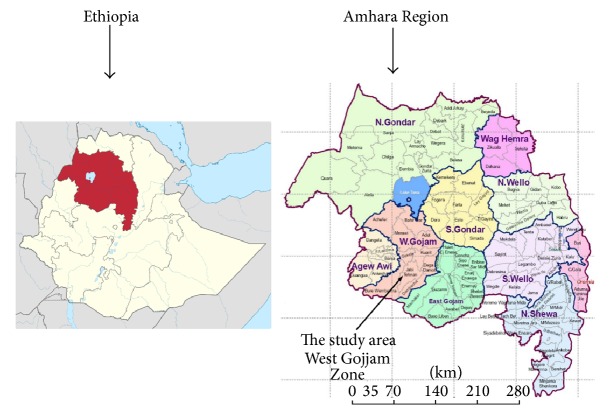
Background. Weak health systems pose many barriers to effective tuberculosis (TB) control. This study aimed at exploring health worker's and TB control program coordinator's perspectives on health systems challenges facing TB control in West Gojjam Zone, Amhara Region, Ethiopia. Methods. This was a qualitative descriptive study. Eight in-depth interviews with TB control program coordinators and two focus group discussions among 16 health workers were conducted. Purposive sampling was used to recruit study participants. Thematic analysis was used to identify and analyse main themes. Results. We found that intermittent interruptions of laboratory reagents and anti-TB drugs supplies, absence of trained and motivated health workers, poor TB data documentation, lack of adherence to TB treatment guideline, and lack of access to TB diagnostic tools at peripheral health institutions were challenges facing the TB control program performance in the study zone. Conclusions. Ensuring uninterrupted supply of anti-TB drugs and laboratory reagents to all health institutions is essential. Continuous refresher training of health workers on standard TB care and data handling and developing and implementing a sound retention strategy to attract and motivate health professionals to work in rural areas are necessary interventions to improve the TB control program performance in the study zone.
背景。薄弱的卫生系统给有效的结核病控制带来了诸多障碍。本研究旨在探讨卫生工作者和结核病控制项目协调员对埃塞俄比亚阿姆哈拉州西戈贾姆地区结核病控制所面临的卫生系统挑战的看法。方法。这是一项定性描述性研究。对结核病控制项目协调员进行了8次深入访谈,并在16名卫生工作者中进行了2次焦点小组讨论。采用目的抽样法招募研究参与者。采用主题分析法来识别和分析主要主题。结果。我们发现,实验室试剂和抗结核药物供应的间歇性中断、缺乏训练有素且积极性高的卫生工作者、结核病数据记录不完善、不遵守结核病治疗指南以及周边卫生机构无法获得结核病诊断工具,是研究地区结核病控制项目实施所面临的挑战。结论。确保向所有卫生机构不间断供应抗结核药物和实验室试剂至关重要。对卫生工作者进行关于标准结核病护理和数据处理的持续进修培训,以及制定和实施合理的留用策略以吸引和激励卫生专业人员到农村地区工作,是提高研究地区结核病控制项目实施效果的必要干预措施。