Zhao Yiming, Fay François, Hak Sjoerd, Manuel Perez-Aguilar Jose, Sanchez-Gaytan Brenda L, Goode Brandon, Duivenvoorden Raphaël, de Lange Davies Catharina, Bjørkøy Astrid, Weinstein Harel, Fayad Zahi A, Pérez-Medina Carlos, Mulder Willem J M
Translational and Molecular Imaging Institute, Icahn School of Medicine at Mount Sinai, New York, New York 10029, USA.
Department of Circulation and Medical Imaging, The Norwegian University of Science and Technology, 7030 Trondheim, Norway.
Nat Commun. 2016 Apr 13;7:11221. doi: 10.1038/ncomms11221.
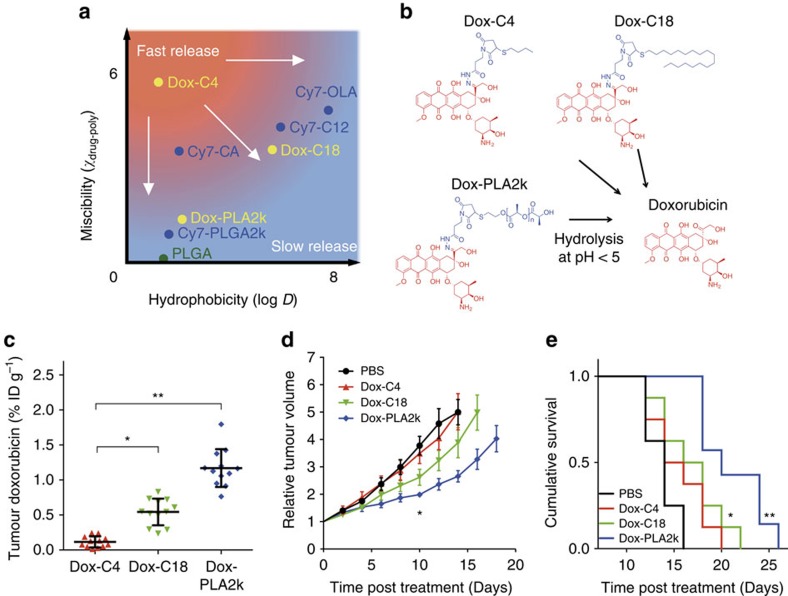
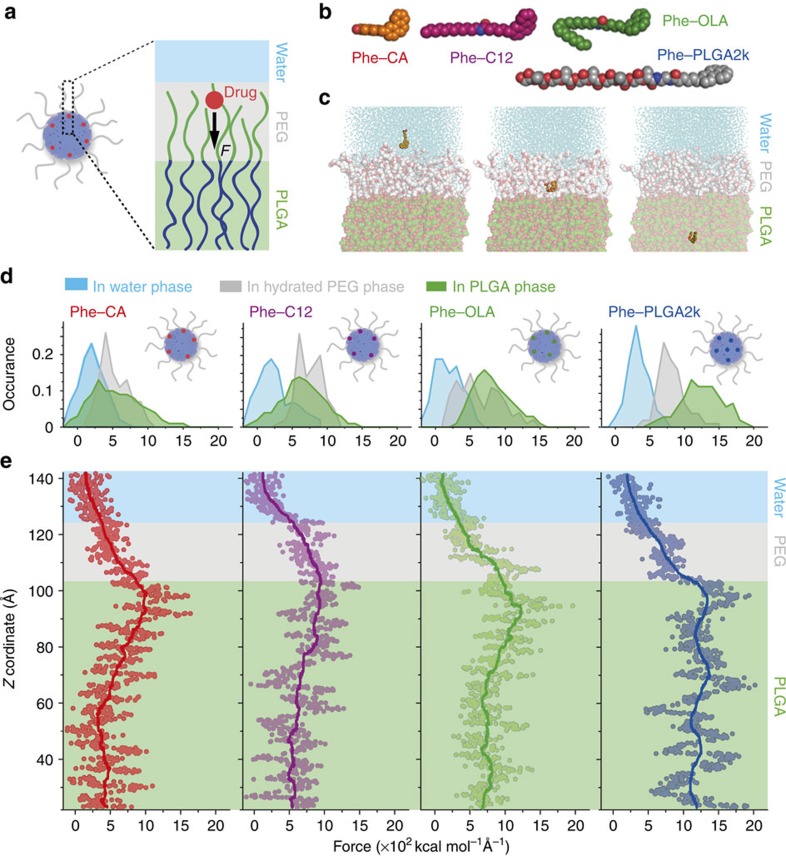
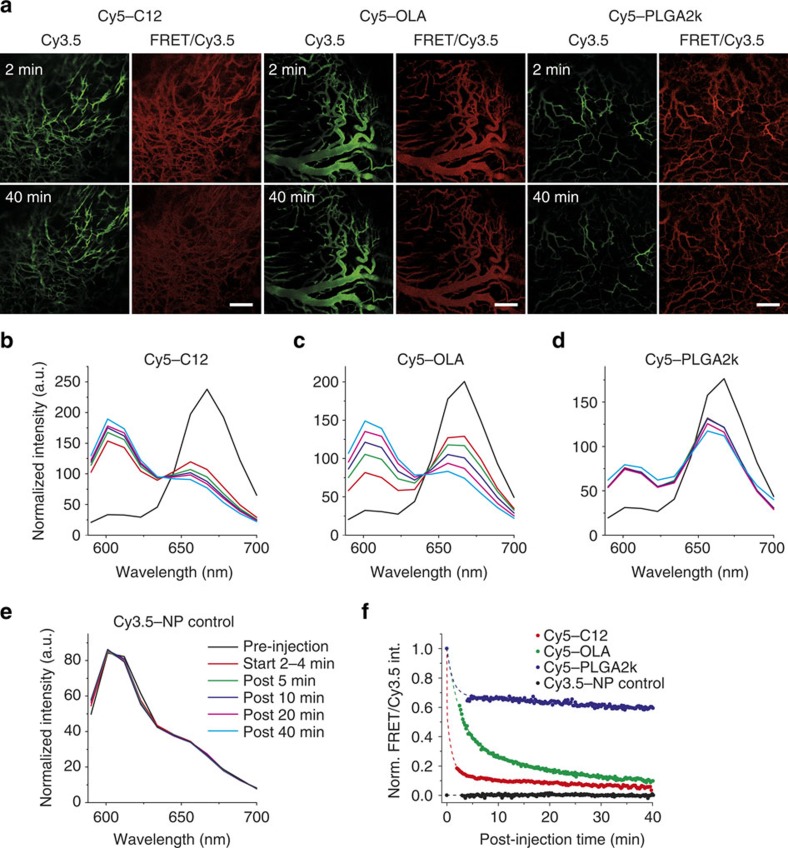
A major goal of cancer nanotherapy is to use nanoparticles as carriers for targeted delivery of anti-tumour agents. The drug-carrier association after intravenous administration is essential for efficient drug delivery to the tumour. However, a large number of currently available nanocarriers are self-assembled nanoparticles whose drug-loading stability is critically affected by the in vivo environment. Here we used in vivo FRET imaging to systematically investigate how drug-carrier compatibility affects drug release in a tumour mouse model. We found the drug's hydrophobicity and miscibility with the nanoparticles are two independent key parameters that determine its accumulation in the tumour. Next, we applied these findings to improve chemotherapeutic delivery by augmenting the parent drug's compatibility; as a result, we achieved better antitumour efficacy. Our results help elucidate nanomedicines' in vivo fate and provide guidelines for efficient drug delivery.
癌症纳米疗法的一个主要目标是使用纳米颗粒作为载体,实现抗肿瘤药物的靶向递送。静脉给药后药物与载体的结合对于将药物有效递送至肿瘤至关重要。然而,目前大量可用的纳米载体是自组装纳米颗粒,其药物负载稳定性受到体内环境的严重影响。在此,我们利用体内荧光共振能量转移(FRET)成像技术,系统地研究了药物 - 载体兼容性如何影响肿瘤小鼠模型中的药物释放。我们发现药物的疏水性及其与纳米颗粒的混溶性是决定其在肿瘤中蓄积的两个独立关键参数。接下来,我们应用这些发现,通过增强母体药物的兼容性来改善化疗药物递送;结果,我们实现了更好的抗肿瘤疗效。我们的研究结果有助于阐明纳米药物在体内的命运,并为高效药物递送提供指导。