Guest Rebecca, Tran Yvonne, Gopinath Bamini, Cameron Ian D, Craig Ashley
John Walsh Centre for Rehabilitation Research, Kolling Institute of Medical Research, Sydney Medical School-Northern, The University of Sydney, Corner Reserve Road and First Avenue, Royal North Shore Hospital, St Leonards, NSW, 2065, Australia.
Trials. 2018 Jun 27;19(1):343. doi: 10.1186/s13063-018-2716-2.
The preliminary results of a randomised controlled trial are presented. The aim of the trial is to determine the efficacy, feasibility and acceptability of email-delivered psychological interventions with telephone support, for adults injured in a motor vehicle crash engaged in seeking compensation. The primary intention for this preliminary analysis was to investigate those who were psychologically distressed and to stop the trial midway to evaluate whether the safety endpoints were necessary.
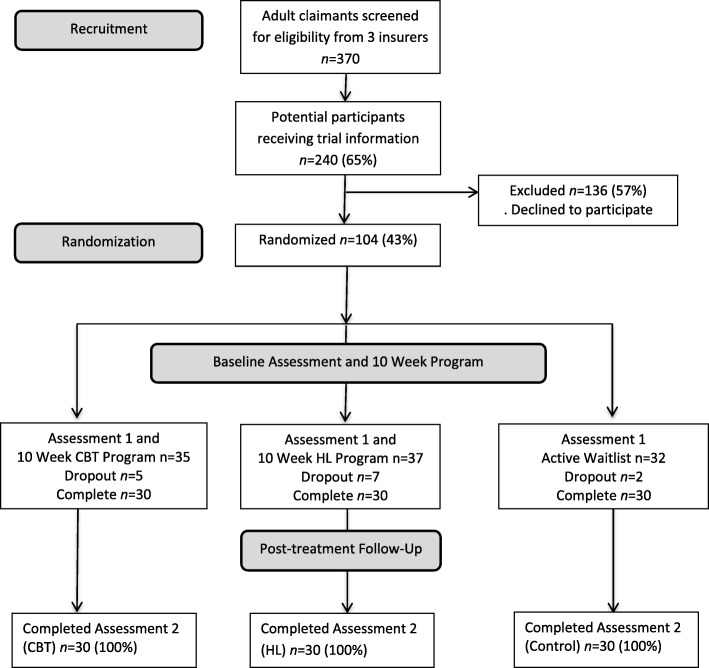
The analysis included 90 adult participants randomised to one of three groups, who were assessed at baseline and post-intervention at 3 months. Cognitive behaviour therapy (CBT) or healthy lifestyle interventions were delivered over 10 weeks, involving fortnightly emailed modules plus clinically focussed telephone support, with the aim of reducing psychological distress. An active waiting list of control subjects received non-clinically focussed telephone contact over the same period along with claim-related reading material. Depression Anxiety Stress Scales (DASS) and Impact of Events Scale (Revised) (IES-R) were used to assess psychological distress. Psychiatric interviews were used to diagnose major depressive disorder and post-traumatic stress disorder. Aspects of acceptability and feasibility were also assessed.
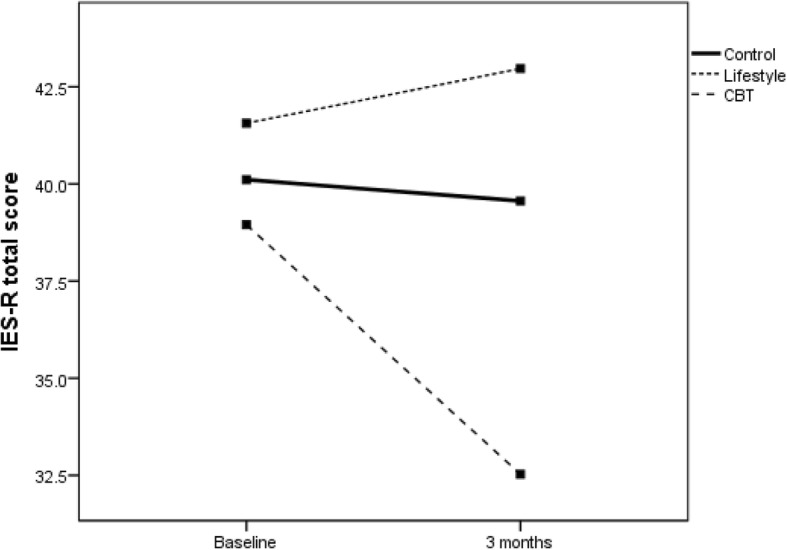
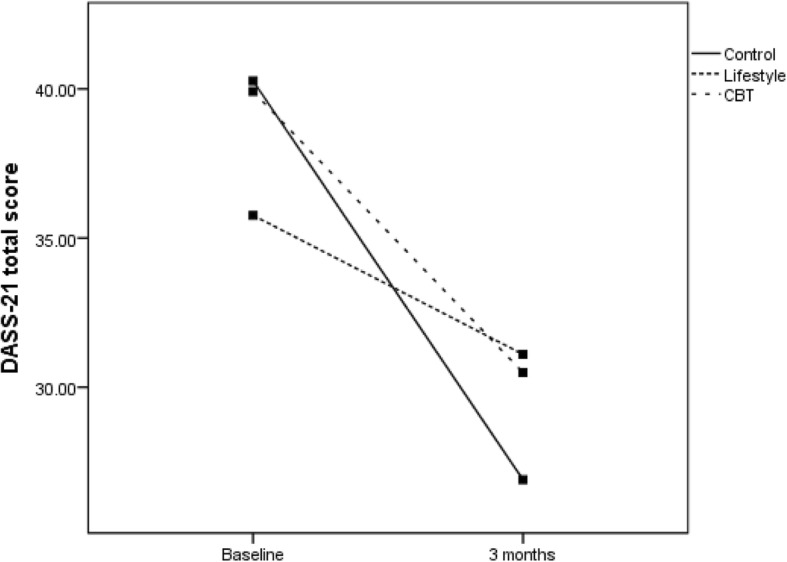
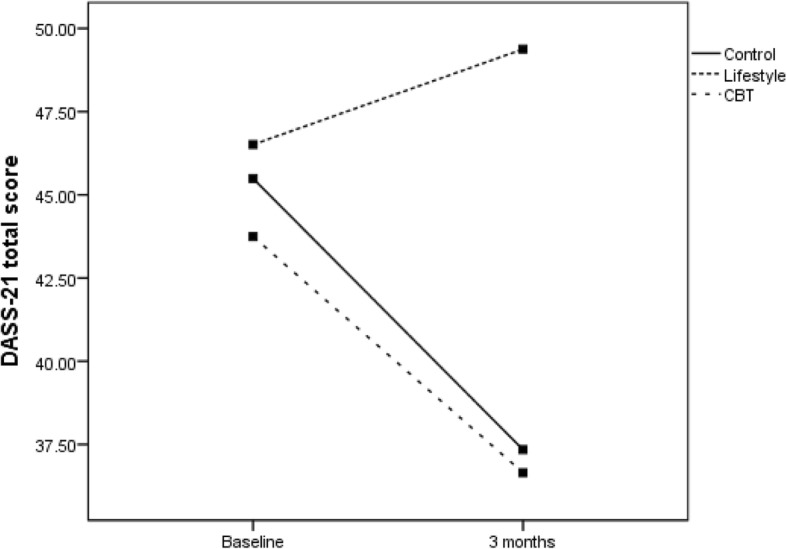
For those diagnosed with depression at baseline in the CBT group, psychological distress reduced by around 16%. For those with depression in the healthy lifestyle group, distress increased marginally. For those in the control group with depression, distress also decreased (by 18% according to DASS-21 and 1.2% according to IES-R). For those without depression, significant reductions in distress occurred, regardless of group (P < .05). The results suggest that for those with depression, a healthy lifestyle intervention is contraindicated, necessitating the cessation of recruitment to this intervention. The interventions were reported as acceptable by the majority and the data indicated that the study is feasible.
CBT with telephone support reduced psychological distress in physically injured people with depression who are engaged in seeking compensation. However, time plus fortnightly telephone contact with claim-related reading material may be sufficient to reduce distress in those who are depressed. For those who were not depressed, time plus telephone support is most likely sufficient enough to assist them to recover. The trial will continue with further recruitment to only the CBT and control groups, over longer follow-up periods.
Australian and New Zealand Clinical Trials Registry: Preventing psychological distress following a motor vehicle accident; ACTRN12615000326594 . Registered on 9 April 2015.
本文呈现了一项随机对照试验的初步结果。该试验旨在确定通过电子邮件提供心理干预并辅以电话支持,对于在机动车事故中受伤且正在寻求赔偿的成年人而言,其有效性、可行性和可接受性。此次初步分析的主要目的是调查那些存在心理困扰的人,并在试验中途停止,以评估安全终点是否必要。
分析纳入了90名成年参与者,他们被随机分配到三组中的一组,在基线和干预后3个月进行评估。认知行为疗法(CBT)或健康生活方式干预为期10周,包括每两周发送一次的电子邮件模块以及以临床为重点的电话支持,目的是减轻心理困扰。同期,处于主动等待名单的对照受试者接受与索赔无关的电话联系以及索赔相关的阅读材料。使用抑郁焦虑压力量表(DASS)和事件影响量表(修订版)(IES-R)评估心理困扰。通过精神科访谈诊断重度抑郁症和创伤后应激障碍。还评估了可接受性和可行性方面。
对于CBT组中基线时被诊断为抑郁症的人,心理困扰减少了约16%。对于健康生活方式组中患有抑郁症的人,困扰略有增加。对于对照组中患有抑郁症的人,困扰也有所减少(根据DASS-21减少了18%,根据IES-R减少了1.2%)。对于没有抑郁症的人,无论所在组如何,困扰均显著减少(P < 0.05)。结果表明,对于患有抑郁症的人,健康生活方式干预是禁忌的,因此必须停止该干预措施的招募。大多数人报告这些干预措施是可接受的,数据表明该研究是可行的。
辅以电话支持的CBT减少了身体受伤且患有抑郁症并正在寻求赔偿的人的心理困扰。然而,时间加上每两周一次的电话联系以及索赔相关的阅读材料可能足以减轻抑郁症患者的困扰。对于那些没有抑郁症的人,时间加上电话支持很可能足以帮助他们康复。该试验将继续进行,仅对CBT组和对照组进行进一步招募,并进行更长时间的随访。
澳大利亚和新西兰临床试验注册中心:预防机动车事故后的心理困扰;ACTRN12615000326594。于2015年4月9日注册。