Matsushita Ryosuke, Yoshino Hirofumi, Enokida Hideki, Goto Yusuke, Miyamoto Kazutaka, Yonemori Masaya, Inoguchi Satoru, Nakagawa Masayuki, Seki Naohiko
Department of Urology, Graduate School of Medical and Dental Sciences, Kagoshima University, Kagoshima, Japan.
Department of Functional Genomics, Chiba University Graduate School of Medicine, Chuo-ku, Chiba, Japan.
Oncotarget. 2016 May 10;7(19):28460-87. doi: 10.18632/oncotarget.8668.
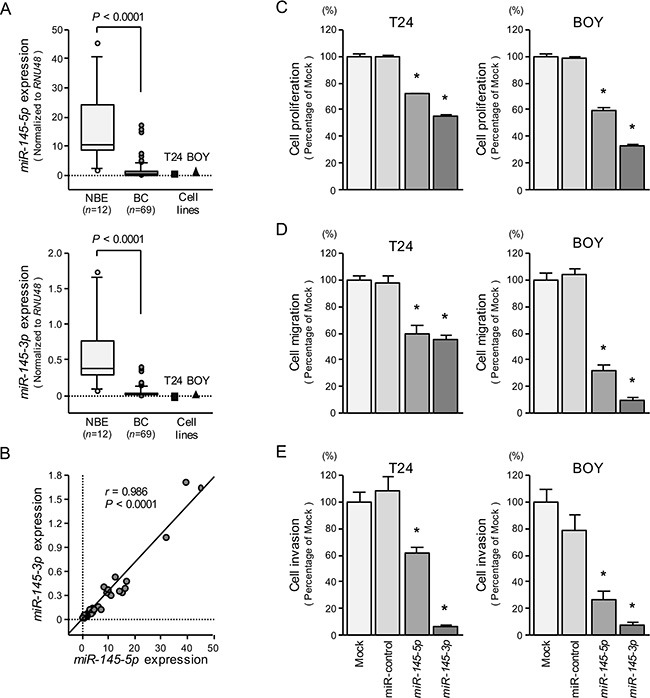
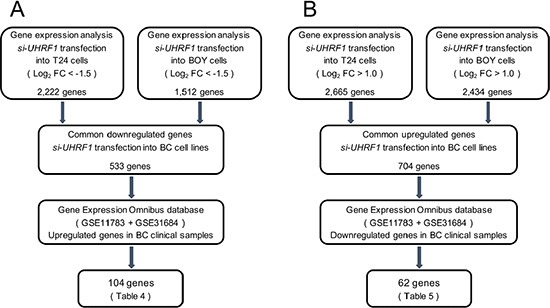
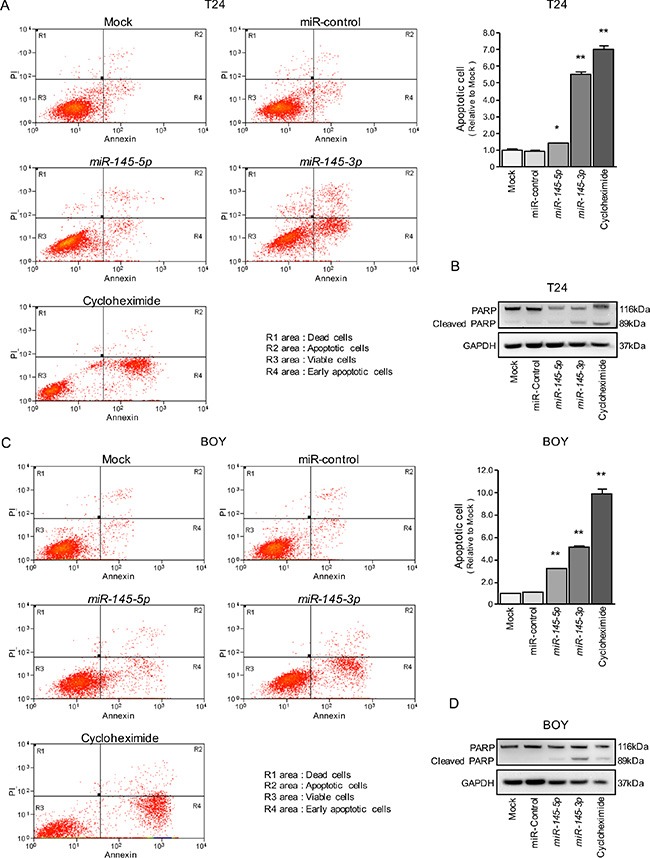
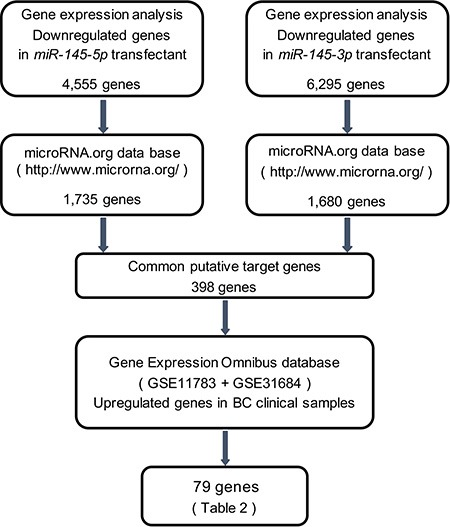
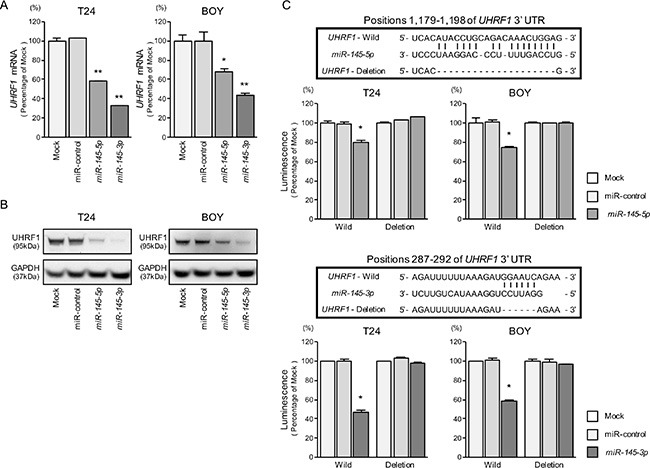
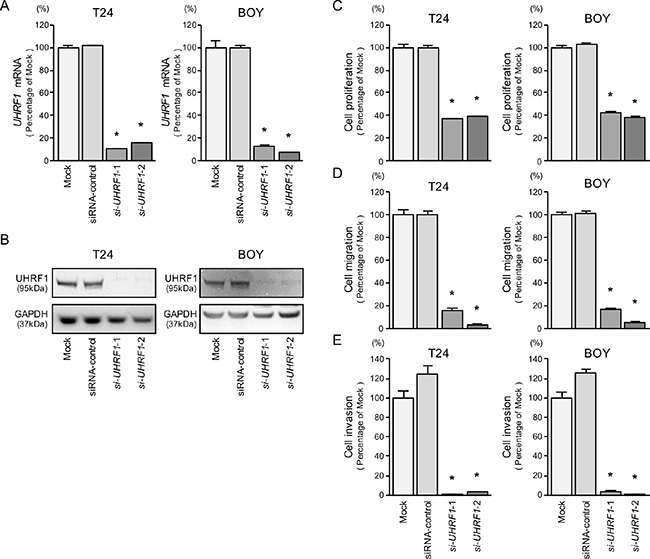
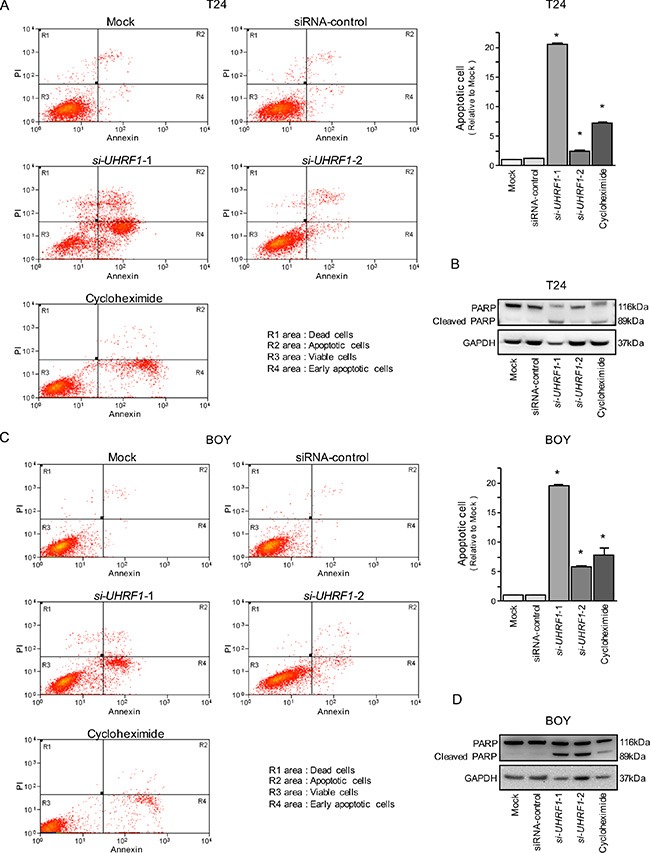
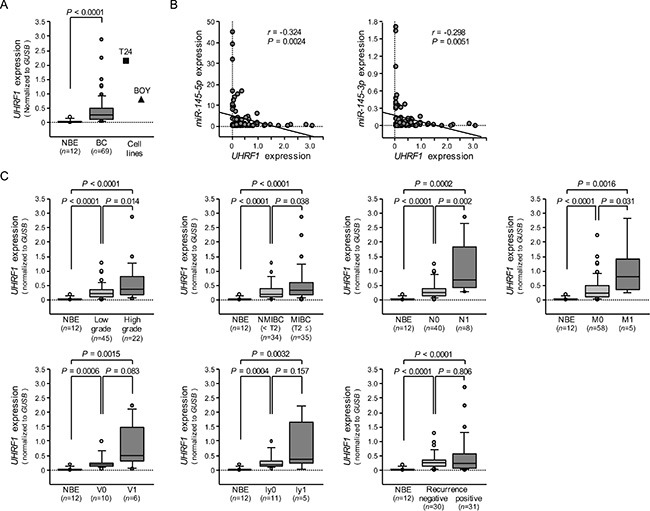
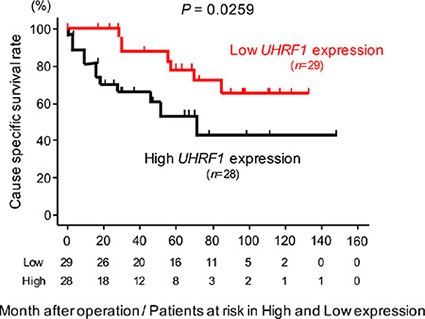
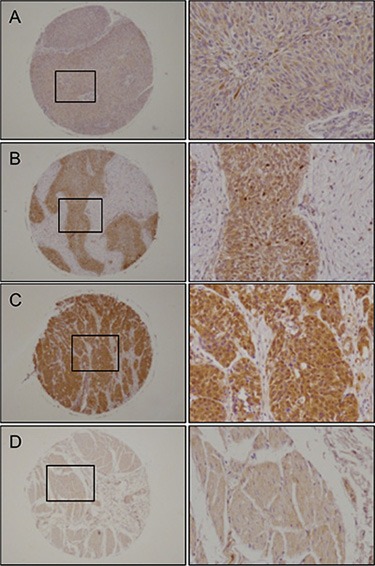
In microRNA (miRNA) biogenesis, the guide-strand of miRNA integrates into the RNA induced silencing complex (RISC), whereas the passenger-strand is inactivated through degradation. Analysis of our miRNA expression signature of bladder cancer (BC) by deep-sequencing revealed that microRNA (miR)-145-5p (guide-strand) and miR-145-3p (passenger-strand) were significantly downregulated in BC tissues. It is well known that miR-145-5p functions as a tumor suppressor in several types of cancer. However, the impact of miR-145-3p on cancer cells is still ambiguous. The aim of the present study was to investigate the functional significance of miR-145-3p and BC oncogenic pathways and targets regulated by miR-145-5p/miR-145-3p. Ectopic expression of either miR-145-5p or miR-145-3p in BC cells significantly suppressed cancer cell growth, migration and invasion and it also induced apoptosis. The gene encoding ubiquitin-like with PHD and ring finger domains 1 (UHRF1) was a direct target of these miRNAs. Silencing of UHRF1 induced apoptosis and inhibited cancer cell proliferation, migration, and invasion in BC cells. In addition, overexpressed UHRF1 was confirmed in BC clinical specimens, and the high UHRF1 expression group showed a significantly poorer cause specific survival rate in comparison with the low expression group. Taken together, our present data demonstrated that both strands of miR-145 (miR-145-5p: guide-strand and miR-145-3p: passenger-strand) play pivotal roles in BC cells by regulating UHRF1. The identification of the molecular target of a tumor suppressive miRNAs provides novel insights into the potential mechanisms of BC oncogenesis and suggests novel therapeutic strategies.
在微小RNA(miRNA)生物合成过程中,miRNA的引导链整合到RNA诱导沉默复合体(RISC)中,而过客链则通过降解而失活。通过深度测序分析我们的膀胱癌(BC)miRNA表达特征发现,微小RNA(miR)-145-5p(引导链)和miR-145-3p(过客链)在BC组织中显著下调。众所周知,miR-145-5p在多种类型的癌症中发挥肿瘤抑制作用。然而,miR-145-3p对癌细胞的影响仍不明确。本研究的目的是探讨miR-145-3p的功能意义以及miR-145-5p/miR-145-3p调控的BC致癌途径和靶点。在BC细胞中异位表达miR-145-5p或miR-145-3p均显著抑制癌细胞的生长、迁移和侵袭,并且还诱导细胞凋亡。编码含PHD和环指结构域1的泛素样蛋白(UHRF1)的基因是这些miRNA的直接靶点。UHRF1的沉默诱导细胞凋亡并抑制BC细胞的增殖、迁移和侵袭。此外,在BC临床标本中证实了UHRF1的过表达,并且高UHRF1表达组与低表达组相比,其病因特异性生存率显著更低。综上所述,我们目前的数据表明,miR-145的两条链(miR-145-5p:引导链和miR-145-3p:过客链)通过调控UHRF1在BC细胞中发挥关键作用。肿瘤抑制性miRNA分子靶点的鉴定为BC肿瘤发生的潜在机制提供了新的见解,并提出了新的治疗策略。