Xiao Lan, Shi Xiao-Yan, Zhang Ying, Zhu Ying, Zhu Lin, Tian Wang, Zhu Bing-Kun, Wei Zhao-Lian
Department of Obstetrics and Gynecology, First Affiliated Hospital, Anhui Medical University, Hefei, People's Republic of China.
Key Laboratory for Molecular Diagnosis of Hubei Province, Central Hospital of Wuhan, Tongji Medical College, Huazhong University of Science and Technology, Wuhan, People's Republic of China.
Onco Targets Ther. 2016 Mar 16;9:1105-14. doi: 10.2147/OTT.S102837. eCollection 2016.
To identify the role of YAP in cisplatin resistance in human ovarian cancer cells and in the regulation of autophagy in these cancer cells.
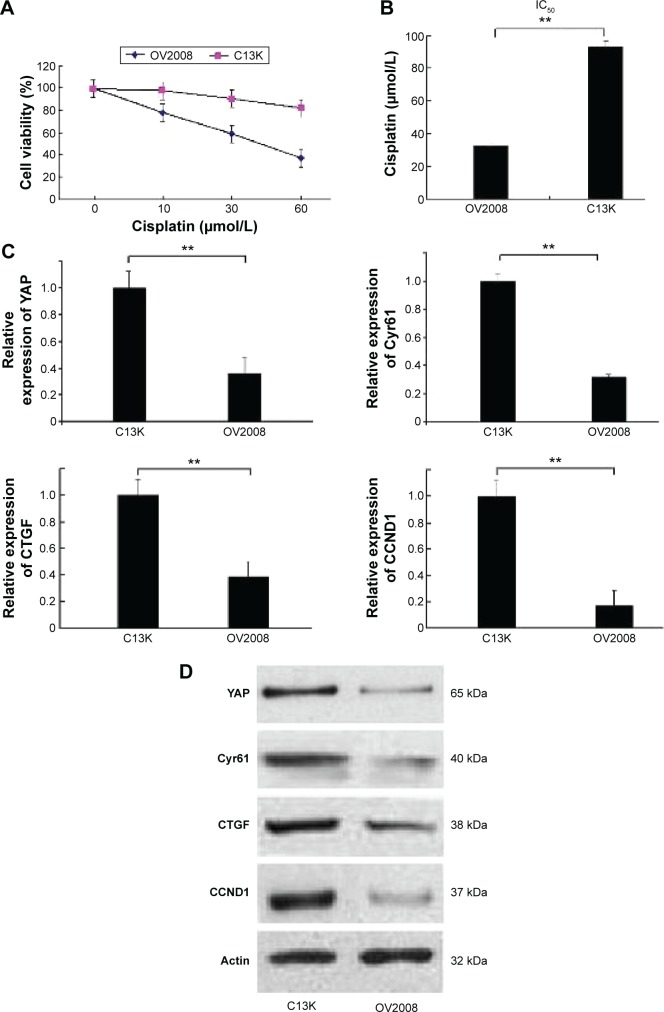
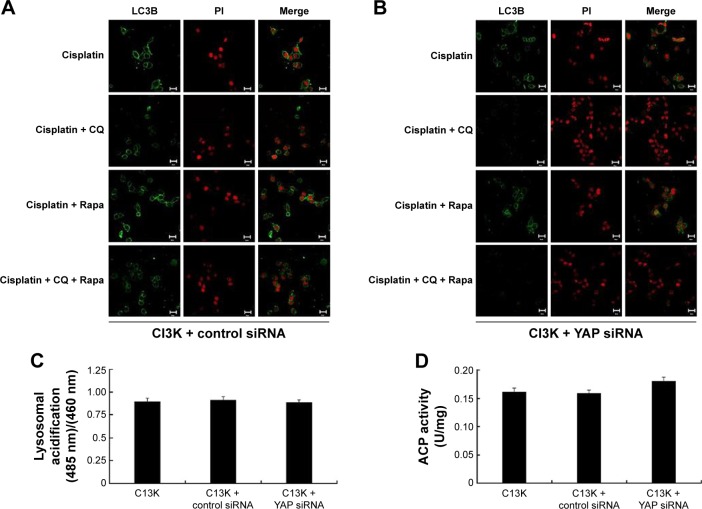
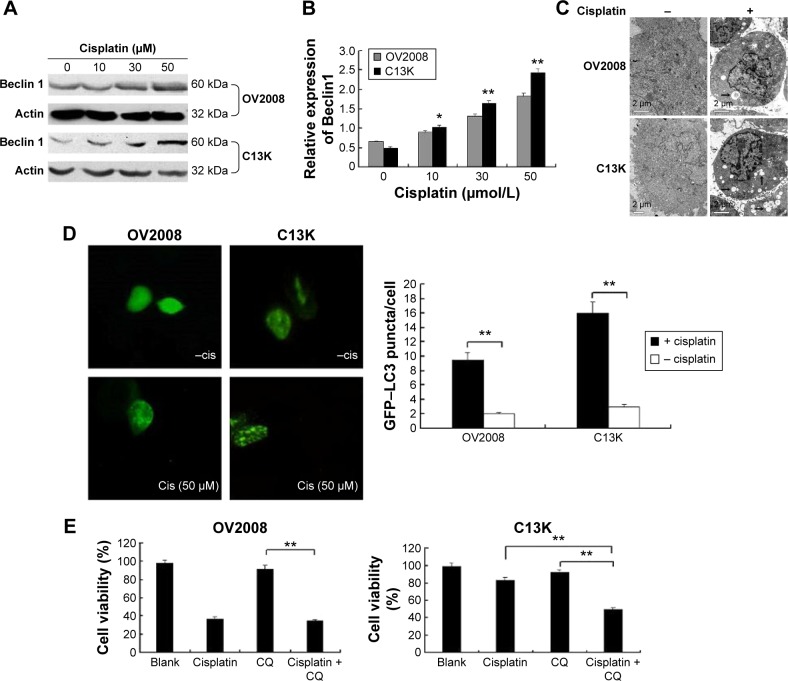
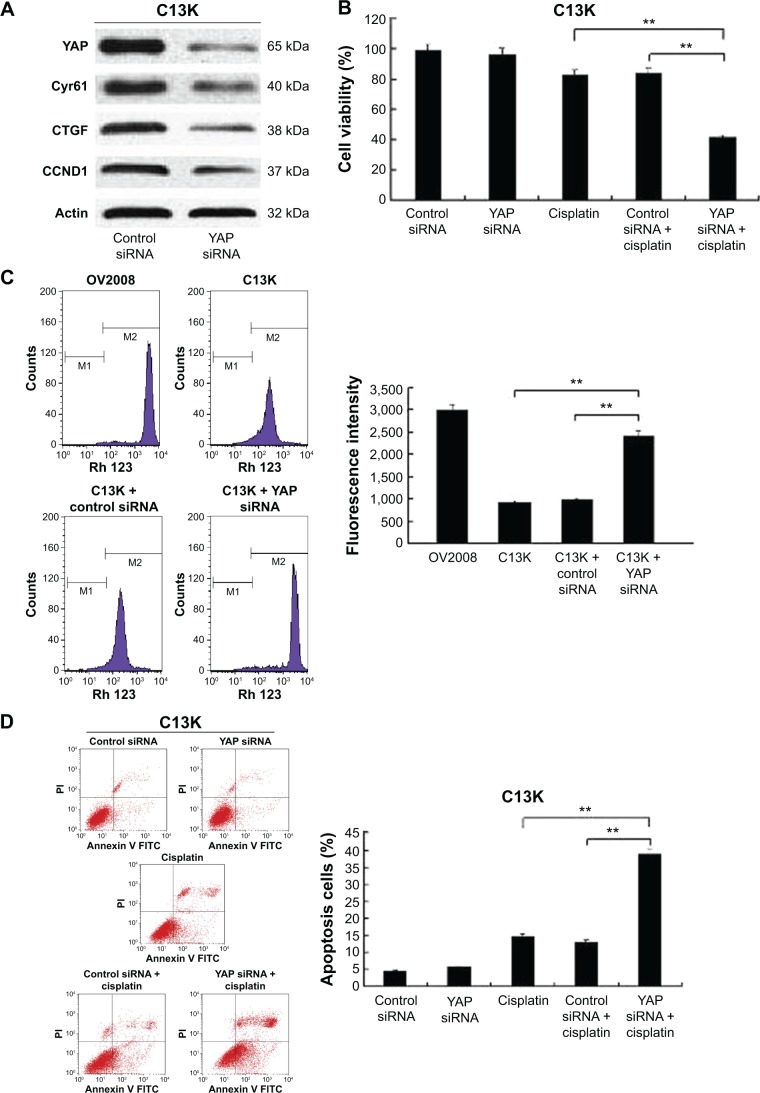
The cisplatin-sensitive OV2008 parental cell line and its cisplatin-resistant variant C13K were cultured. RNA interference was used to knock down the YAP gene. Accumulation of GFP-LC3 puncta was performed by fluorescence microscopy. The formation of autophagosomes was observed by transmission electron microscopy. Drug sensitivity was examined using CCK-8 assay, while apoptosis, the level of intracellular rhodamine 123 and lysosomal acidification were analyzed by fluorescence-activated cell sorting. Acid phosphatase activity was measured using an acid phosphatase-assay kit. Real-time polymerase chain reaction, Western blotting, and immunofluorescence detection were used to detect the protein and messenger RNA expression of YAP, YAP target genes, CCND1, cleaved PARP, and caspase 3, Atg-3 and -5, and the LC3B protein.
YAP signaling may regulate cisplatin resistance in ovarian cancer cells by augmenting cellular autophagic flux. After knockdown of YAP-sensitized C13K cells to cisplatin by inducing a decrease in autophagy, YAP led to an increase in autophagy via enhancement of autolysosome degradation.
YAP-mediated autophagy may play a protective role in cisplatin-resistant human ovarian cancer cells. Therefore, YAP-mediated autophagy should be explored as a new target for enhancing the efficacy of cisplatin against ovarian cancer and other types of malignancies.
确定YAP在人卵巢癌细胞顺铂耐药及这些癌细胞自噬调节中的作用。
培养顺铂敏感的OV2008亲本细胞系及其顺铂耐药变体C13K。采用RNA干扰技术敲低YAP基因。通过荧光显微镜观察GFP-LC3斑点的积累。用透射电子显微镜观察自噬体的形成。使用CCK-8法检测药物敏感性,同时通过荧光激活细胞分选分析细胞凋亡、细胞内罗丹明123水平和溶酶体酸化。使用酸性磷酸酶检测试剂盒测量酸性磷酸酶活性。采用实时聚合酶链反应、蛋白质印迹法和免疫荧光检测法检测YAP、YAP靶基因、CCND1、裂解的PARP和半胱天冬酶3、Atg-3和-5以及LC3B蛋白的蛋白质和信使RNA表达。
YAP信号通路可能通过增强细胞自噬通量来调节卵巢癌细胞的顺铂耐药性。YAP基因敲低后,通过诱导自噬减少使C13K细胞对顺铂敏感,而YAP通过增强自溶酶体降解导致自噬增加。
YAP介导的自噬可能在顺铂耐药的人卵巢癌细胞中发挥保护作用。因此,应探索YAP介导的自噬作为增强顺铂对卵巢癌和其他类型恶性肿瘤疗效的新靶点。