Moussawi Rasha N, Patra Digambara
Department of Chemistry, American University of Beirut, Beirut, Lebanon.
Sci Rep. 2016 Apr 15;6:24565. doi: 10.1038/srep24565.
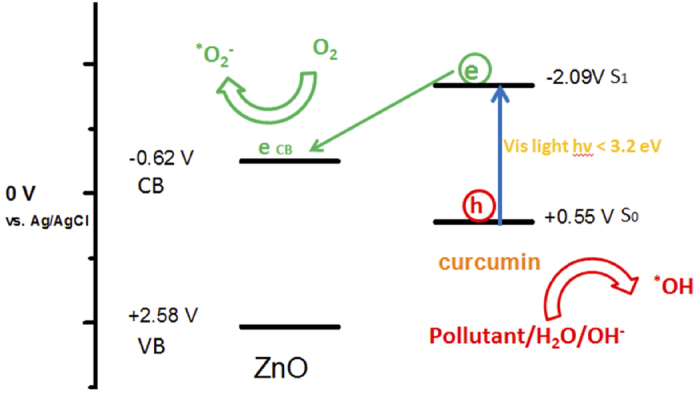
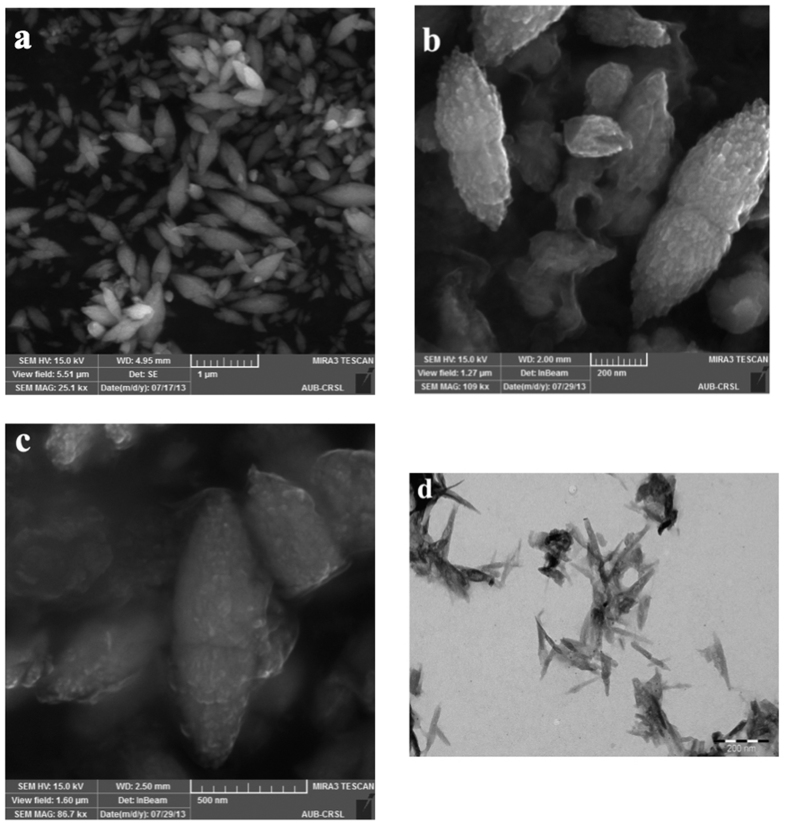
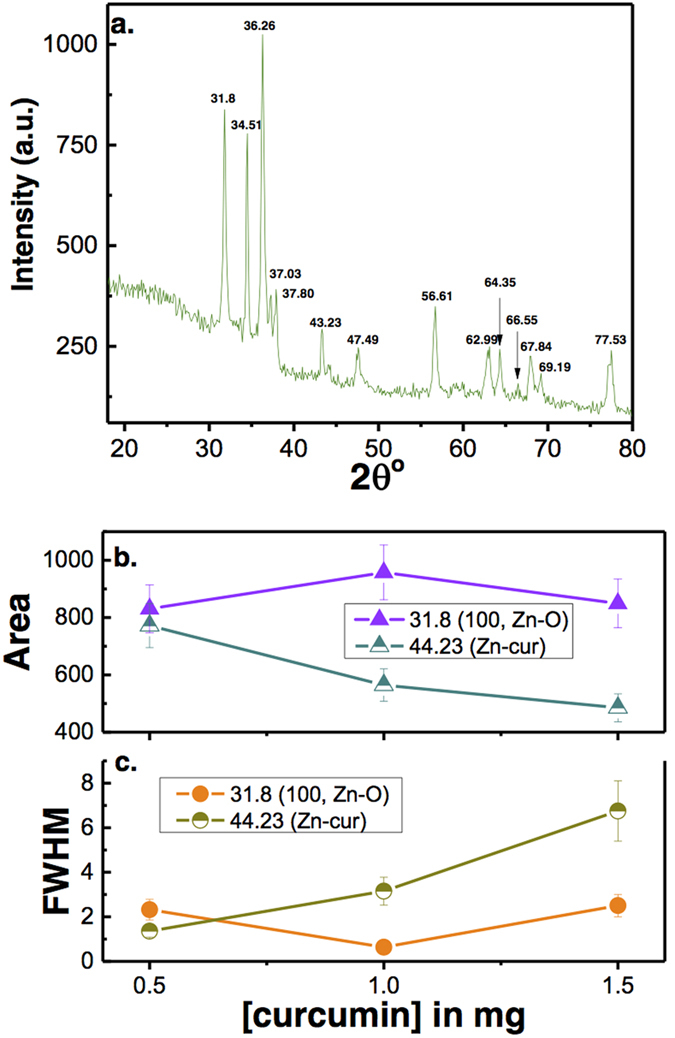
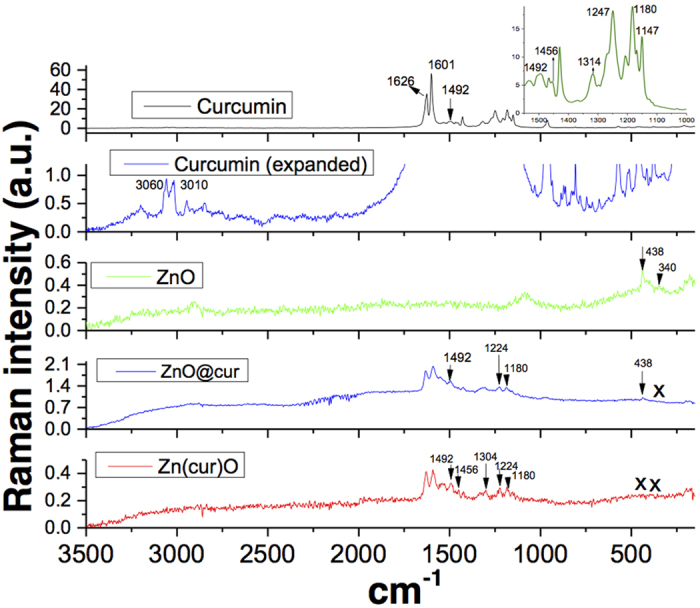
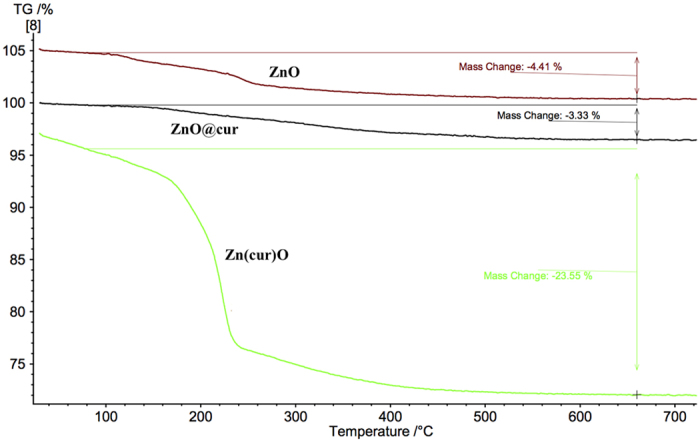
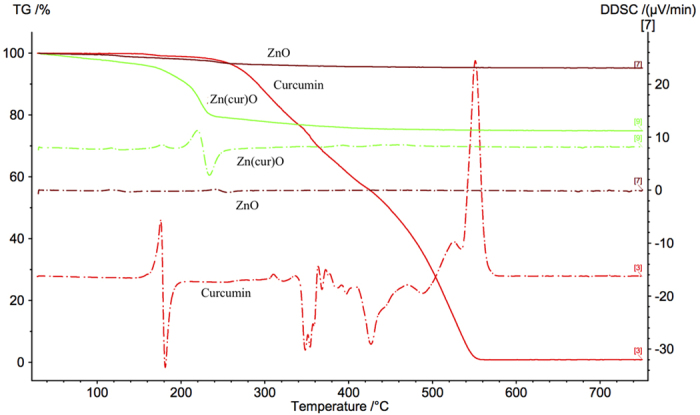
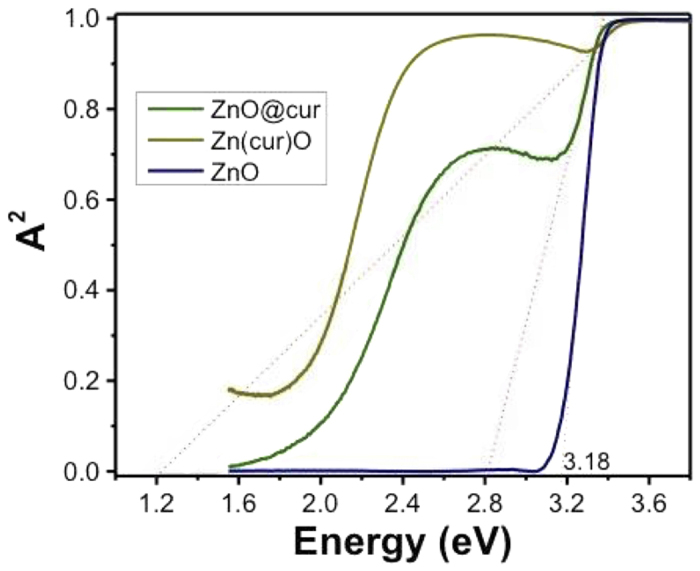
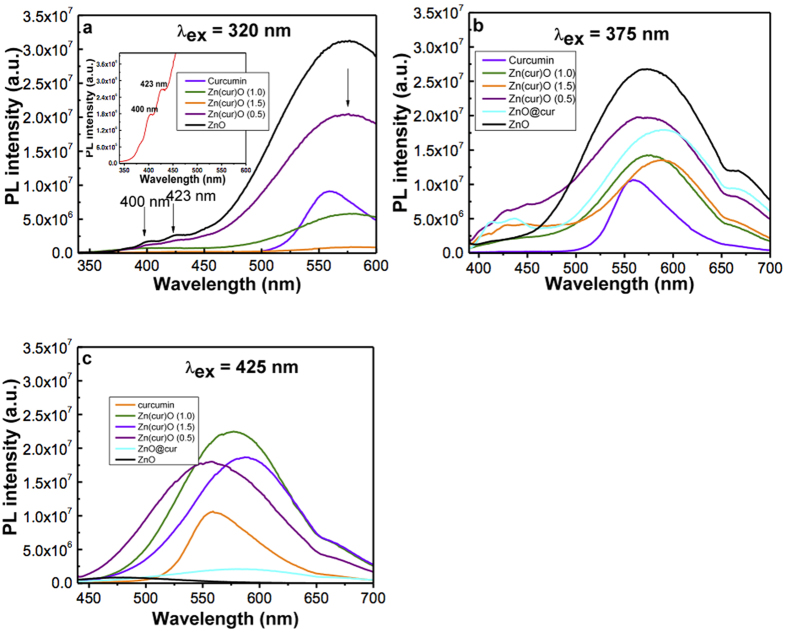
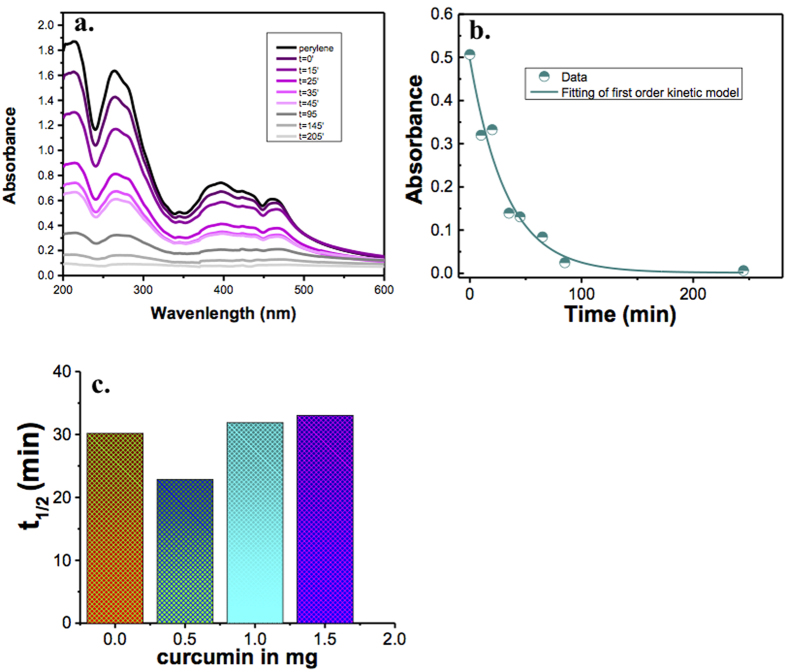
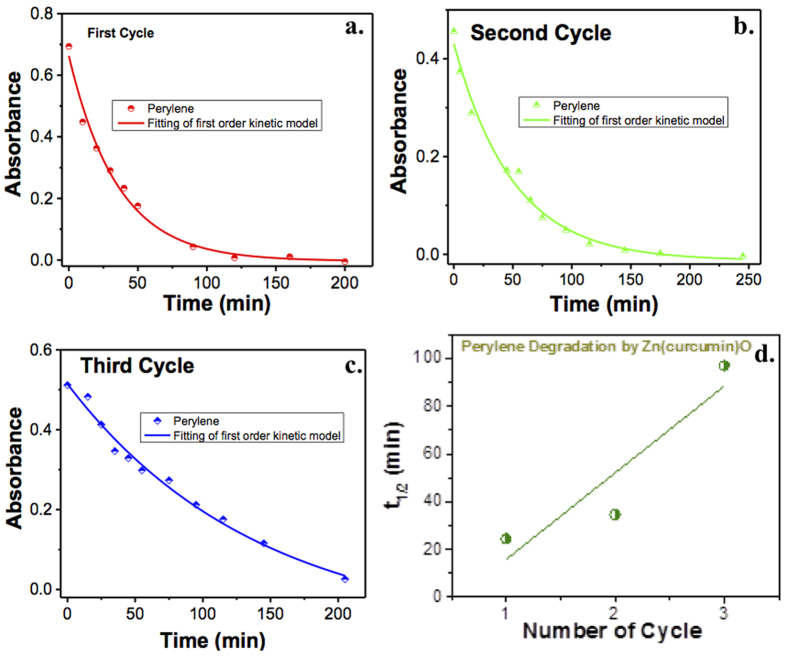
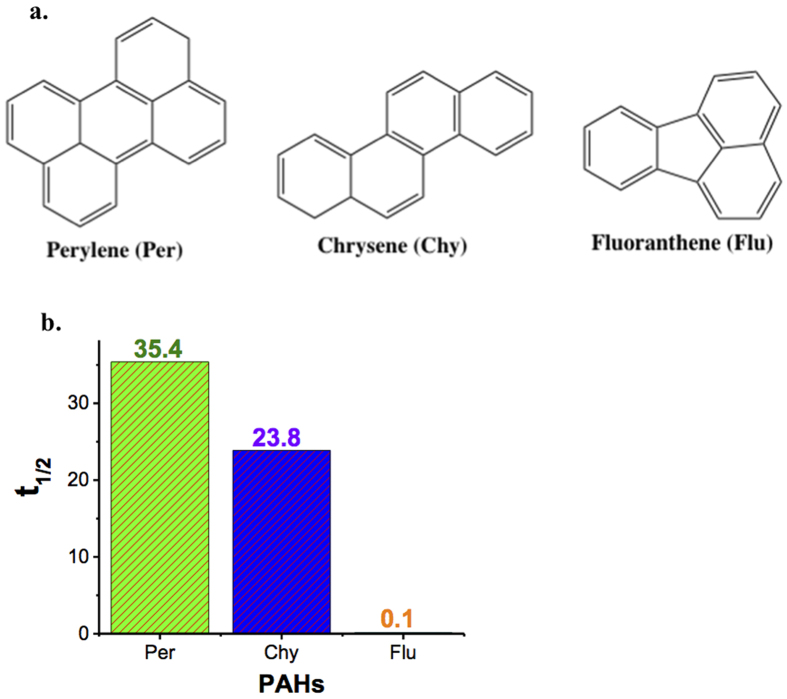
Curcumin conjugated ZnO, referred as Zn(cur)O, nanostructures have been successfully synthesized, these sub-micro grain-like structures are actually self-assemblies of individual needle-shaped nanoparticles. The nanostructures as synthesized possess the wurtzite hexagonal crystal structure of ZnO and exhibit very good crystalline quality. FT-Raman and TGA analysis establish that Zn(cur)O is different from curcumin anchored ZnO (ZnO@cur), which is prepared by physically adsorbing curcumin on ZnO surfaces. Chemically Zn(cur)O is more stable than ZnO@cur. Diffuse reflectance spectroscopy indicates Zn(cur)O have more impurities compared to ZnO@cur. The solid-state photoluminescence of Zn(cur)O has been investigated, which demonstrates that increase of curcumin concentration in Zn(cur)O suppresses visible emission of ZnO prepared through the same method, this implies filling ZnO defects by curcumin. However, at excitation wavelength 425 nm the emission is dominated by fluorescence from curcumin. The study reveals that Zn(cur)O can remove to a far extent high concentrations of perylene, fluoranthene, and chrysene faster than ZnO. The removal depends on the extent of curcumin conjugation and is found to be faster for PAHs having smaller number of aromatic rings, particularly, it is exceptional for fluoranthene with 93% removal after 10 minutes in the present conditions. The high rate of removal is related to photo-degradation and a mechanism has been proposed.
已成功合成了姜黄素共轭的ZnO,即Zn(cur)O纳米结构,这些亚微米颗粒状结构实际上是单个针状纳米颗粒的自组装体。合成的纳米结构具有ZnO的纤锌矿六方晶体结构,并且表现出非常好的结晶质量。傅里叶变换拉曼光谱和热重分析表明,Zn(cur)O不同于通过将姜黄素物理吸附在ZnO表面制备的姜黄素锚定的ZnO(ZnO@cur)。从化学角度来看,Zn(cur)O比ZnO@cur更稳定。漫反射光谱表明,与ZnO@cur相比,Zn(cur)O有更多杂质。对Zn(cur)O的固态光致发光进行了研究,结果表明,Zn(cur)O中姜黄素浓度的增加抑制了通过相同方法制备的ZnO的可见光发射,这意味着姜黄素填充了ZnO的缺陷。然而,在激发波长425nm时,发射主要由姜黄素的荧光主导。研究表明,Zn(cur)O比ZnO能在更大程度上更快地去除高浓度的苝、荧蒽和芘。去除率取决于姜黄素共轭的程度,并且发现对于芳环数量较少的多环芳烃去除速度更快,特别是在当前条件下,荧蒽在10分钟后去除率达93%,表现异常。高去除率与光降解有关,并且已经提出了一种机制。