Zhou Mengyao, Yu Guangyuan, Yang Xiantao, Zhu Chaomin, Zhang Zhenzhen, Zhan Xue
The Children's Hospital of Chongqing Medical University, Ministry of Education Key Laboratory of Child Development and Disorders, Key Laboratory of Pediatrics in Chongqing, Chongqing International Science and Technology Cooperation Center for Child Development and Disorders, Chongqing 400000, P.R. China.
Mol Med Rep. 2016 Jun;13(6):4620-6. doi: 10.3892/mmr.2016.5097. Epub 2016 Apr 8.
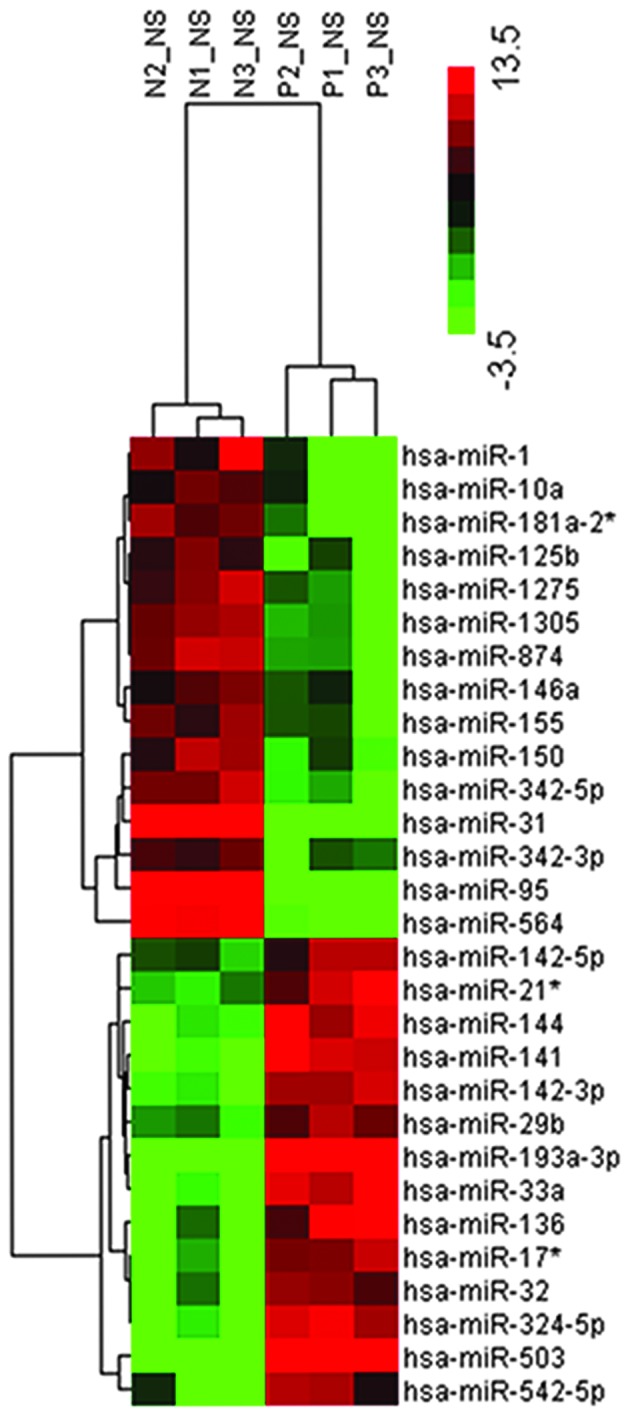
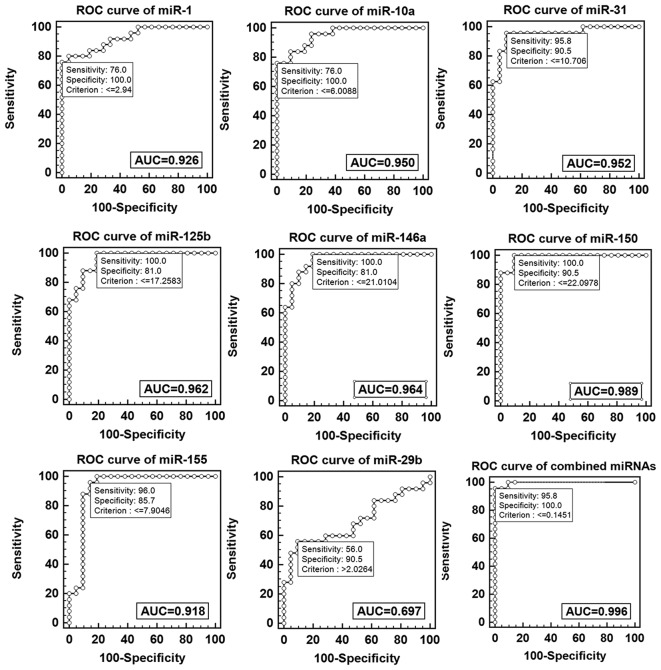
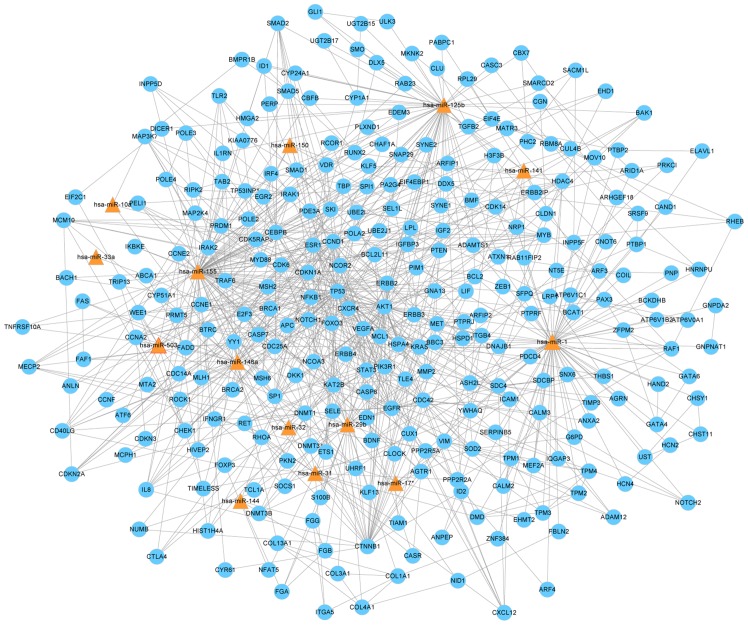
MicroRNAs (miRNAs) are a class of highly conserved, single-stranded RNA molecules (length, 18-25 nt) that regulate the expression of their target mRNAs. Previous studies have demonstrated that miRNAs may be novel biomarkers in the diagnosis of certain diseases. In order to evaluate the diagnostic value of miRNAs in childhood tuberculosis (TB), the circulating miRNA profile was determined using microarray analysis. An miRNA‑gene network was constructed to identify closely associated miRNAs and these miRNAs were validated using reverse transcription‑quantitative polymerase chain reaction (RT‑qPCR). A receiver operational curve (ROC) was used to evaluate the diagnostic sensitivity and specificity of confirmed miRNAs. The microarray data demonstrated that 29 miRNAs were altered with 15 upregulated and 14 downregulated. The network showed indicated 14 miRNAs that are critical in childhood TB. RT-qPCR validated that miR-1, miR-155, miR‑31, miR‑146a, miR‑10a, miR‑125b and miR‑150 were downregulated in while miR‑29 was upregulated in children with TB compared with uninfected children. The ROC curve data indicated the diagnostic value of single miRNA was as follows: miR‑150>miR‑146a>miR‑125b>miR‑31>miR‑10a>miR‑1>miR‑155>miR‑29. Notably, a combination of these miRNAs exhibited increased diagnostic value compared with any single miRNA. To the best of our knowledge, the present study is the first to identify the expression profile of circulating miRNAs in childhood TB and demonstrated that miRNAs may be a novel, non‑invasive and effective biomarker for the early diagnosis of childhood TB.
微小RNA(miRNA)是一类高度保守的单链RNA分子(长度为18 - 25个核苷酸),可调控其靶mRNA的表达。先前的研究表明,miRNA可能是某些疾病诊断中的新型生物标志物。为了评估miRNA在儿童结核病(TB)诊断中的价值,使用微阵列分析确定循环miRNA谱。构建了一个miRNA-基因网络以鉴定密切相关的miRNA,并使用逆转录定量聚合酶链反应(RT-qPCR)对这些miRNA进行验证。使用受试者工作特征曲线(ROC)评估已确认miRNA的诊断敏感性和特异性。微阵列数据表明,29种miRNA发生了变化,其中15种上调,14种下调。该网络显示有14种miRNA在儿童结核病中起关键作用。RT-qPCR验证了与未感染儿童相比,miR-1、miR-155、miR-31、miR-146a、miR-10a、miR-125b和miR-150在结核病儿童中下调,而miR-29上调。ROC曲线数据表明单个miRNA的诊断价值如下:miR-150>miR-146a>miR-125b>miR-31>miR-10a>miR-1>miR-155>miR-29。值得注意的是,与任何单个miRNA相比,这些miRNA的组合显示出更高的诊断价值。据我们所知,本研究首次鉴定了儿童结核病中循环miRNA的表达谱,并证明miRNA可能是儿童结核病早期诊断的一种新型、非侵入性且有效的生物标志物。