Tahara Yu, Aoyama Shinya, Shibata Shigenobu
Laboratory of Physiology and Pharmacology, School of Advanced Science and Engineering, Waseda University, Wakamatsu 2-2, Shinjuku, Tokyo, 162-8480, Japan.
Waseda Institute for Advanced Study, Waseda University, Tokyo, Japan.
J Physiol Sci. 2017 Jan;67(1):1-10. doi: 10.1007/s12576-016-0450-7. Epub 2016 Apr 15.
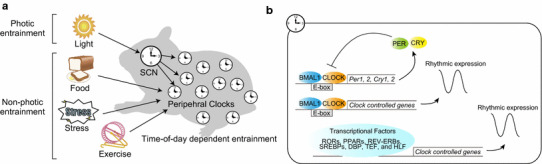
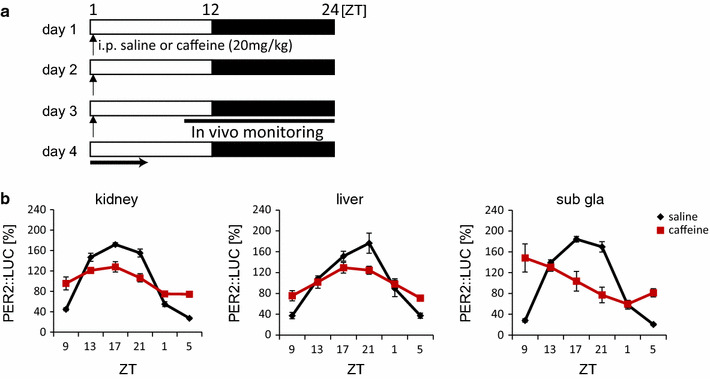
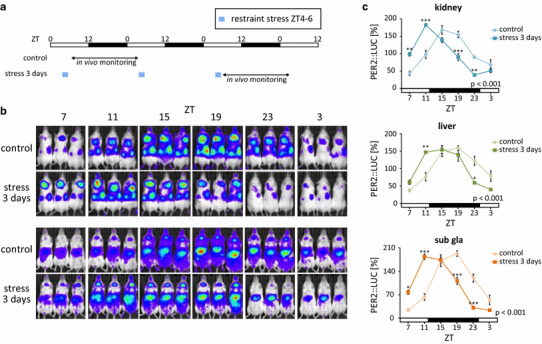
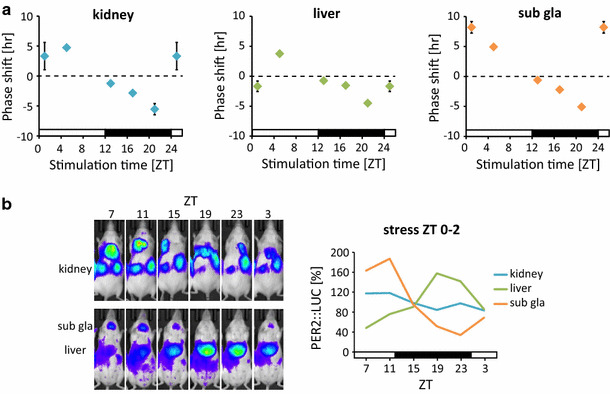
The mammalian circadian clock regulates day-night fluctuations in various physiological processes. The circadian clock consists of the central clock in the suprachiasmatic nucleus of the hypothalamus and peripheral clocks in peripheral tissues. External environmental cues, including light/dark cycles, food intake, stress, and exercise, provide important information for adjusting clock phases. This review focuses on stress and exercise as potent entrainment signals for both central and peripheral clocks, especially in regard to the timing of stimuli, types of stressors/exercises, and differences in the responses of rodents and humans. We suggest that the common signaling pathways of clock entrainment by stress and exercise involve sympathetic nervous activation and glucocorticoid release. Furthermore, we demonstrate that physiological responses to stress and exercise depend on time of day. Therefore, using exercise to maintain the circadian clock at an appropriate phase and amplitude might be effective for preventing obesity, diabetes, and cardiovascular disease.
哺乳动物的生物钟调节着各种生理过程中的昼夜波动。生物钟由下丘脑视交叉上核中的中央生物钟和外周组织中的外周生物钟组成。外部环境线索,包括光/暗周期、食物摄入、压力和运动,为调整生物钟相位提供重要信息。本综述重点关注压力和运动作为中央和外周生物钟的有效同步信号,特别是在刺激时机、压力源/运动类型以及啮齿动物和人类反应差异方面。我们认为,压力和运动使生物钟同步的共同信号通路涉及交感神经激活和糖皮质激素释放。此外,我们证明了对压力和运动的生理反应取决于一天中的时间。因此,利用运动将生物钟维持在适当的相位和振幅可能对预防肥胖、糖尿病和心血管疾病有效。