Isola Allison L, Chen Suzie
Susan Lehman Cullman Laboratory for Cancer Research, Department of Chemical Biology, Ernest Mario School of Pharmacy, Rutgers the State UniversityPiscataway, NJ, USA; Joint Graduate Program in Toxicology, Environmental and Occupational Health Sciences Institute, Rutgers the State UniversityPiscataway, NJ, USA.
Susan Lehman Cullman Laboratory for Cancer Research, Department of Chemical Biology, Ernest Mario School of Pharmacy, Rutgers the State UniversityPiscataway, NJ, USA; Joint Graduate Program in Toxicology, Environmental and Occupational Health Sciences Institute, Rutgers the State UniversityPiscataway, NJ, USA; Rutgers Cancer Institute of New JerseyNew Brunswick, NJ, USA.
Front Genet. 2016 Apr 8;7:56. doi: 10.3389/fgene.2016.00056. eCollection 2016.
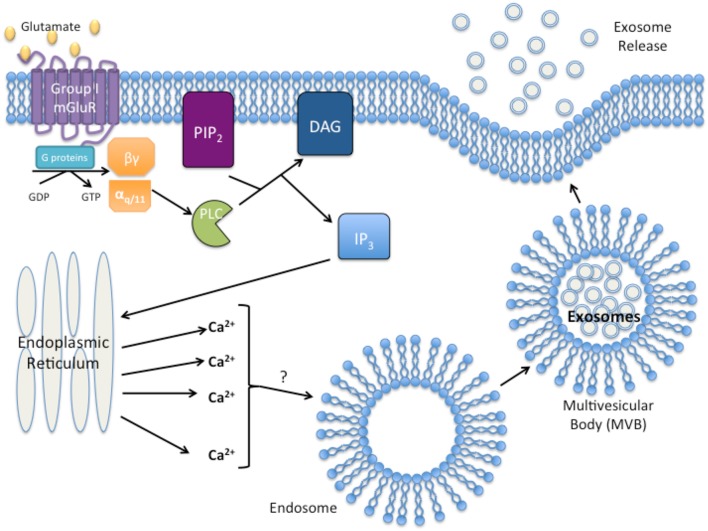
The activation of G-Protein Coupled Receptors (GPCRs) by their respective ligands initiates a cascade of multiple signaling processes within the cell, regulating growth, metabolism and other essential cellular functions. Dysregulation and aberrant expression of these GPCRs and their subsequent signaling cascades are associated with many different types of pathologies, including cancer. The main life threatening complication in patients diagnosed with cancer is the dissemination of cells from the primary tumor to distant vital organs within the body, metastasis. Communication between the primary tumor, immune system, and the site of future metastasis are some of the key events in the early stages of metastasis. It has been postulated that the communication is mediated by nanovesicles that, under non-pathological conditions, are released by normal cells to relay signals to other cells in the body. These nanovesicles are called exosomes, and are utilized by the tumor cell to influence changes within the recipient cell, such as bone marrow progenitor cells, and cells within the site of future metastatic growth, in order to prepare the site for colonization. Tumor cells have been shown to release an increased number of exosomes when compared to their normal cell counterpart. Exosome production and release are regulated by proteins involved in localization, degradation and size of the multivesicular body, whose function may be altered within cancer cells, resulting in the release of an increased number of these vesicles. This review investigates the possibility of GPCR signaling cascades acting as the upstream activator of proteins involved in exosome production and release, linking a commonly targeted trans-membrane protein class with cellular communication utilized by tumor cells in early stages of metastasis.
G蛋白偶联受体(GPCRs)被其各自的配体激活后,会在细胞内引发一系列多重信号传导过程,从而调节生长、代谢及其他重要的细胞功能。这些GPCRs及其后续信号级联的失调和异常表达与许多不同类型的病理状况相关,包括癌症。被诊断为癌症的患者面临的主要危及生命的并发症是细胞从原发性肿瘤扩散到体内远处的重要器官,即转移。原发性肿瘤、免疫系统与未来转移部位之间的通讯是转移早期的一些关键事件。据推测,这种通讯是由纳米囊泡介导的,在非病理条件下,正常细胞会释放纳米囊泡将信号传递给体内的其他细胞。这些纳米囊泡被称为外泌体,肿瘤细胞利用它们来影响受体细胞内的变化,比如骨髓祖细胞以及未来转移生长部位的细胞,以便为定植准备场所。与正常细胞相比,肿瘤细胞已被证明会释放更多数量的外泌体。外泌体的产生和释放受参与多囊泡体定位、降解和大小的蛋白质调控,其功能在癌细胞内可能会发生改变,从而导致释放出更多数量的这些囊泡。本综述探讨了GPCR信号级联作为参与外泌体产生和释放的蛋白质的上游激活剂的可能性,将一类常见的靶向跨膜蛋白与肿瘤细胞在转移早期利用的细胞通讯联系起来。