Wang Daofeng, Qin Yanling, Fang Jingjing, Yuan Shoujiang, Peng Lixiang, Zhao Jinfeng, Li Xueyong
National Key Facility for Crop Gene Resources and Genetic Improvement, Institute of Crop Science, Chinese Academy of Agricultural Sciences, Beijing, China.
Shandong Rice Research Institute, Jinan, China.
PLoS One. 2016 Apr 19;11(4):e0153993. doi: 10.1371/journal.pone.0153993. eCollection 2016.
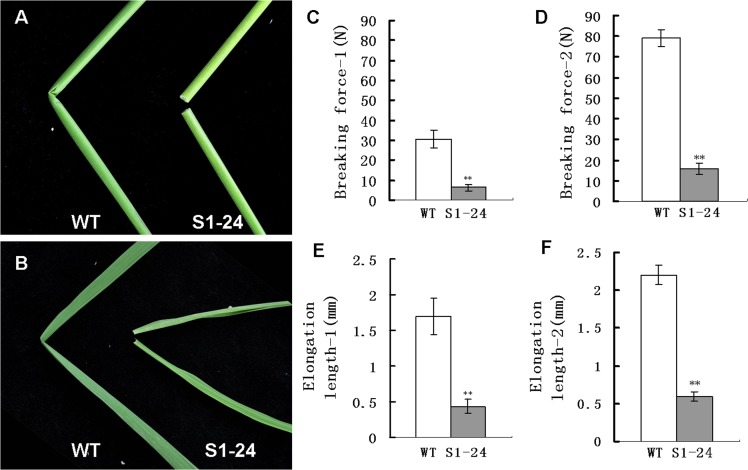
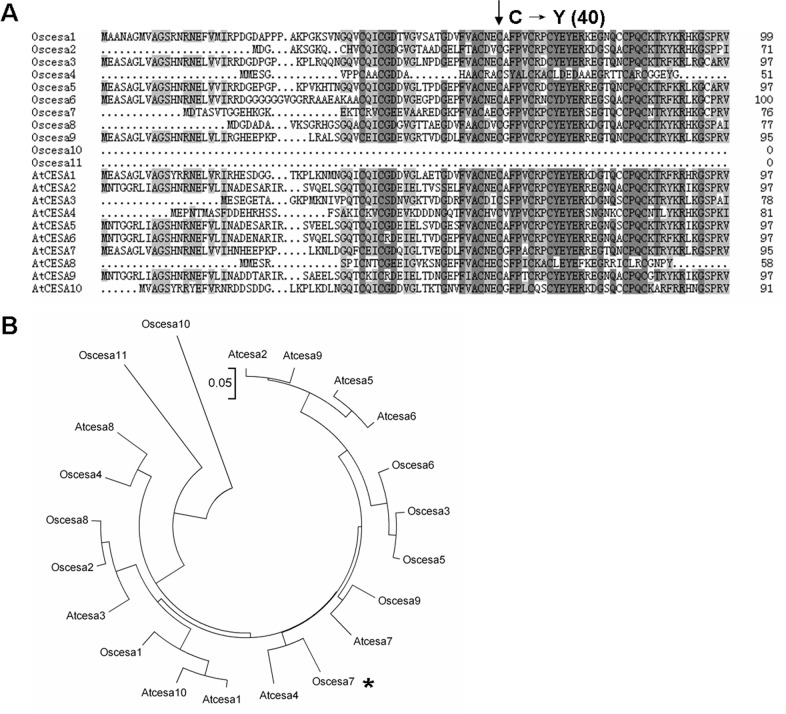
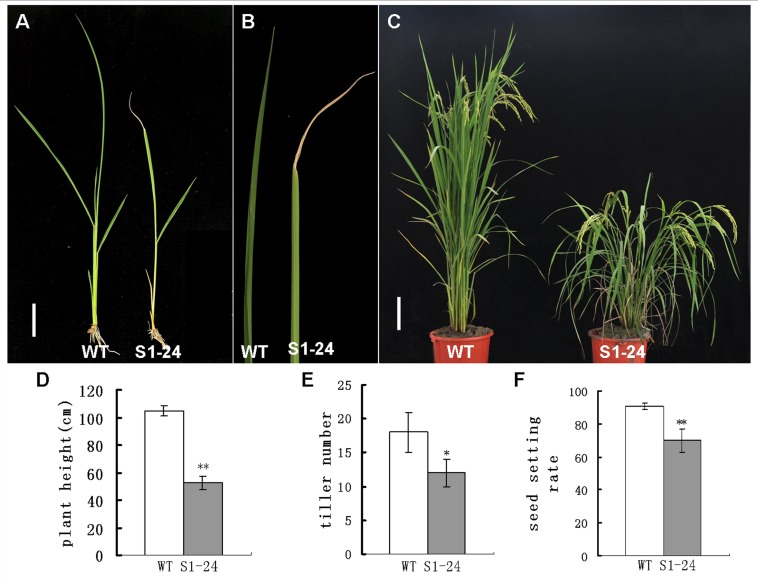
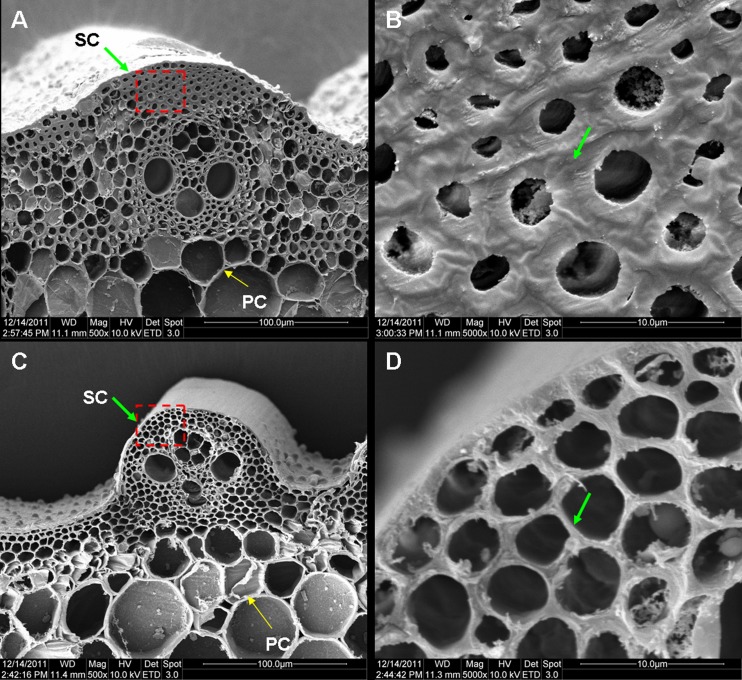
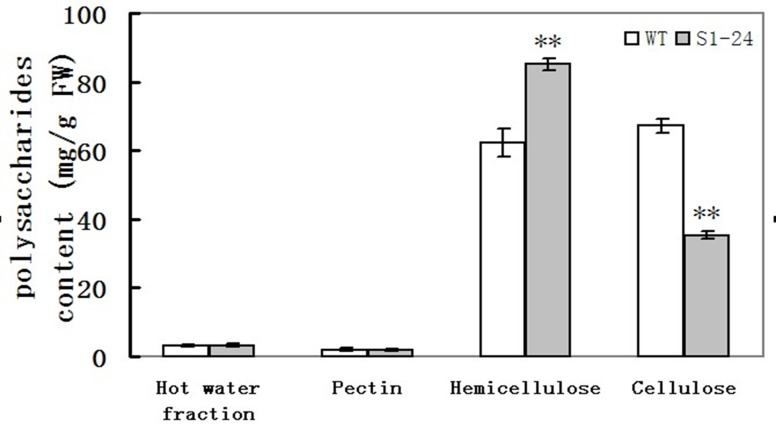
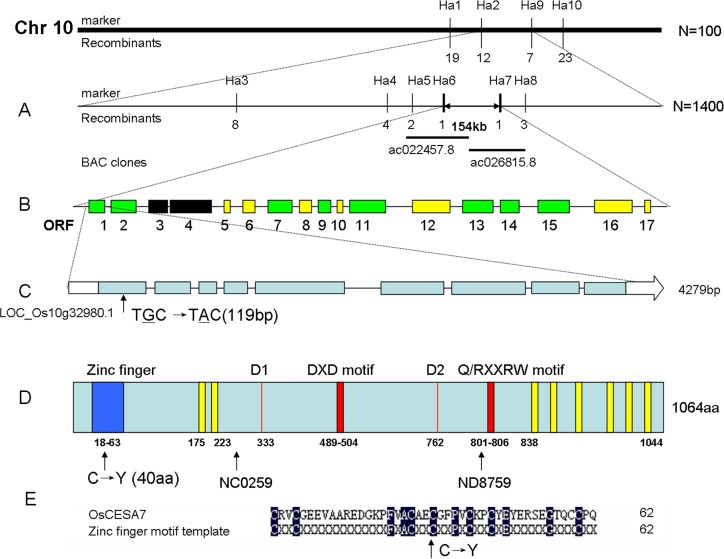
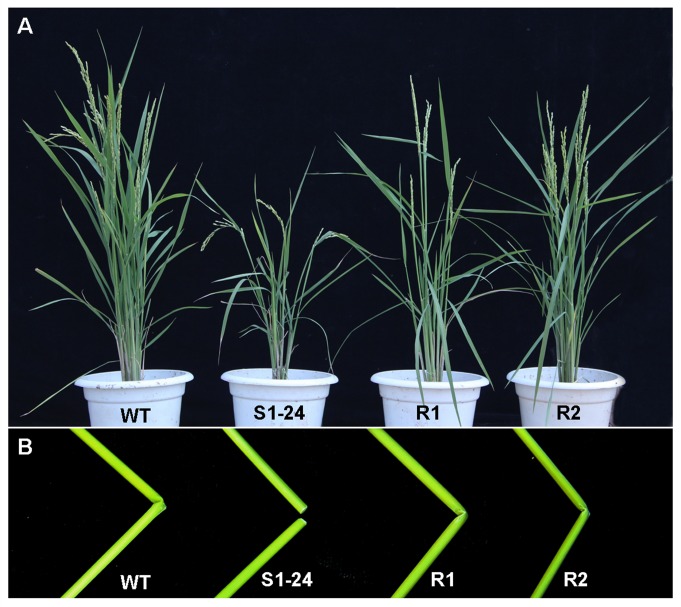
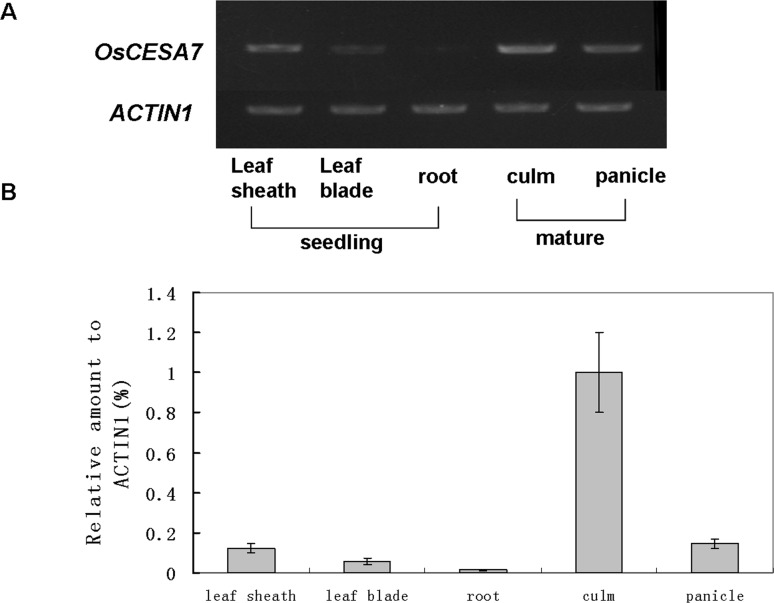
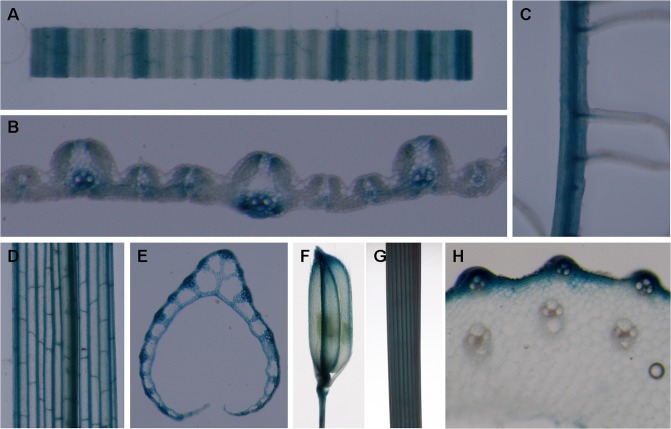
Rice is a model plant species for the study of cellulose biosynthesis. We isolated a mutant, S1-24, from ethyl methanesulfonate (EMS)-treated plants of the japonica rice cultivar, Nipponbare. The mutant exhibited brittle culms and other pleiotropic phenotypes such as dwarfism and partial sterility. The brittle culms resulted from reduced mechanical strength due to a defect in thickening of the sclerenchyma cell wall and reduced cellulose content in the culms of the S1-24 mutant. Map-based gene cloning and a complementation assay showed that phenotypes of the S1-24 mutant were caused by a recessive point mutation in the OsCESA7 gene, which encodes cellulose synthase A subunit 7. The missense mutation changed the highly conserved C40 to Y in the zinc finger domain. The OsCESA7 gene is expressed predominantly in the culm at the mature stage, particularly in mechanical tissues such as vascular bundles and sclerenchyma cells, consistent with the brittle phenotype in the culm. These results indicate that OsCESA7 plays an important role in cellulose biosynthesis and plant growth.
水稻是用于研究纤维素生物合成的模式植物物种。我们从粳稻品种日本晴经甲基磺酸乙酯(EMS)处理的植株中分离出一个突变体S1-24。该突变体表现出茎秆脆弱以及其他多效性表型,如矮化和部分不育。茎秆脆弱是由于厚壁组织细胞壁增厚缺陷导致机械强度降低以及S1-24突变体茎秆中纤维素含量减少所致。基于图谱的基因克隆和互补试验表明,S1-24突变体的表型是由编码纤维素合酶A亚基7的OsCESA7基因中的隐性点突变引起的。错义突变使锌指结构域中高度保守的C40变为Y。OsCESA7基因在成熟阶段主要在茎中表达,特别是在维管束和厚壁组织细胞等机械组织中表达,这与茎中的脆弱表型一致。这些结果表明,OsCESA7在纤维素生物合成和植物生长中起重要作用。