Sufka Kenneth J, Staszko Stephanie M, Johnson Ainslee P, Davis Morgan E, Davis Rachel E, Smitherman Todd A
Department of Psychology, University of Mississippi, Oxford, MS, 38677, USA.
Research Institute of the Pharmaceutical Sciences, University of Mississippi, Oxford, MS, 38677, USA.
J Headache Pain. 2016;17:40. doi: 10.1186/s10194-016-0624-y. Epub 2016 Apr 19.
This research sought to further validate the rat nitroglycerin (NTG) migraine model by comparing the effects of single versus recurrent NTG episodes on behavioral endpoints that mirror ICHD-3 diagnostic criteria for migraine, and to determine if the altered behavioral endpoints are reduced after administration of sumatriptan.
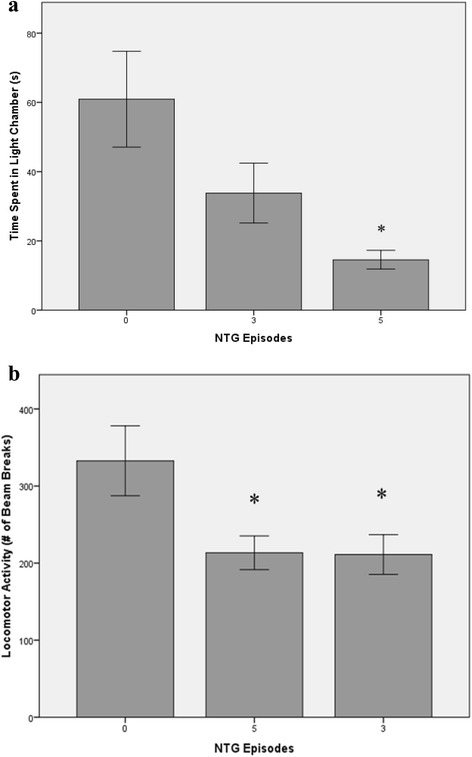
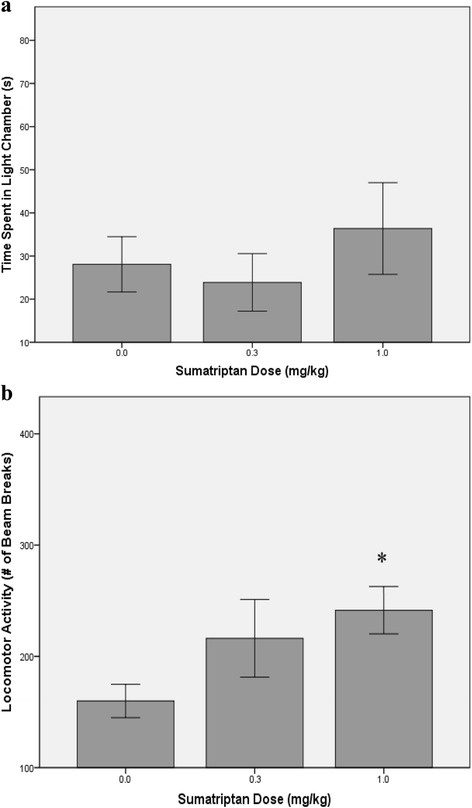
Separate cohorts of rats were administered NTG (10 mg/kg/2 ml) or saline (Experiment 1: single injection; Experiment 2: repeated injections; Experiment 3: repeated injections with sumatriptan [0.0, 0.3 and 1.0 mg/kg/ml] rescue. Behavioral endpoints were assessed 2 h after final NTG administration and included time in light/dark chambers for photophobia and activity, pain facial ratings, and cool (5 °C) and warm (46 °C) tail dip.
The first two experiments demonstrated that repeated (n = 5) but not single NTG injections produced photophobia, decreased activity, and yielded less weight gain than saline injections. Experiment 3 showed that sumatriptan attenuated hypoactivity, reduced facial expressions of pain, and reversed weight alterations in a dose-dependent manner.
These findings identify numerous clinical homologies of a recurrent NTG rat migraine model that may be useful for screening novel pharmacotherapies.
本研究旨在通过比较单次与反复给予硝酸甘油(NTG)对反映偏头痛国际头痛疾病分类第3版(ICHD-3)诊断标准的行为学指标的影响,进一步验证大鼠NTG偏头痛模型,并确定给予舒马曲坦后行为学指标的改变是否减轻。
将大鼠分为不同队列,分别给予NTG(10mg/kg/2ml)或生理盐水(实验1:单次注射;实验2:重复注射;实验3:重复注射并给予舒马曲坦[0.0、0.3和1.0mg/kg/ml]进行挽救)。在最后一次给予NTG后2小时评估行为学指标,包括在明/暗箱中的时间以评估畏光和活动情况、疼痛面部评分以及冷(5℃)和热(46℃)尾浸试验。
前两个实验表明,与生理盐水注射相比,反复(n = 5)而非单次给予NTG会导致畏光、活动减少以及体重增加减少。实验3表明,舒马曲坦以剂量依赖的方式减轻活动减退、减少疼痛面部表情并逆转体重改变。
这些发现确定了反复给予NTG的大鼠偏头痛模型的众多临床相似之处,这可能有助于筛选新型药物疗法。