Ji Jian, Shu Dingming, Zheng Mingzhu, Wang Jie, Luo Chenglong, Wang Yan, Guo Fuyou, Zou Xian, Lv Xiaohui, Li Ying, Liu Tianfei, Qu Hao
Institute of Animal Science, Guangdong Academy of Agricultural Sciences, 1 Dafeng 1st Street, Wushan, Tianhe District, Guangzhou 510640, China.
State Key Laboratory of Livestock and Poultry Breeding, Guangzhou 510640, China.
Sci Rep. 2016 Apr 20;6:24838. doi: 10.1038/srep24838.
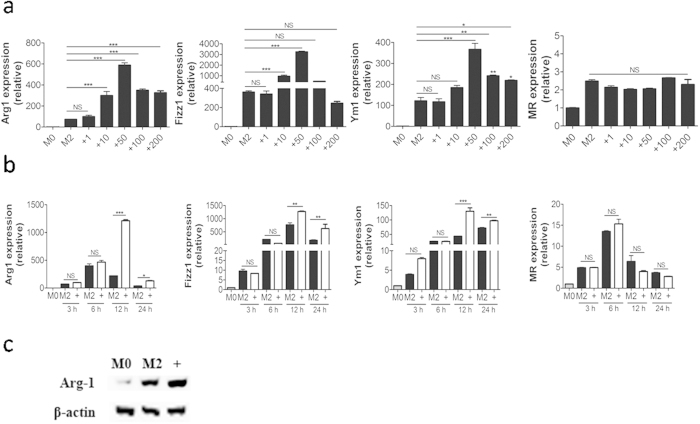
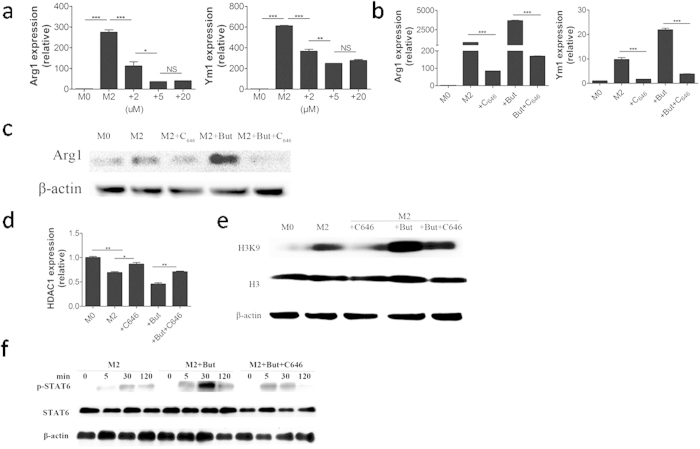
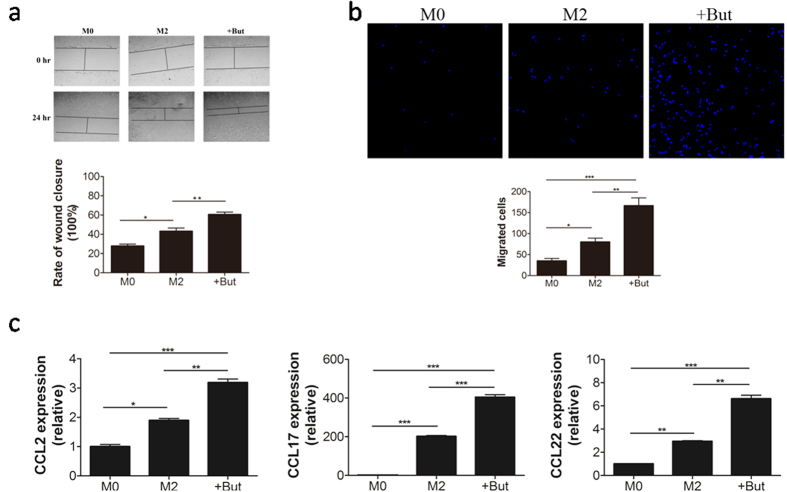
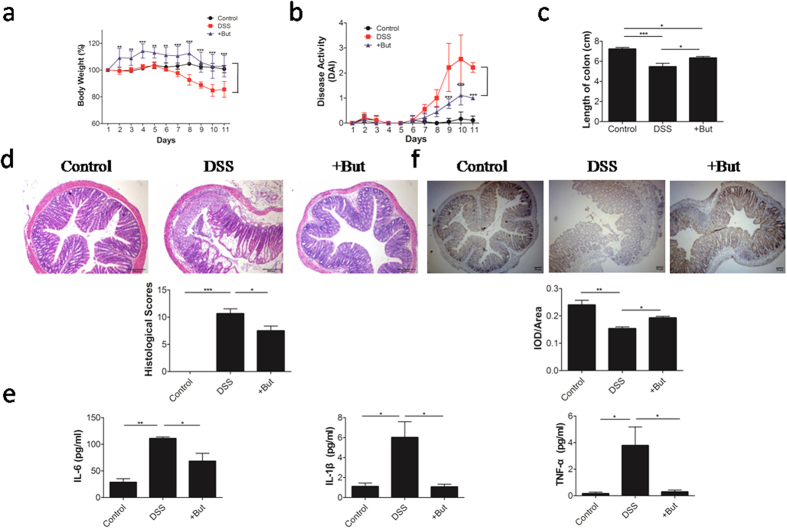
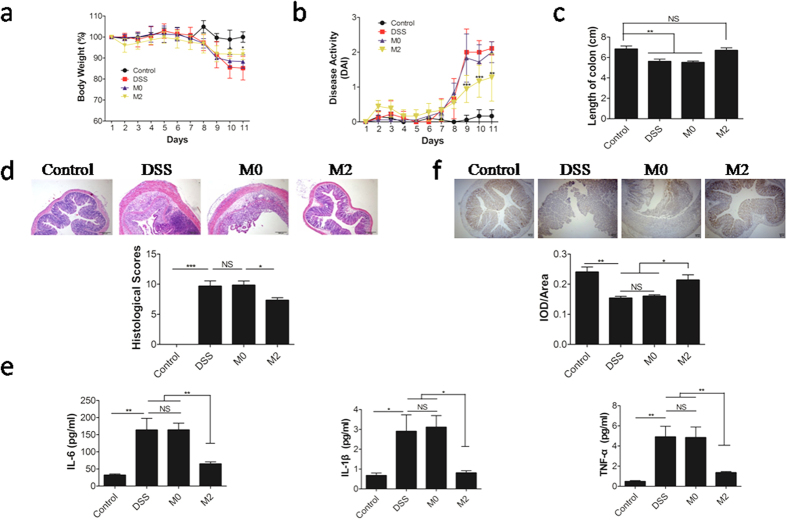
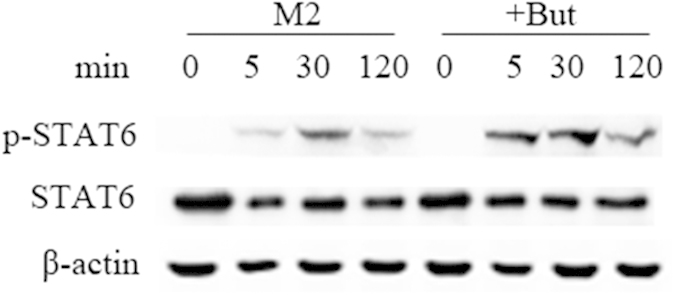
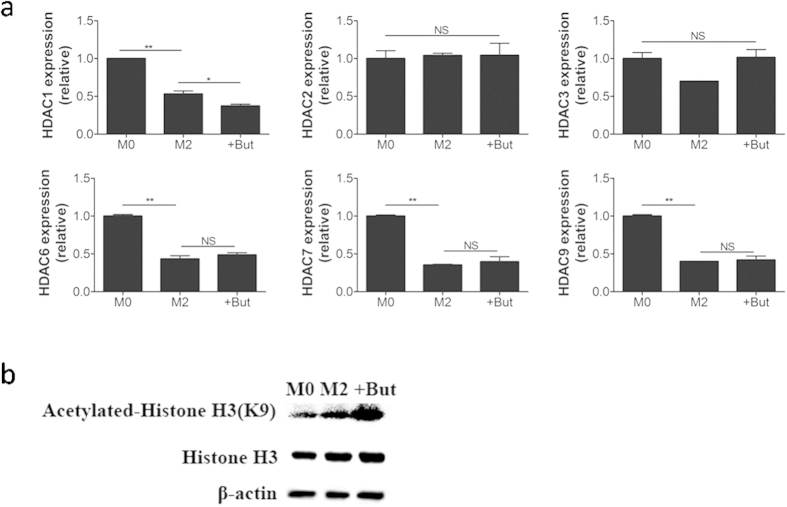
Metabolites from intestinal microbes modulate the mucosal immune system by regulating the polarization and expansion of T cells. Whether the microbial metabolites influence macrophage polarization, however, is poorly understood. Here, we show that the large bowel microbial fermentation product, butyrate, facilitates M2 macrophage polarization, in vitro and in vivo. The supernatant from butyrate-treated M2 macrophage increased the migration and enhanced the wound closure rate of MLE-12 cells. Butyrate attenuated intestinal inflammation in mice with dextran sulfate sodium (DSS)-induced colitis, with a significant increase in colonic expression of the M2 macrophage-associated protein, Arg1. M2 macrophage treated with butyrate, had increased activation of the H3K9/STAT6 signaling pathway, suggesting a mechanism for butyrate facilitated M2 macrophage polarization. Collectively, our study indicated that commensal microbe-derived butyrate is a novel activator of STAT6-mediated transcription through H3K9 acetylation driving M2 macrophage polarization, and delineated new insights into the immune interplay underlying inflammatory bowel disease.
肠道微生物产生的代谢产物通过调节T细胞的极化和扩增来调节黏膜免疫系统。然而,微生物代谢产物是否影响巨噬细胞极化,目前还知之甚少。在此,我们表明,大肠微生物发酵产物丁酸盐在体外和体内均促进M2巨噬细胞极化。丁酸盐处理的M2巨噬细胞的上清液增加了MLE-12细胞的迁移并提高了伤口闭合率。丁酸盐减轻了葡聚糖硫酸钠(DSS)诱导的结肠炎小鼠的肠道炎症,结肠中M2巨噬细胞相关蛋白Arg1的表达显著增加。用丁酸盐处理的M2巨噬细胞,H3K9/STAT6信号通路的激活增加,提示丁酸盐促进M2巨噬细胞极化的机制。总的来说,我们的研究表明,共生微生物衍生的丁酸盐是一种通过H3K9乙酰化驱动M2巨噬细胞极化的STAT6介导转录的新型激活剂,并为炎症性肠病潜在的免疫相互作用描绘了新的见解。