Weber Jens P, Andrásfalvy Bertalan K, Polito Marina, Magó Ádám, Ujfalussy Balázs B, Makara Judit K
Momentum Laboratory of Neuronal Signaling, Institute of Experimental Medicine, Hungarian Academy of Sciences, 43 Szigony Street, Budapest 1083, Hungary.
Nat Commun. 2016 Apr 21;7:11380. doi: 10.1038/ncomms11380.
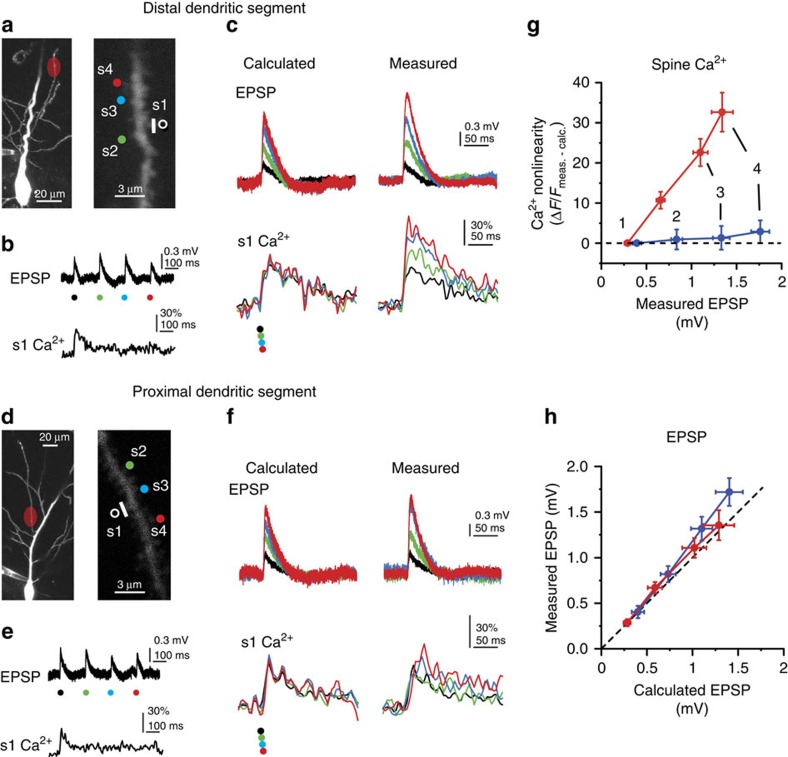
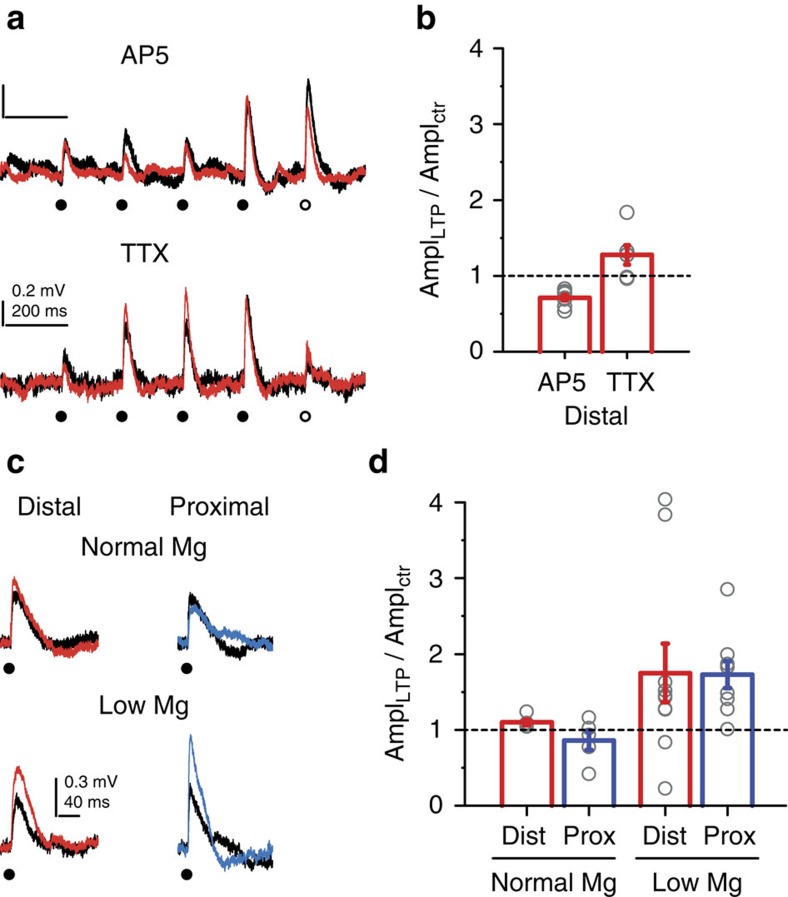
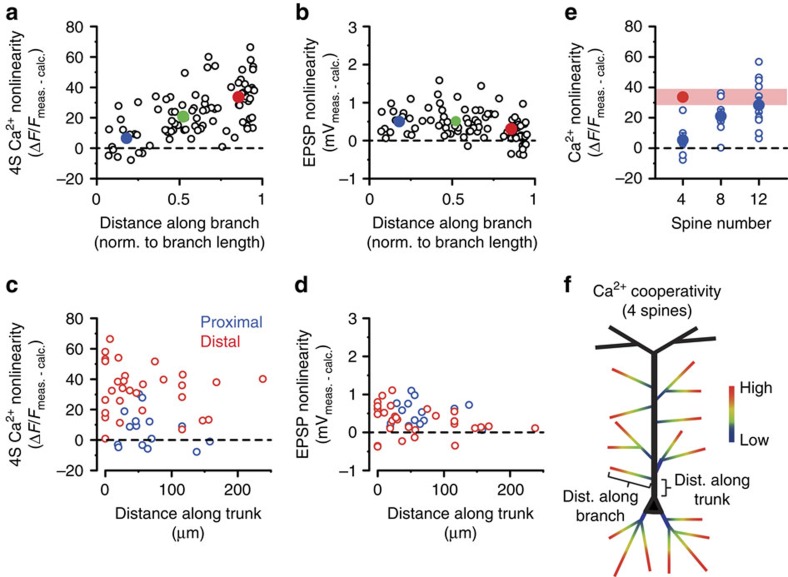
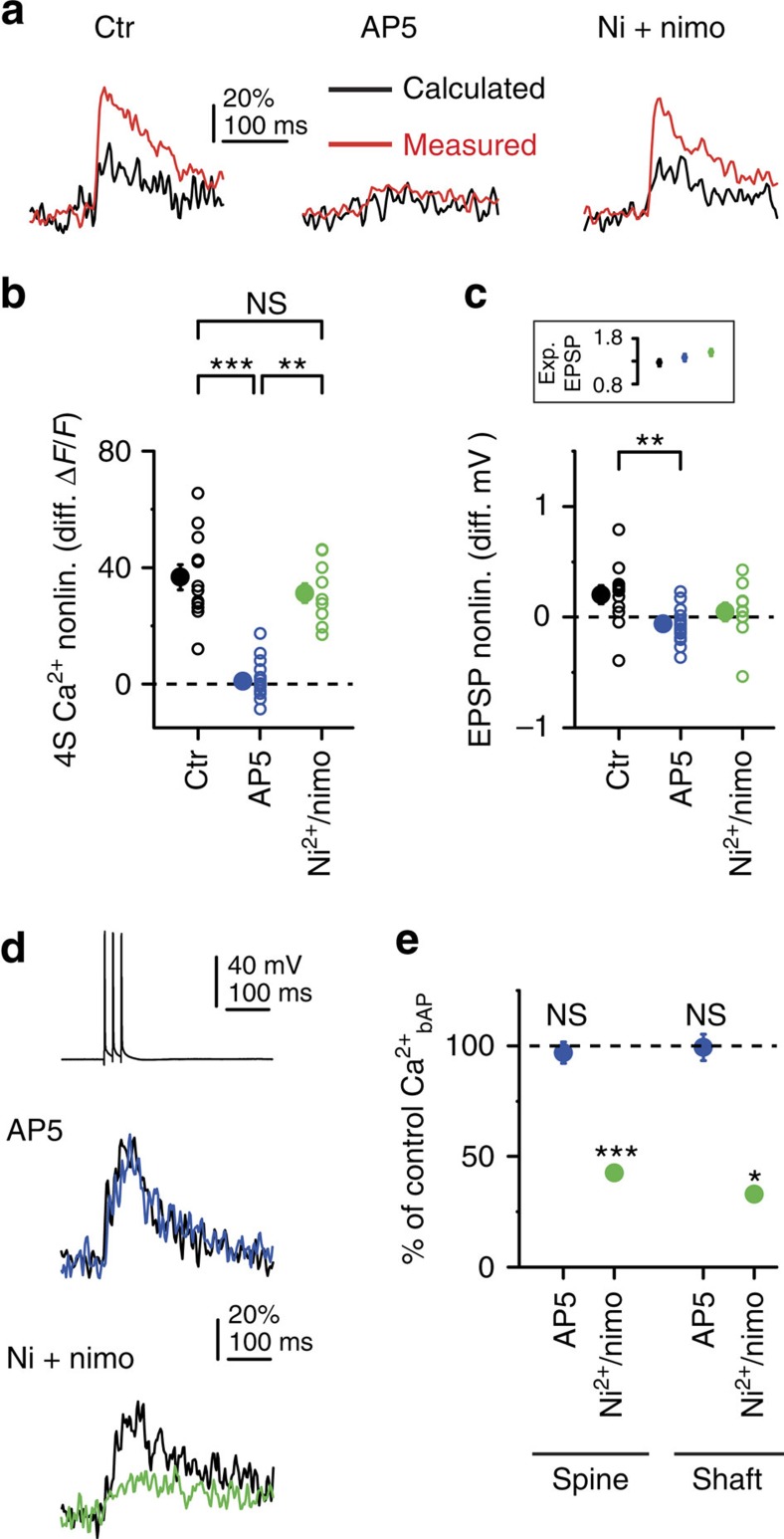
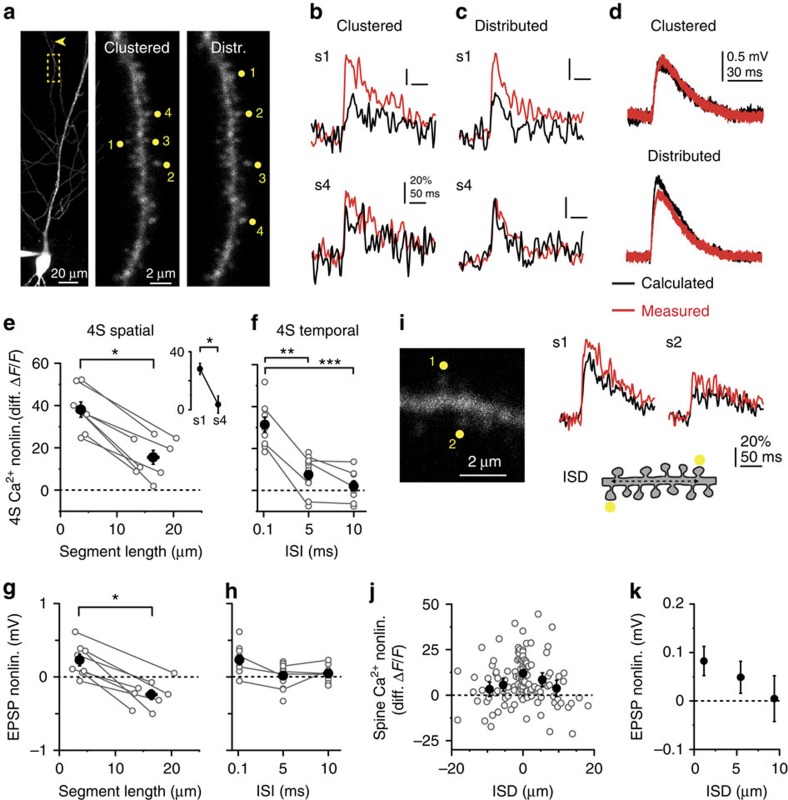
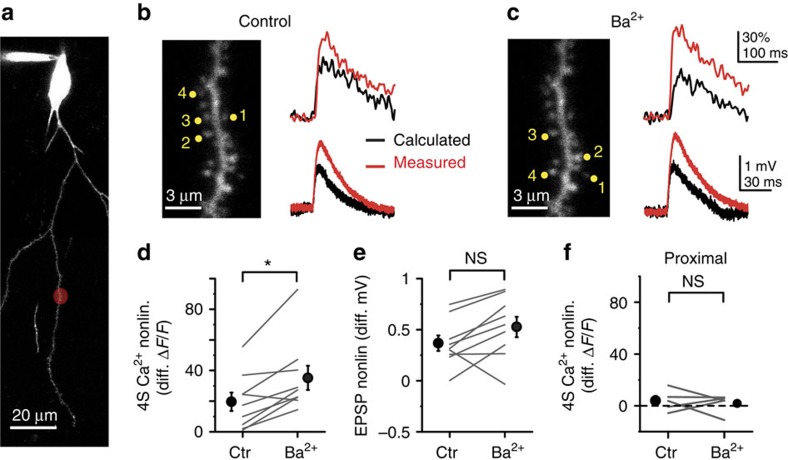
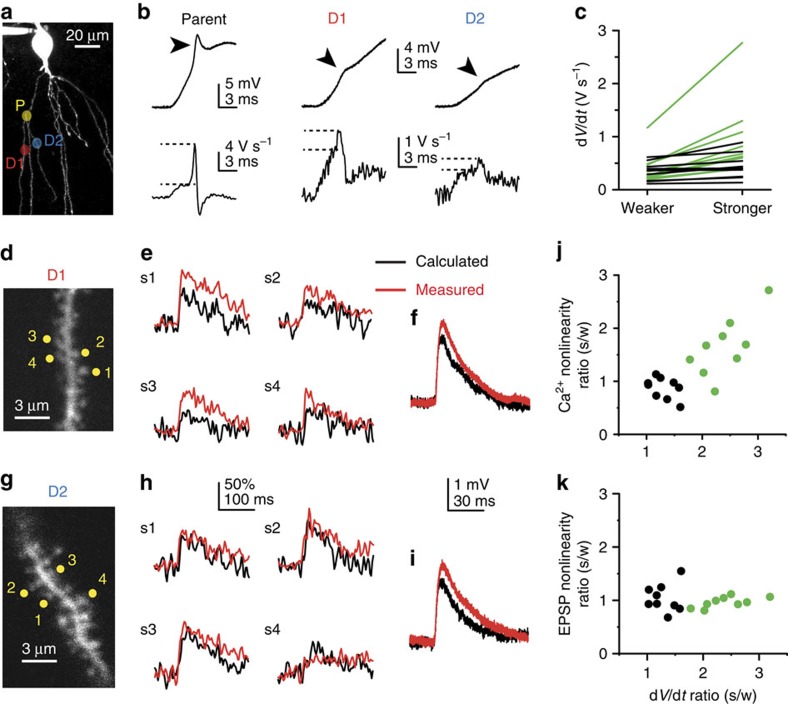
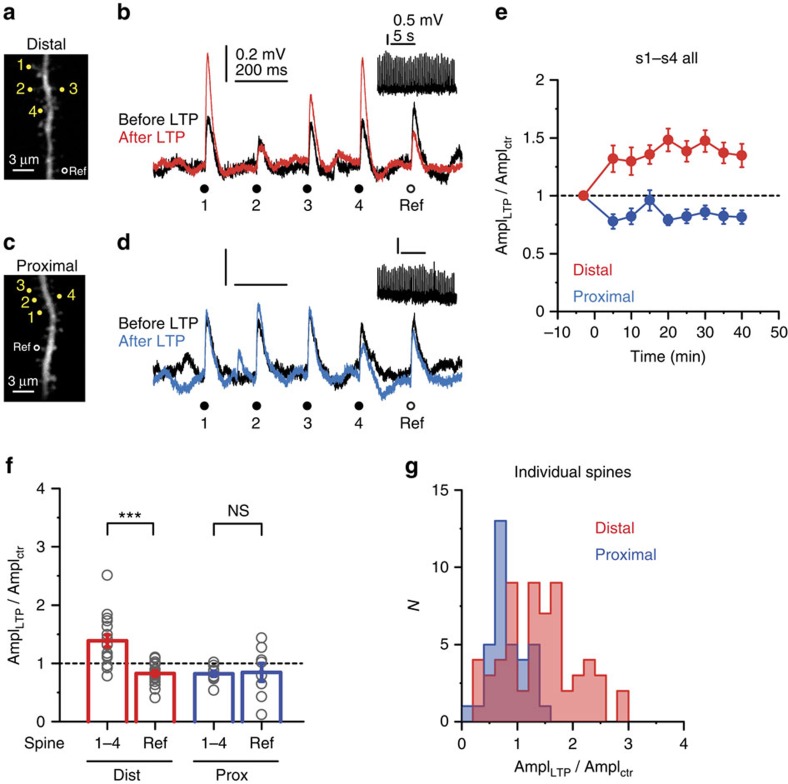
Nonlinear interactions between coactive synapses enable neurons to discriminate between spatiotemporal patterns of inputs. Using patterned postsynaptic stimulation by two-photon glutamate uncaging, here we investigate the sensitivity of synaptic Ca(2+) signalling and long-term plasticity in individual spines to coincident activity of nearby synapses. We find a proximodistally increasing gradient of nonlinear NMDA receptor (NMDAR)-mediated amplification of spine Ca(2+) signals by a few neighbouring coactive synapses along individual perisomatic dendrites. This synaptic cooperativity does not require dendritic spikes, but is correlated with dendritic Na(+) spike propagation strength. Furthermore, we show that repetitive synchronous subthreshold activation of small spine clusters produces input specific, NMDAR-dependent cooperative long-term potentiation at distal but not proximal dendritic locations. The sensitive synaptic cooperativity at distal dendritic compartments shown here may promote the formation of functional synaptic clusters, which in turn can facilitate active dendritic processing and storage of information encoded in spatiotemporal synaptic activity patterns.
共同激活的突触之间的非线性相互作用使神经元能够区分输入的时空模式。通过双光子谷氨酸解笼实现的模式化突触后刺激,我们在此研究了单个棘突中突触钙信号传导和长期可塑性对附近突触同步活动的敏感性。我们发现,沿着单个胞体周围树突,少数相邻共同激活的突触对棘突钙信号进行非线性NMDA受体(NMDAR)介导的放大,呈现出从近端到远端逐渐增加的梯度。这种突触协同作用不需要树突棘峰电位,但与树突钠峰电位传播强度相关。此外,我们表明,小棘突簇的重复同步阈下激活在远端而非近端树突位置产生输入特异性、NMDAR依赖性的协同长期增强。此处显示的远端树突区室中敏感的突触协同作用可能促进功能性突触簇的形成,进而有助于活跃的树突处理和存储时空突触活动模式中编码的信息。