Robison Patrick, Caporizzo Matthew A, Ahmadzadeh Hossein, Bogush Alexey I, Chen Christina Yingxian, Margulies Kenneth B, Shenoy Vivek B, Prosser Benjamin L
Department of Physiology, Pennsylvania Muscle Institute, University of Pennsylvania Perelman School of Medicine, Philadelphia, PA 19104, USA.
Department of Materials Science and Engineering, University of Pennsylvania School of Engineering and Applied Science, Philadelphia, PA 19104, USA.
Science. 2016 Apr 22;352(6284):aaf0659. doi: 10.1126/science.aaf0659.
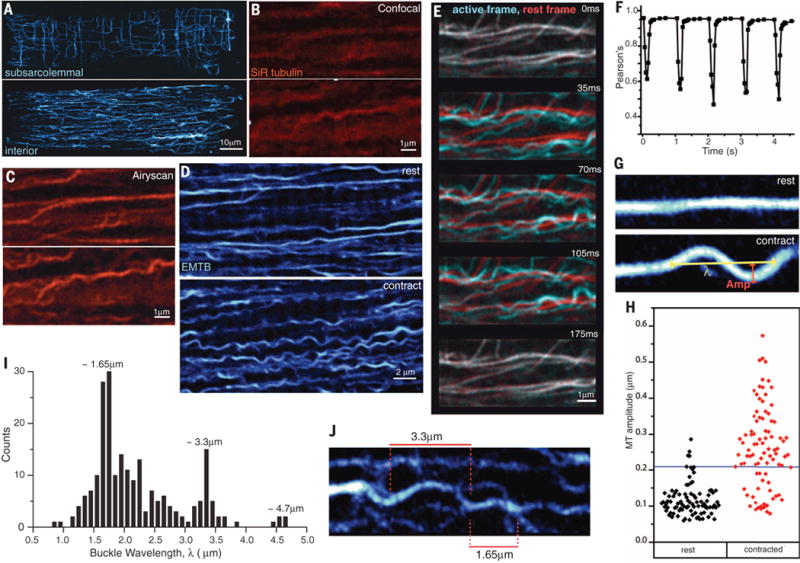
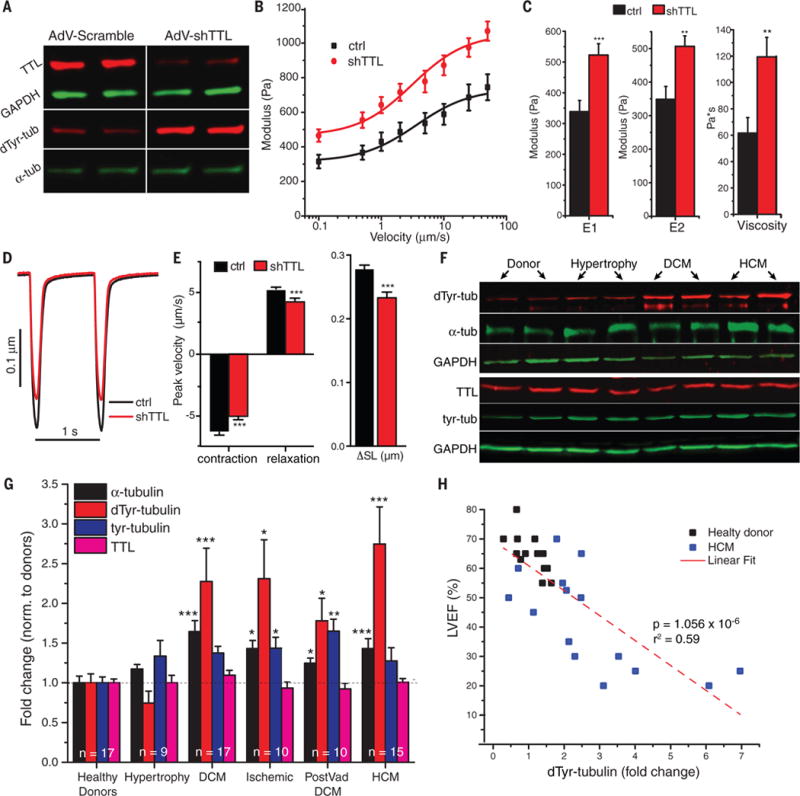
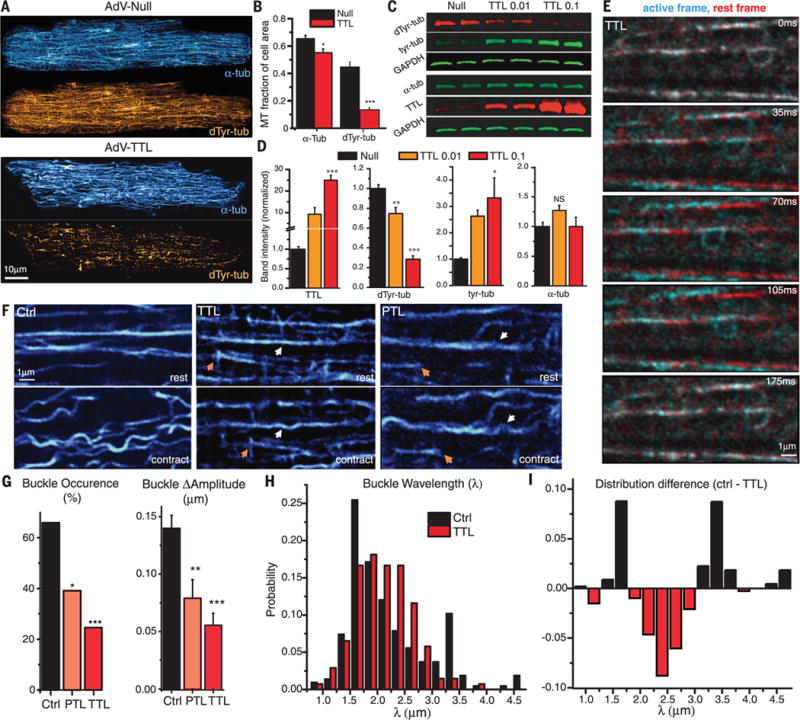
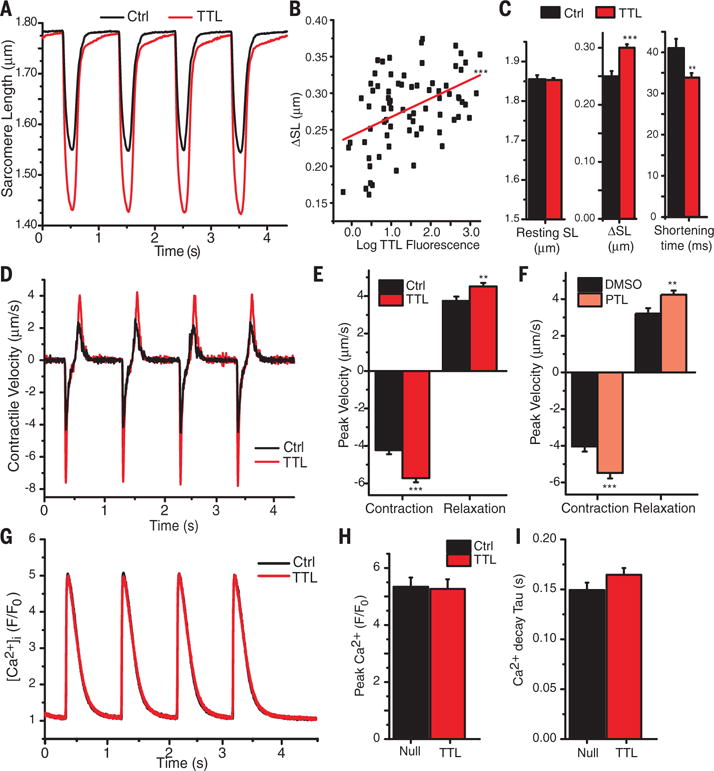
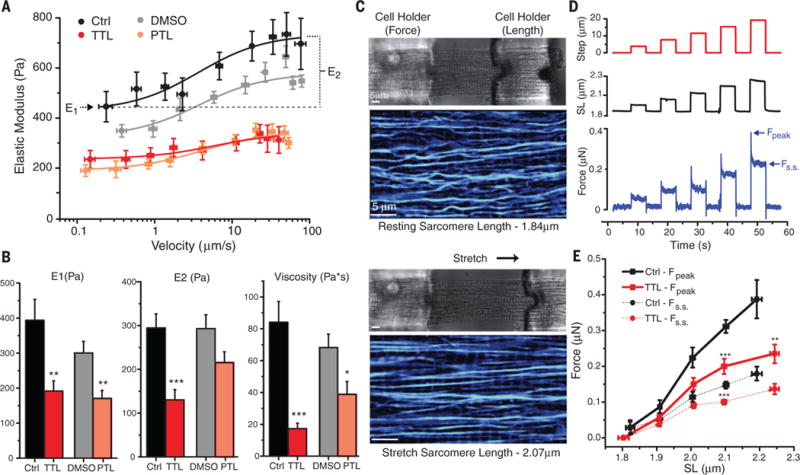
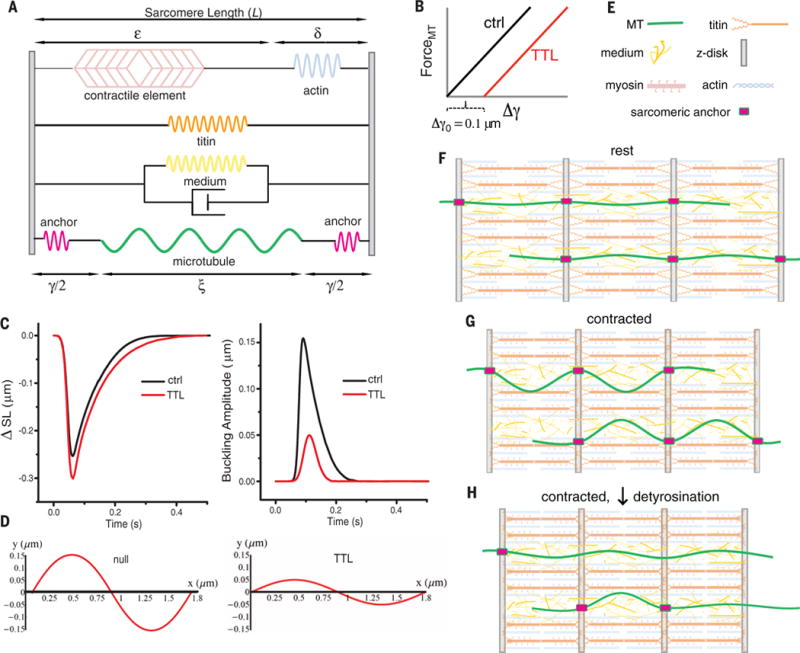
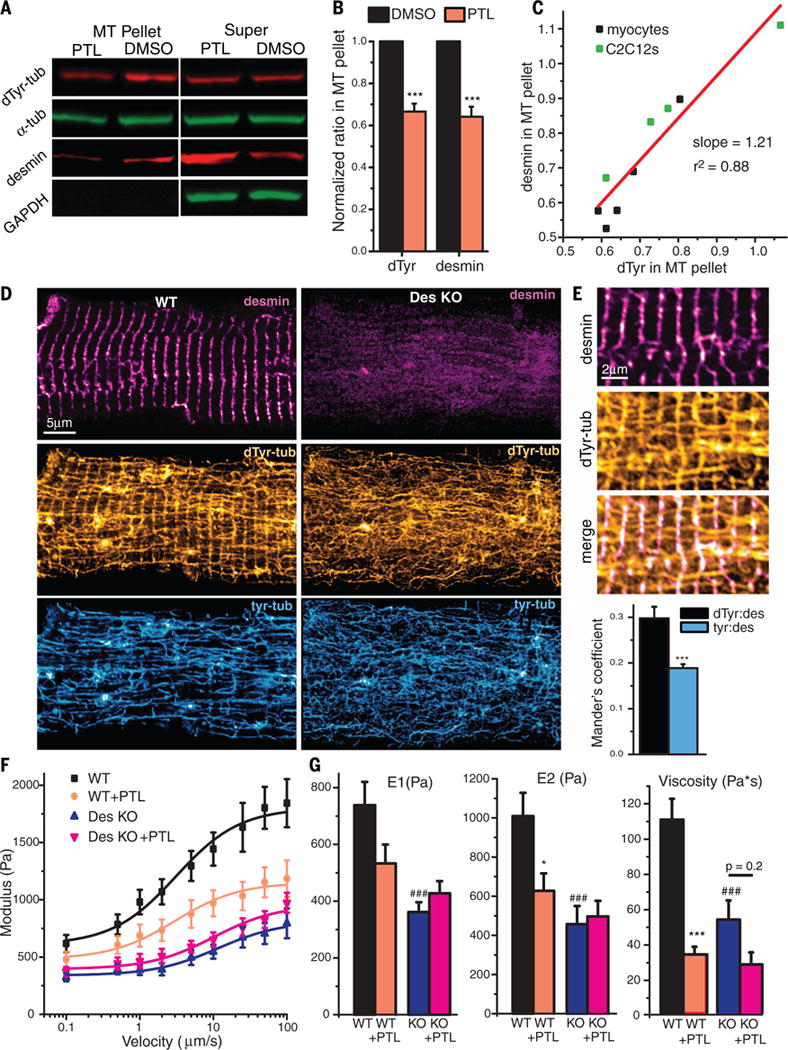
The microtubule (MT) cytoskeleton can transmit mechanical signals and resist compression in contracting cardiomyocytes. How MTs perform these roles remains unclear because of difficulties in observing MTs during the rapid contractile cycle. Here, we used high spatial and temporal resolution imaging to characterize MT behavior in beating mouse myocytes. MTs deformed under contractile load into sinusoidal buckles, a behavior dependent on posttranslational "detyrosination" of α-tubulin. Detyrosinated MTs associated with desmin at force-generating sarcomeres. When detyrosination was reduced, MTs uncoupled from sarcomeres and buckled less during contraction, which allowed sarcomeres to shorten and stretch with less resistance. Conversely, increased detyrosination promoted MT buckling, stiffened the myocyte, and correlated with impaired function in cardiomyopathy. Thus, detyrosinated MTs represent tunable, compression-resistant elements that may impair cardiac function in disease.
微管(MT)细胞骨架能够在收缩的心肌细胞中传递机械信号并抵抗压缩。由于在快速收缩周期中观察微管存在困难,微管如何执行这些功能仍不清楚。在这里,我们使用高空间和时间分辨率成像来表征跳动的小鼠心肌细胞中的微管行为。微管在收缩负荷下变形为正弦形弯曲,这种行为依赖于α-微管蛋白的翻译后“去酪氨酸化”。去酪氨酸化的微管在产生力的肌节处与结蛋白相关联。当去酪氨酸化减少时,微管与肌节解偶联,并且在收缩期间弯曲减少,这使得肌节能够以较小的阻力缩短和伸展。相反,去酪氨酸化增加促进了微管弯曲,使心肌细胞变硬,并与心肌病中功能受损相关。因此,去酪氨酸化的微管代表了可调节的、抗压缩元件,可能在疾病中损害心脏功能。