Argyropoulos Angela J, Robichaud Patrick, Balimunkwe Rebecca Mutesi, Fisher Gary J, Hammerberg Craig, Yan Yan, Quan Taihao
Department of Psychiatry, University of Washington, Seattle, Washington, United States of America.
Department of Dermatology, University of Michigan Medical School, Ann Arbor, Michigan, United States of America.
PLoS One. 2016 Apr 22;11(4):e0153806. doi: 10.1371/journal.pone.0153806. eCollection 2016.
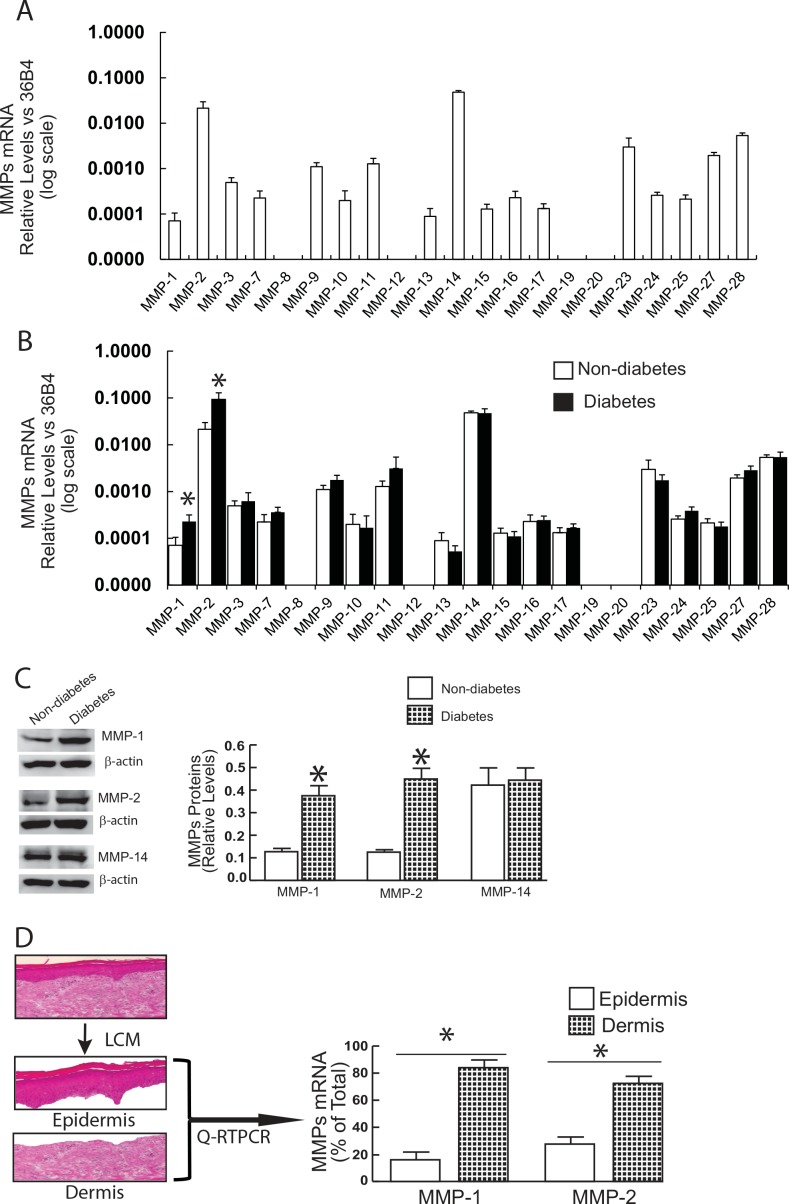
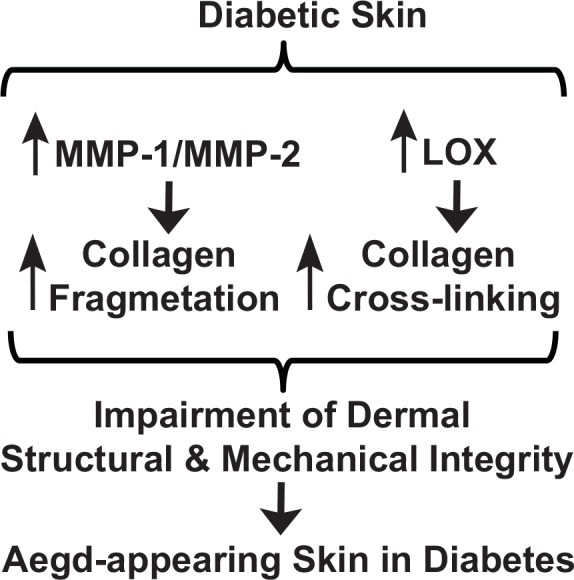
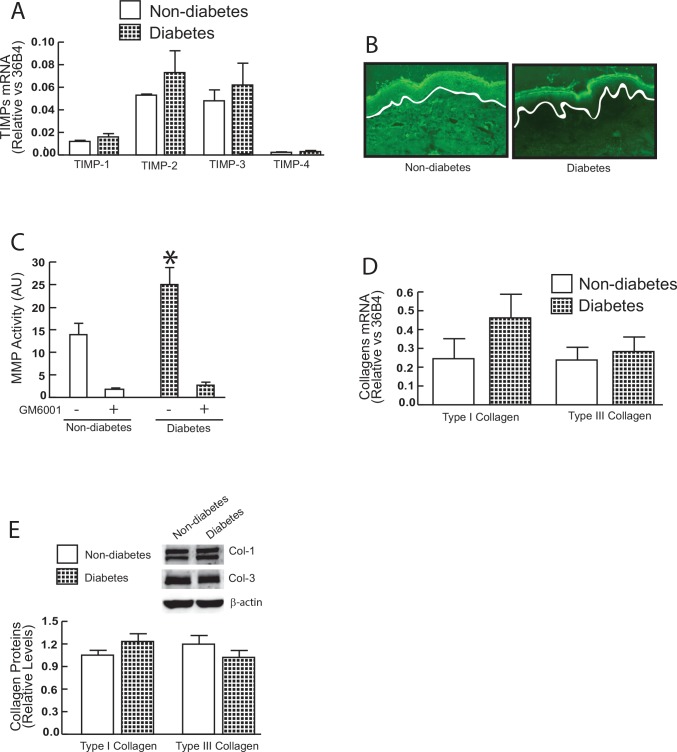
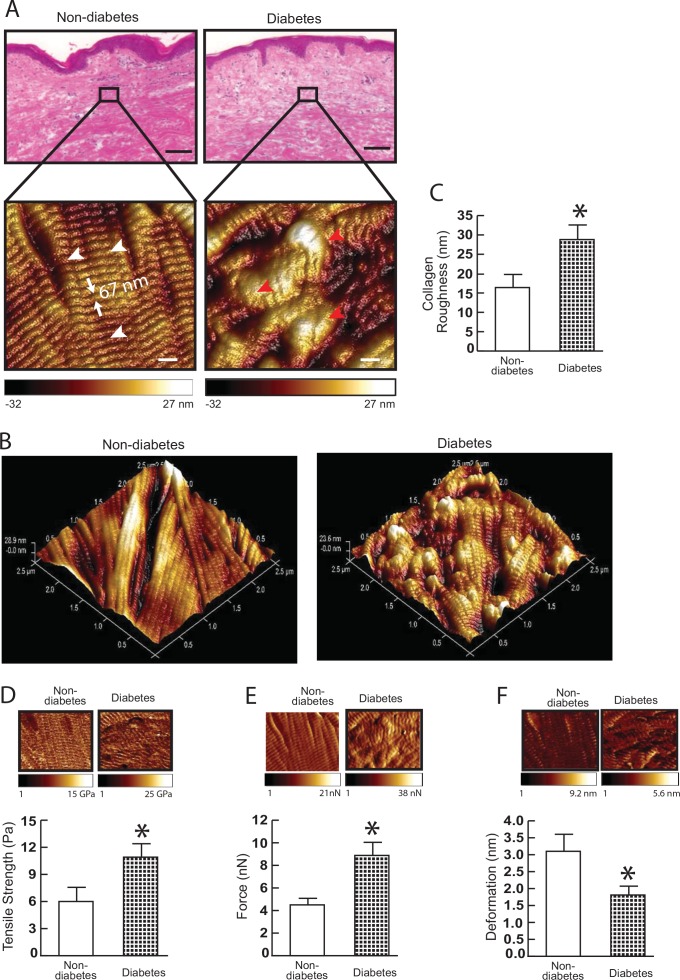
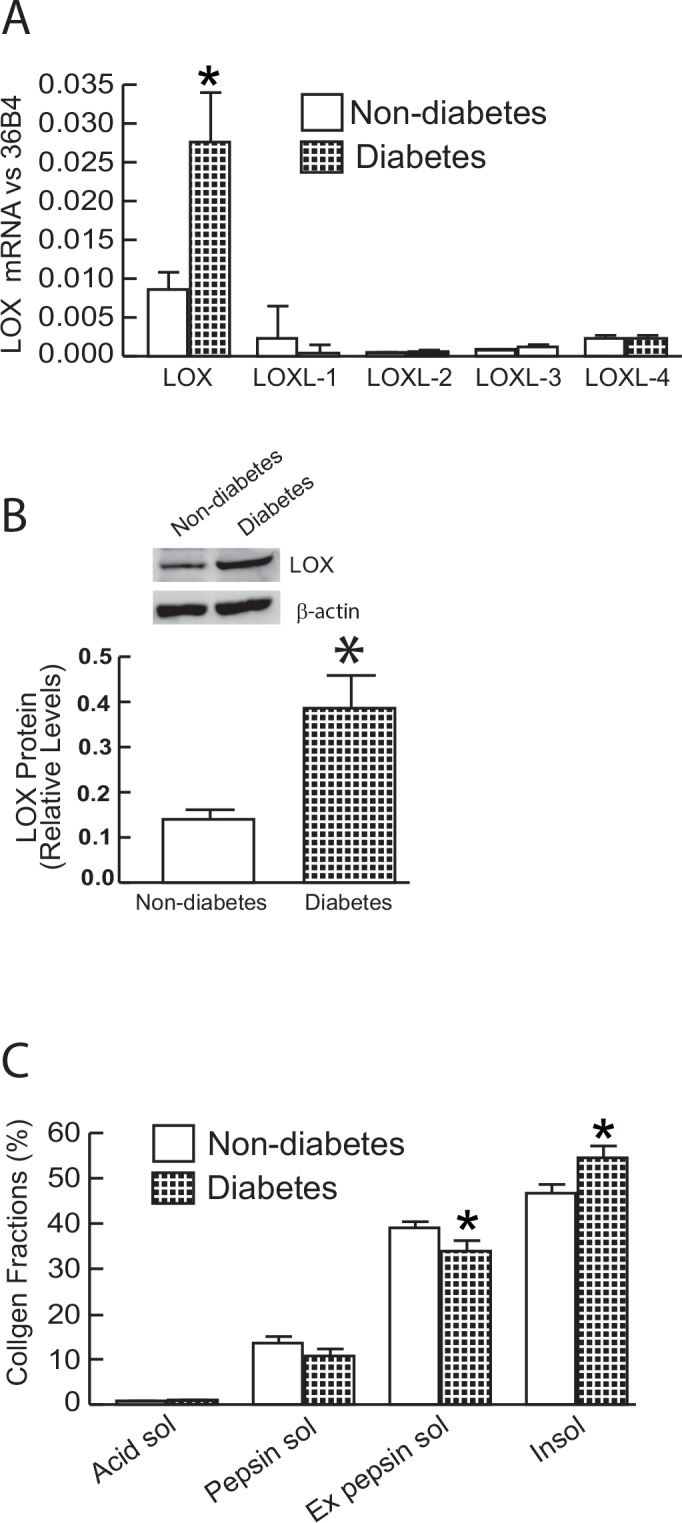
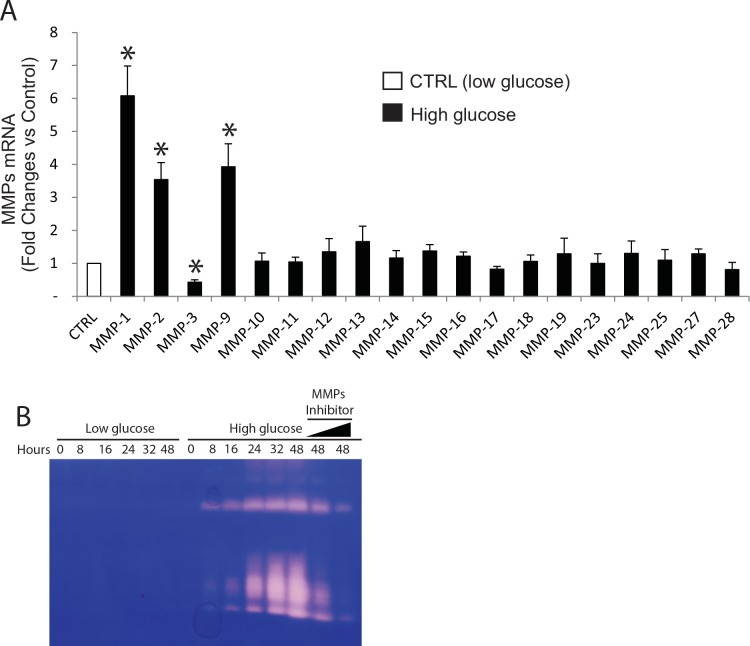
Alterations of the collagen, the major structural protein in skin, contribute significantly to human skin connective tissue aging. As aged-appearing skin is more common in diabetes, here we investigated the molecular basis of aged-appearing skin in diabetes. Among all known human matrix metalloproteinases (MMPs), diabetic skin shows elevated levels of MMP-1 and MMP-2. Laser capture microdissection (LCM) coupled real-time PCR indicated that elevated MMPs in diabetic skin were primarily expressed in the dermis. Furthermore, diabetic skin shows increased lysyl oxidase (LOX) expression and higher cross-linked collagens. Atomic force microscopy (AFM) further indicated that collagen fibrils were fragmented/disorganized, and key mechanical properties of traction force and tensile strength were increased in diabetic skin, compared to intact/well-organized collagen fibrils in non-diabetic skin. In in vitro tissue culture system, multiple MMPs including MMP-1 and MM-2 were induced by high glucose (25 mM) exposure to isolated primary human skin dermal fibroblasts, the major cells responsible for collagen homeostasis in skin. The elevation of MMPs and LOX over the years is thought to result in the accumulation of fragmented and cross-linked collagen, and thus impairs dermal collagen structural integrity and mechanical properties in diabetes. Our data partially explain why old-looking skin is more common in diabetic patients.
胶原蛋白是皮肤中的主要结构蛋白,其改变是导致人类皮肤结缔组织衰老的重要因素。因为在糖尿病患者中,出现老化外观的皮肤更为常见,所以我们在此研究了糖尿病患者皮肤出现老化外观的分子基础。在所有已知的人类基质金属蛋白酶(MMPs)中,糖尿病皮肤中MMP-1和MMP-2的水平升高。激光捕获显微切割(LCM)结合实时PCR表明,糖尿病皮肤中MMPs水平升高主要表现在真皮层。此外,糖尿病皮肤中赖氨酰氧化酶(LOX)表达增加,交联胶原蛋白含量更高。原子力显微镜(AFM)进一步表明,与非糖尿病皮肤中完整/排列良好的胶原纤维相比,糖尿病皮肤中的胶原纤维发生了断裂/紊乱,且其关键力学性能如牵引力和拉伸强度有所增加。在体外组织培养系统中,将分离的原代人皮肤成纤维细胞(皮肤中负责维持胶原稳态的主要细胞)暴露于高糖(25 mM)环境中,可诱导包括MMP-1和MMP-2在内的多种MMPs产生。多年来MMPs和LOX水平的升高被认为会导致断裂和交联胶原蛋白的积累,从而损害糖尿病患者皮肤真皮层胶原蛋白的结构完整性和力学性能。我们的数据部分解释了为什么糖尿病患者中出现老化外观皮肤的情况更为常见。