Dunea Daniel, Iordache Stefania, Liu Hai-Ying, Bøhler Trond, Pohoata Alin, Radulescu Cristiana
Valahia University of Targoviste, Aleea Sinaia no. 13, RO-130004, Targoviste, Romania.
Norwegian Institute for Air Research - NILU, Instituttveien 18, PO Box 100, NO-2027, Kjeller, Norway.
Environ Sci Pollut Res Int. 2016 Aug;23(15):15395-406. doi: 10.1007/s11356-016-6734-x. Epub 2016 Apr 26.
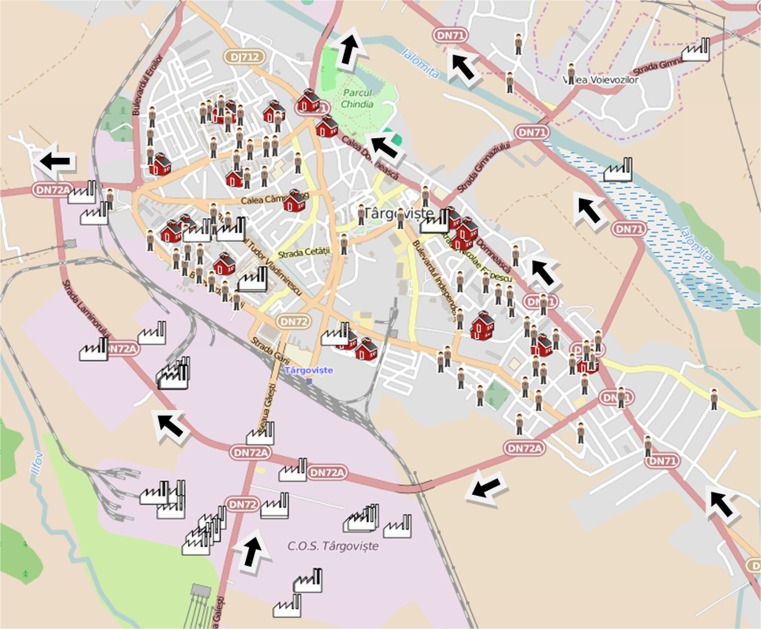
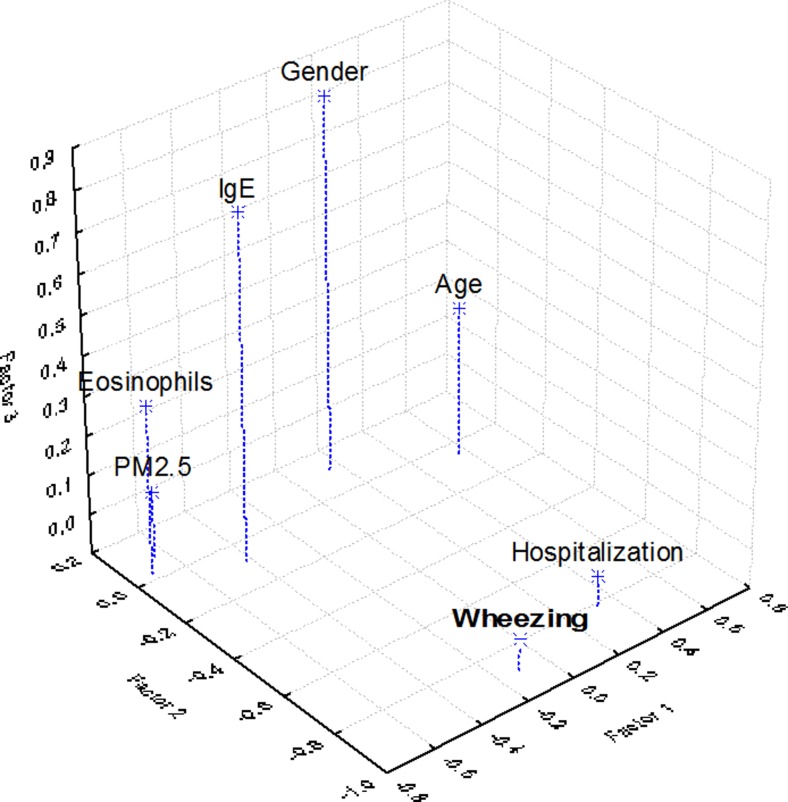
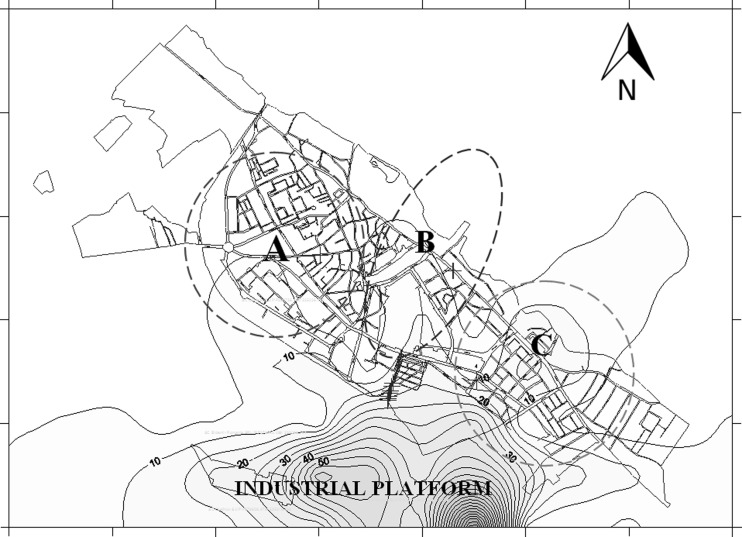
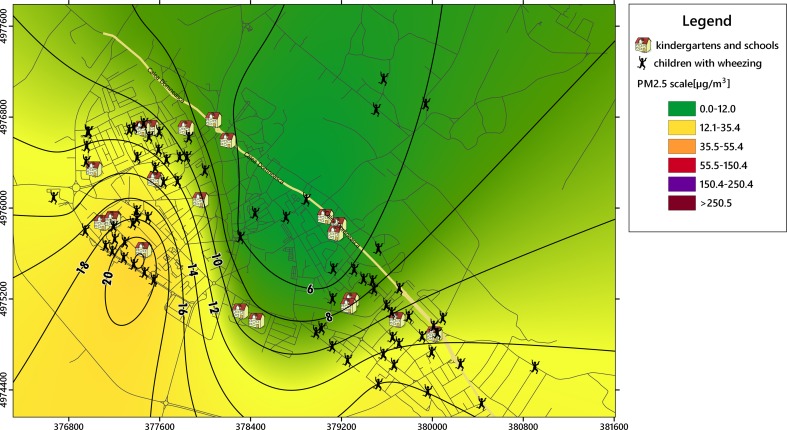
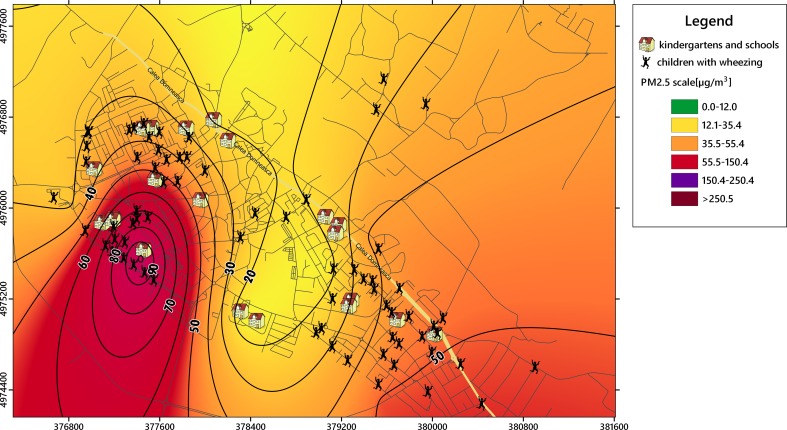
The aim of this study was to link the concentrations of particulate matter with an aerodynamic diameter below 2.5 μm (PM2.5) and associated heavy metals with occurrence of wheezing and hospitalizations due to wheezing in 111 children who live near metallurgical plants in Targoviste City, Romania. A group of 72 children with high levels of immunoglobulin E (IgE) and eosinophils, as well as frequent wheezing episodes, was geolocated on digital thematic maps. Monitoring campaigns and medical assessments were performed over two consecutive years (2013-2014). The multiannual average concentrations of PM2.5 ranged from 4.6 to 22.5 μg m(-3), up to a maximum value of 102 μg m(-3). Significant correlations (p < 0.01) were observed between the locations of the children with respiratory issues and the PM2.5 multiannual average (r = 0.985) and PM2.5 maximum (r = 0.813). Fe, Ni, Cd, and Cr were the main marker elements of the emissions from steel production and metal-working facilities in the Targoviste area. The results support the hypothesis that increased PM2.5 levels directly influence wheezing symptom and asthma attacks in the analyzed group. IgE, eosinophils, and wheezing episodes may be considered key indicators with which to evaluate the adverse effects of PM2.5 air pollution on children's health.
本研究旨在将空气动力学直径小于2.5微米的颗粒物(PM2.5)及其相关重金属的浓度,与罗马尼亚特尔戈维什泰市冶金厂附近居住的111名儿童的喘息发生情况及因喘息而住院的情况联系起来。一组72名免疫球蛋白E(IgE)和嗜酸性粒细胞水平高且喘息发作频繁的儿童,被定位在数字专题地图上。连续两年(2013 - 2014年)开展了监测活动和医学评估。PM2.5的多年平均浓度在4.6至22.5微克/立方米之间,最高值达102微克/立方米。在有呼吸问题的儿童所在位置与PM2.5多年平均值(r = 0.985)和PM2.5最大值(r = 0.813)之间观察到显著相关性(p < 0.01)。铁、镍、镉和铬是特尔戈维什泰地区钢铁生产和金属加工设施排放的主要标志物元素。结果支持以下假设:PM2.5水平升高直接影响分析组中的喘息症状和哮喘发作。IgE、嗜酸性粒细胞和喘息发作可被视为评估PM2.5空气污染对儿童健康不良影响的关键指标。