Tenorio María J, Ross Breyan H, Luchsinger Charlotte, Rivera-Dictter Andrés, Arriagada Cecilia, Acuña Diego, Aguilar Marcelo, Cavieres Viviana, Burgos Patricia V, Ehrenfeld Pamela, Mardones Gonzalo A
Department of Physiology, School of Medicine, and Centro Interdisciplinario de Estudios del Sistema Nervioso (CISNe), Universidad Austral de Chile, Valdivia, Chile.
Department of Anatomy, Histology and Pathology, School of Medicine, and Centro Interdisciplinario de Estudios del Sistema Nervioso (CISNe), Universidad Austral de Chile, Valdivia, Chile.
PLoS One. 2016 Apr 28;11(4):e0154719. doi: 10.1371/journal.pone.0154719. eCollection 2016.
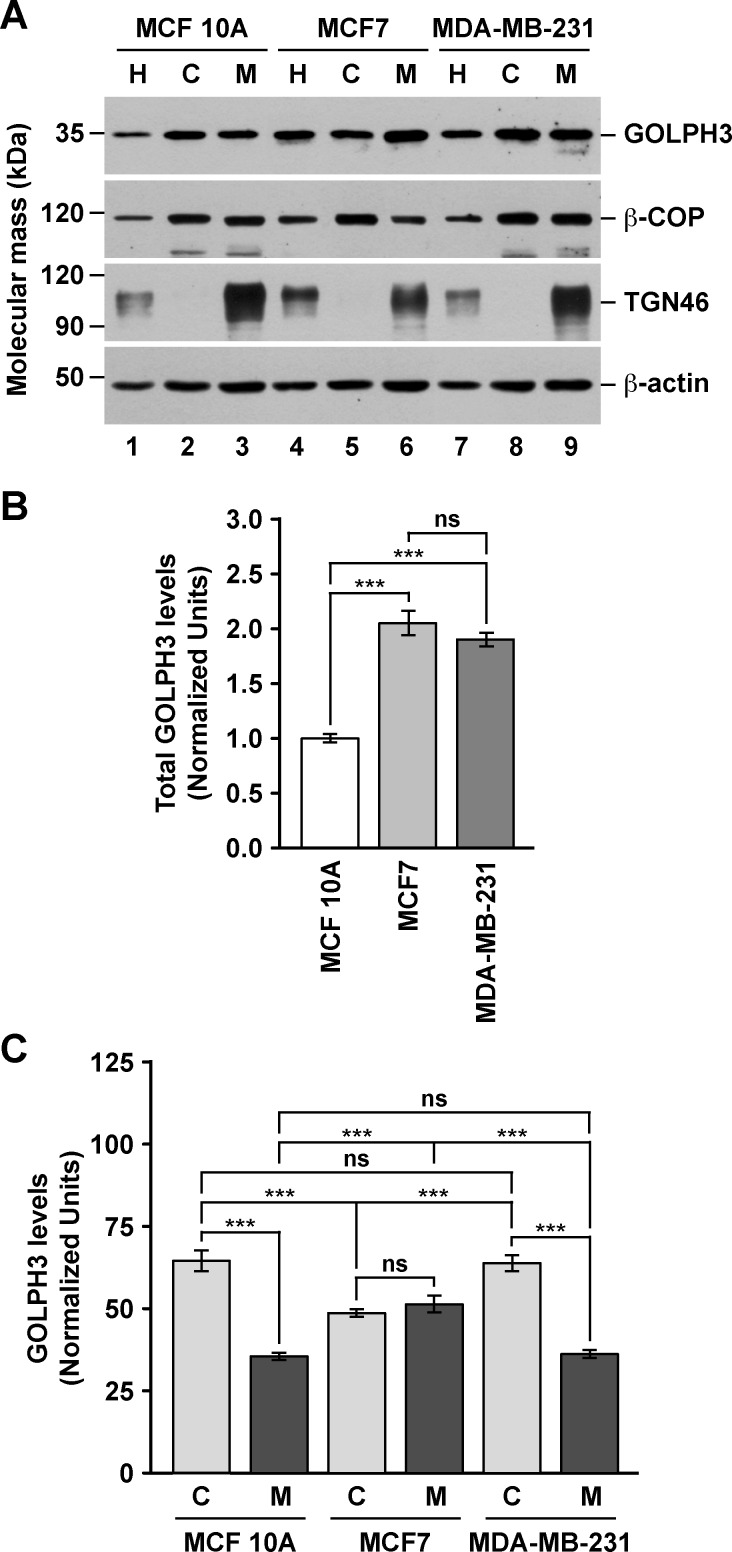
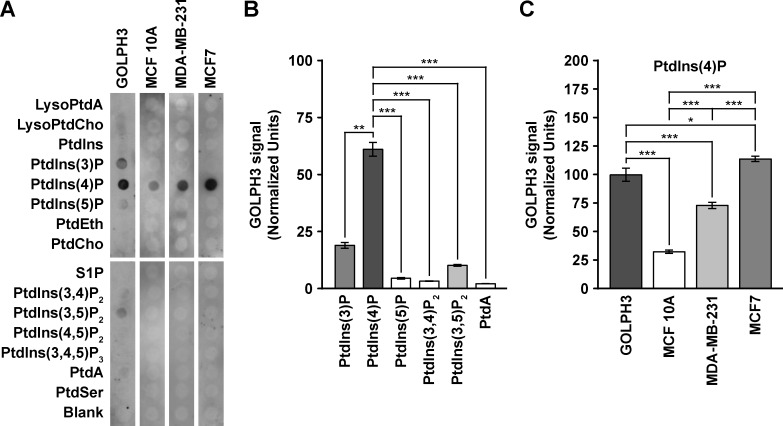
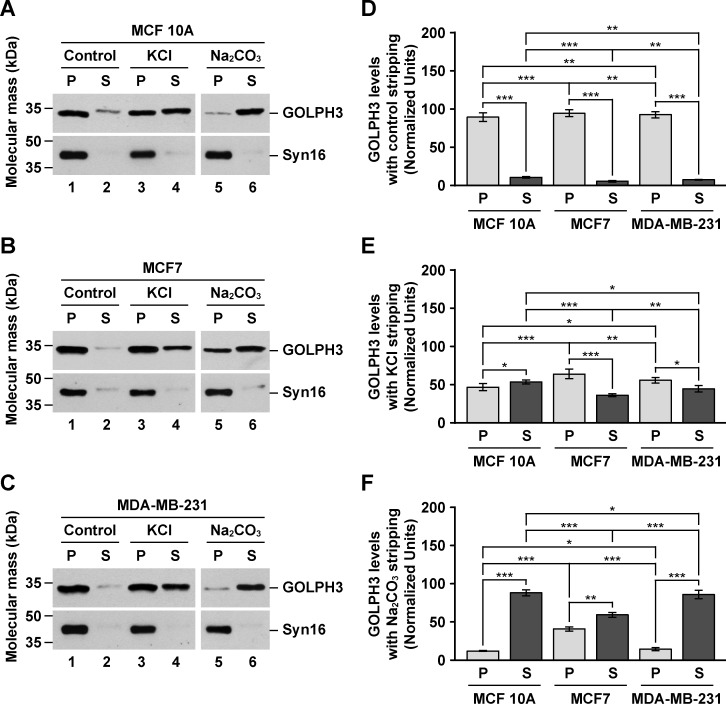
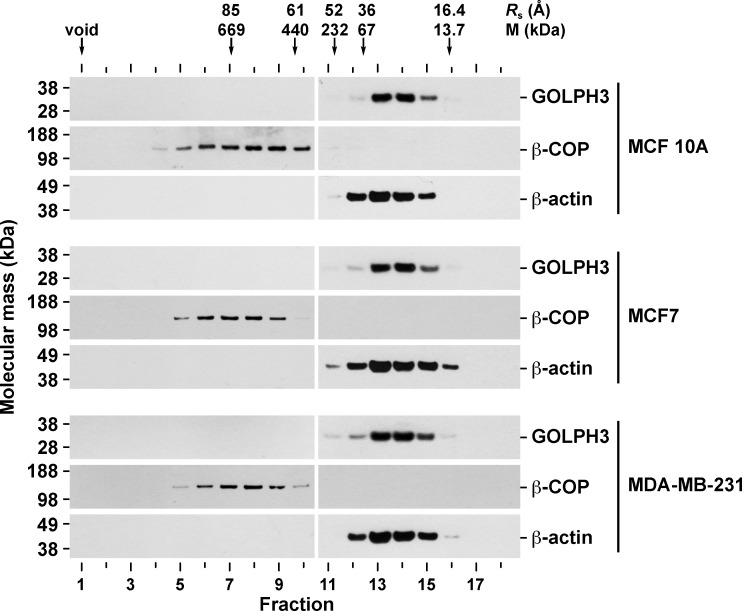
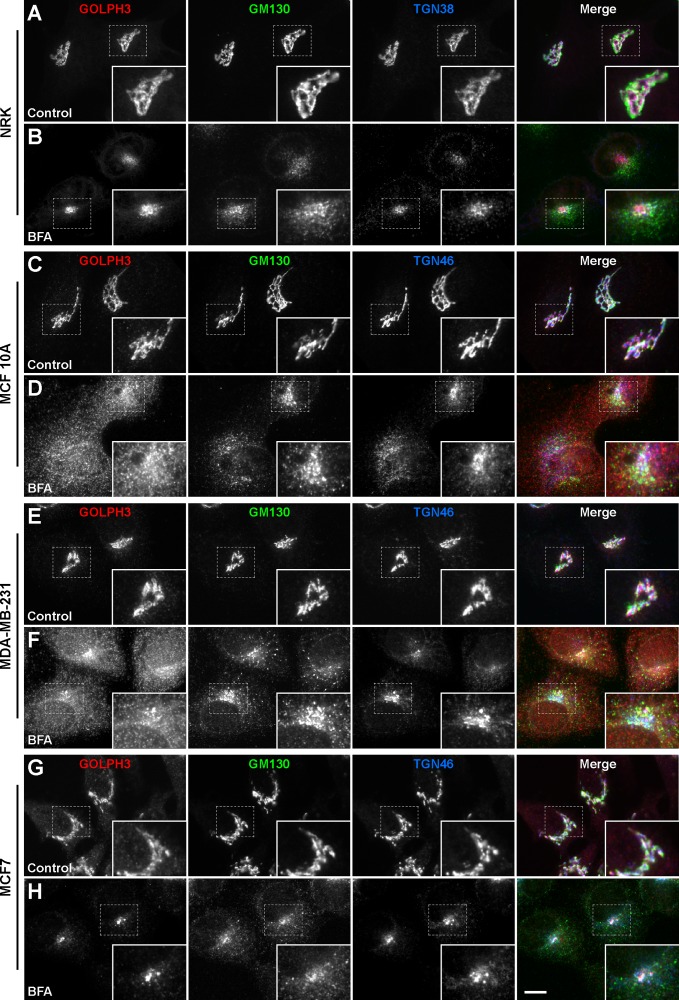
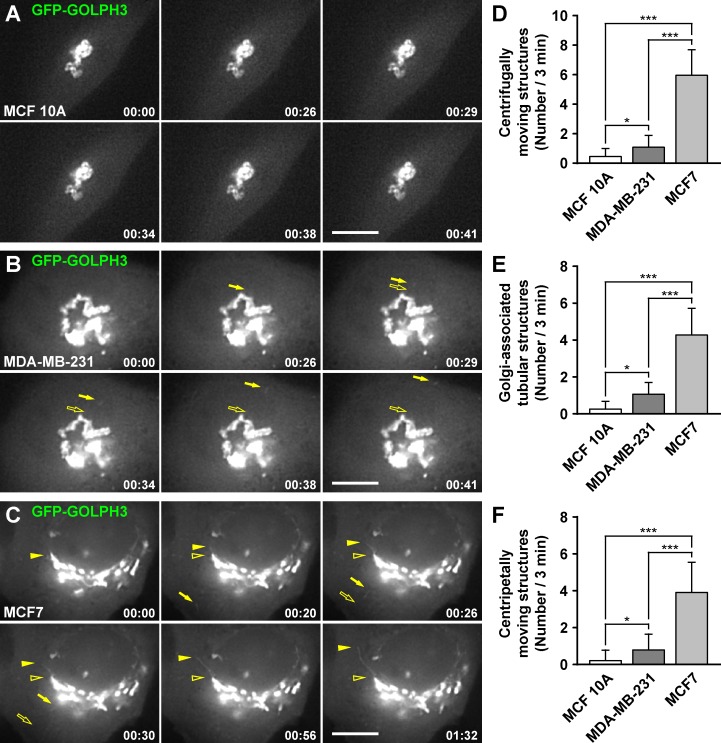
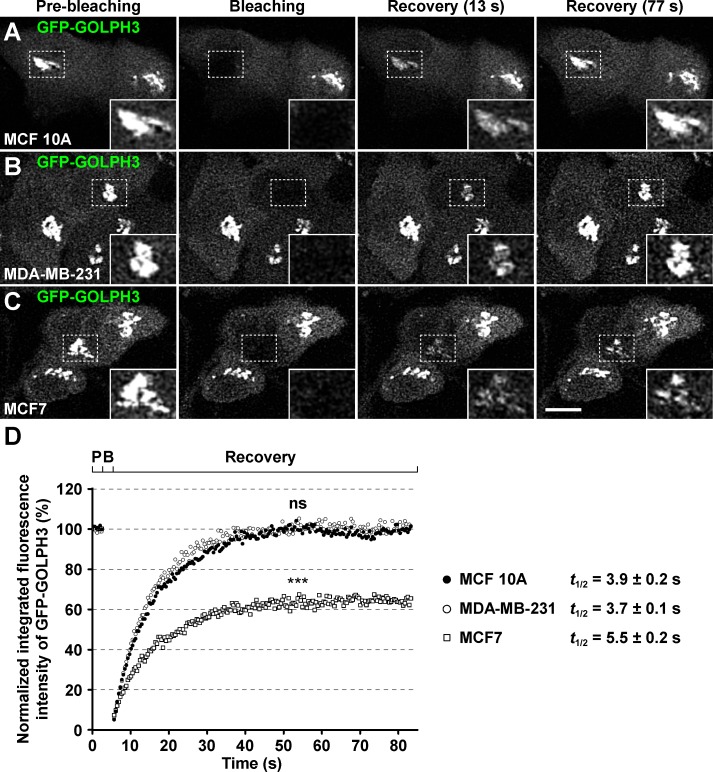
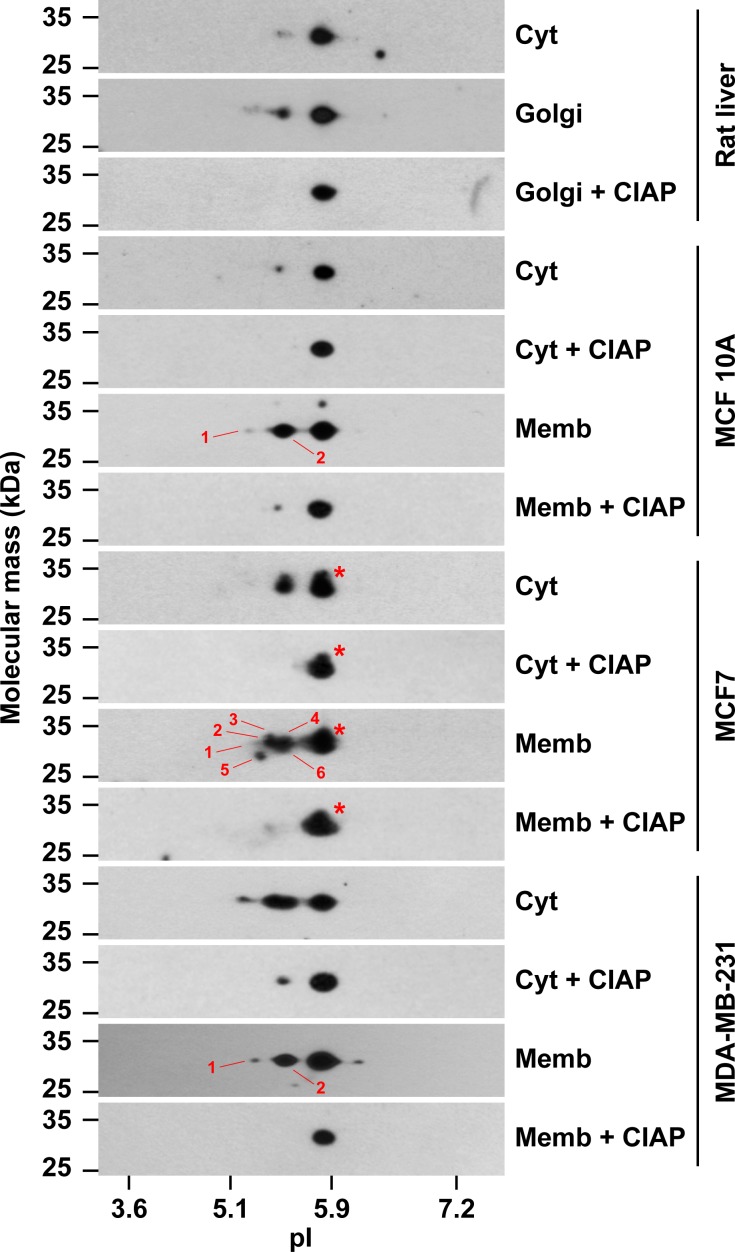
Golgi phosphoprotein 3 (GOLPH3) has been implicated in the development of carcinomas in many human tissues, and is currently considered a bona fide oncoprotein. Importantly, several tumor types show overexpression of GOLPH3, which is associated with tumor progress and poor prognosis. However, the underlying molecular mechanisms that connect GOLPH3 function with tumorigenicity are poorly understood. Experimental evidence shows that depletion of GOLPH3 abolishes transformation and proliferation of tumor cells in GOLPH3-overexpressing cell lines. Conversely, GOLPH3 overexpression drives transformation of primary cell lines and enhances mouse xenograft tumor growth in vivo. This evidence suggests that overexpression of GOLPH3 could result in distinct features of GOLPH3 in tumor cells compared to that of non-tumorigenic cells. GOLPH3 is a peripheral membrane protein mostly localized at the trans-Golgi network, and its association with Golgi membranes depends on binding to phosphatidylinositol-4-phosphate. GOLPH3 is also contained in a large cytosolic pool that rapidly exchanges with Golgi-associated pools. GOLPH3 has also been observed associated with vesicles and tubules arising from the Golgi, as well as other cellular compartments, and hence it has been implicated in several membrane trafficking events. Whether these and other features are typical to all different types of cells is unknown. Moreover, it remains undetermined how GOLPH3 acts as an oncoprotein at the Golgi. Therefore, to better understand the roles of GOLPH3 in cancer cells, we sought to compare some of its biochemical and cellular properties in the human breast cancer cell lines MCF7 and MDA-MB-231 with that of the non-tumorigenic breast human cell line MCF 10A. We found unexpected differences that support the notion that in different cancer cells, overexpression of GOLPH3 functions in diverse fashions, which may influence specific tumorigenic phenotypes.
高尔基体磷蛋白3(GOLPH3)与多种人体组织中的癌症发生有关,目前被认为是一种真正的癌蛋白。重要的是,几种肿瘤类型显示出GOLPH3的过表达,这与肿瘤进展和不良预后相关。然而,将GOLPH3功能与肿瘤发生联系起来的潜在分子机制仍知之甚少。实验证据表明,在GOLPH3过表达的细胞系中,GOLPH3的缺失可消除肿瘤细胞的转化和增殖。相反,GOLPH3的过表达驱动原代细胞系的转化并增强小鼠体内异种移植肿瘤的生长。这一证据表明,与非致瘤细胞相比,GOLPH3的过表达可能导致肿瘤细胞中GOLPH3具有不同的特征。GOLPH3是一种外周膜蛋白,主要定位于反式高尔基体网络,其与高尔基体膜的结合取决于与磷脂酰肌醇-4-磷酸的结合。GOLPH3也存在于一个大的胞质池中,该池与高尔基体相关池快速交换。还观察到GOLPH3与源自高尔基体的囊泡和小管以及其他细胞区室相关,因此它与多种膜运输事件有关。这些以及其他特征是否是所有不同类型细胞所共有的尚不清楚。此外,GOLPH3如何在高尔基体处作为癌蛋白发挥作用仍未确定。因此,为了更好地理解GOLPH3在癌细胞中的作用,我们试图比较其在人乳腺癌细胞系MCF7和MDA-MB-231以及非致瘤性人乳腺细胞系MCF 10A中的一些生化和细胞特性。我们发现了意想不到的差异,这支持了这样一种观点,即在不同的癌细胞中,GOLPH3的过表达以不同的方式发挥作用,这可能会影响特定的致瘤表型。