
基于多网络上活动驱动的认知传播的疫情扩散
Epidemic spreading with activity-driven awareness diffusion on multiplex network.
作者信息
Guo Quantong, Lei Yanjun, Jiang Xin, Ma Yifang, Huo Guanying, Zheng Zhiming
机构信息
School of Mathematics and Systems Science, Beihang University, Beijing 100191, China.
Key Laboratory of Mathematics Informatics Behavioral Semantics (LMIB), Ministry of Education, China.
出版信息
Chaos. 2016 Apr;26(4):043110. doi: 10.1063/1.4947420.
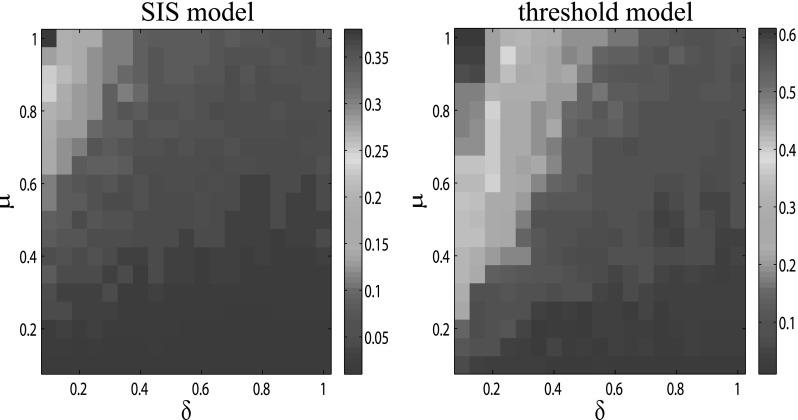
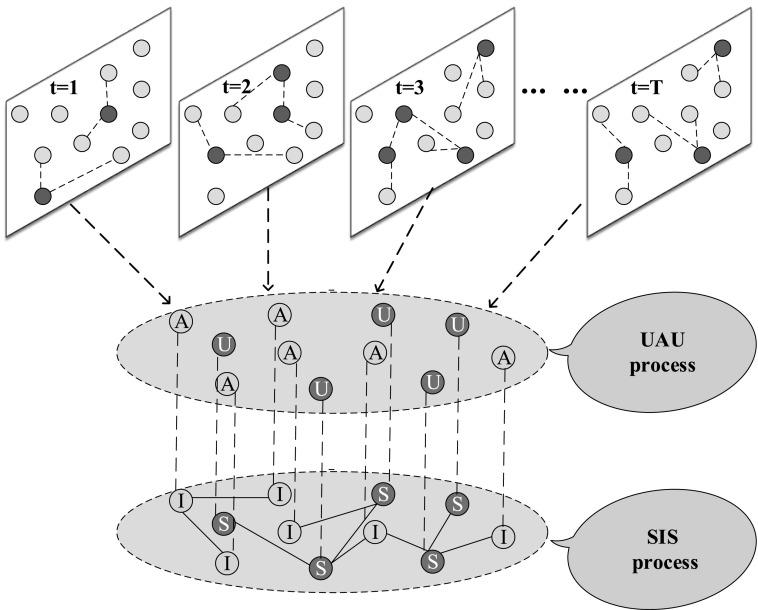
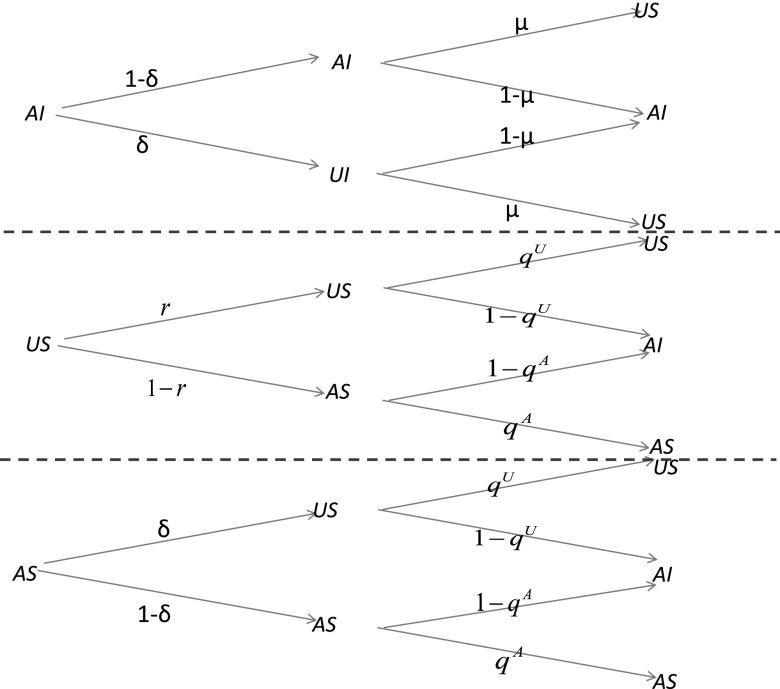
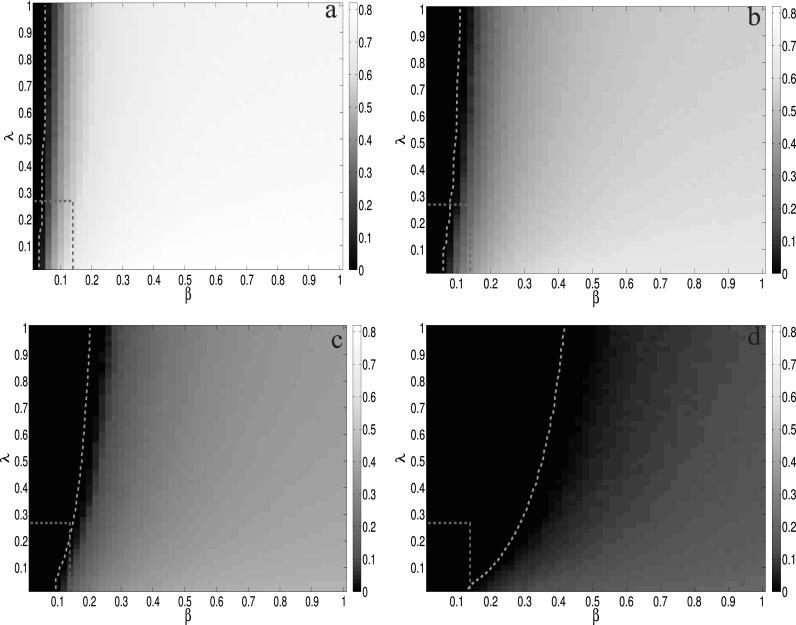
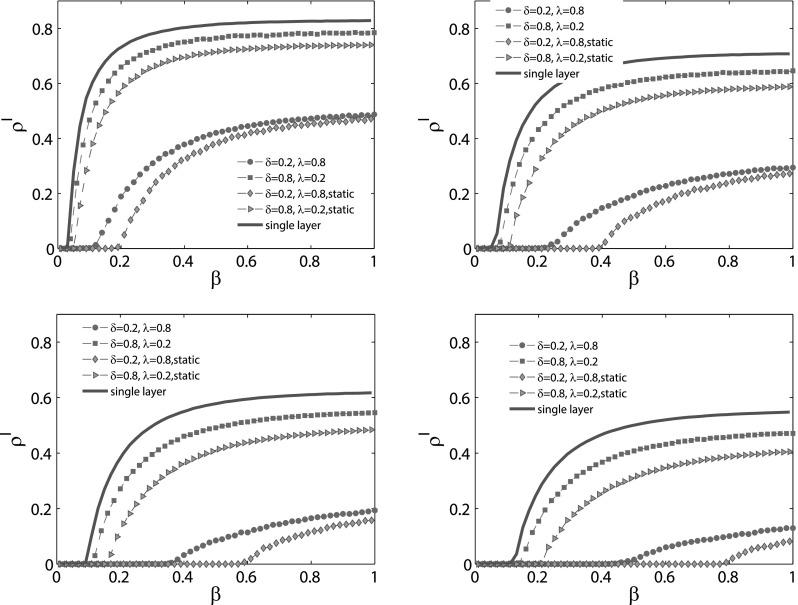
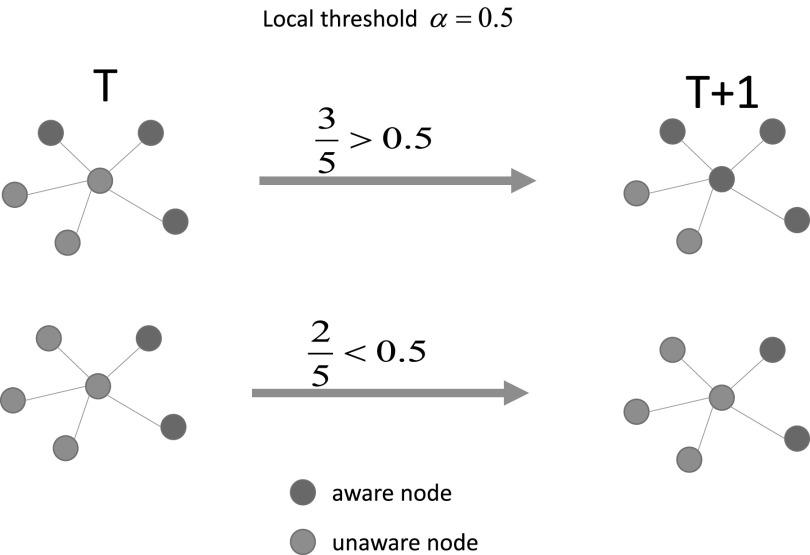
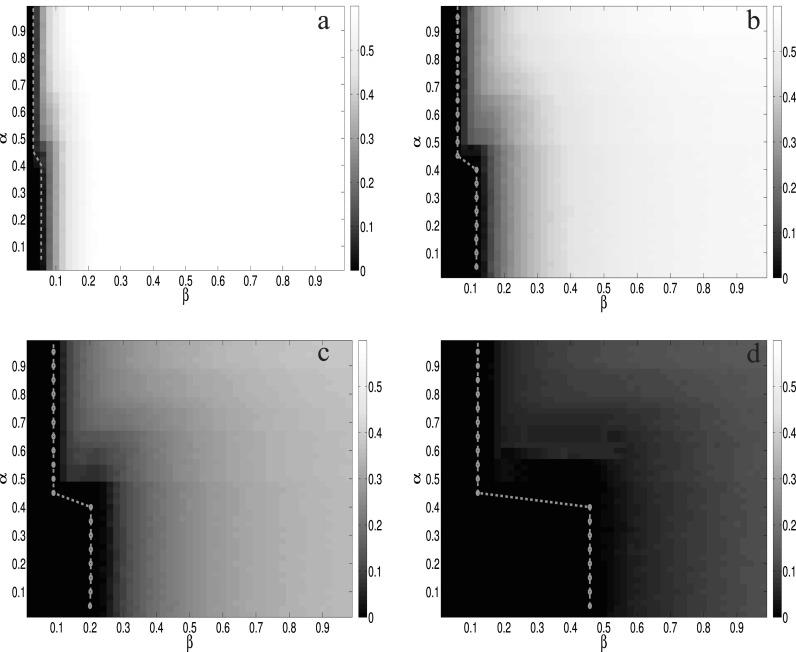
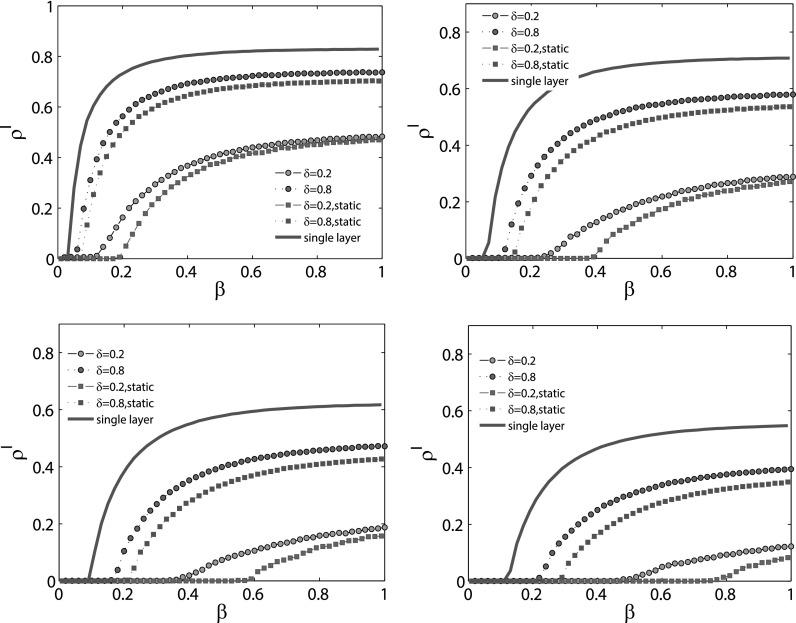
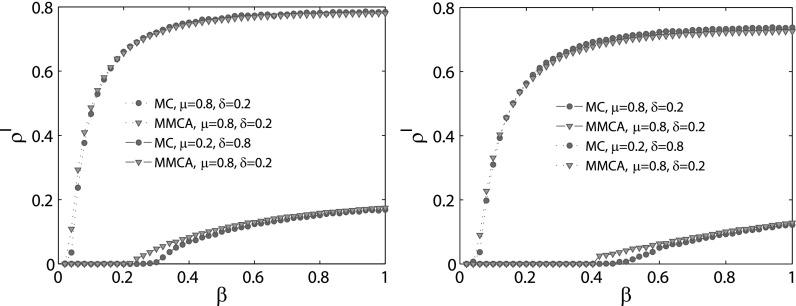
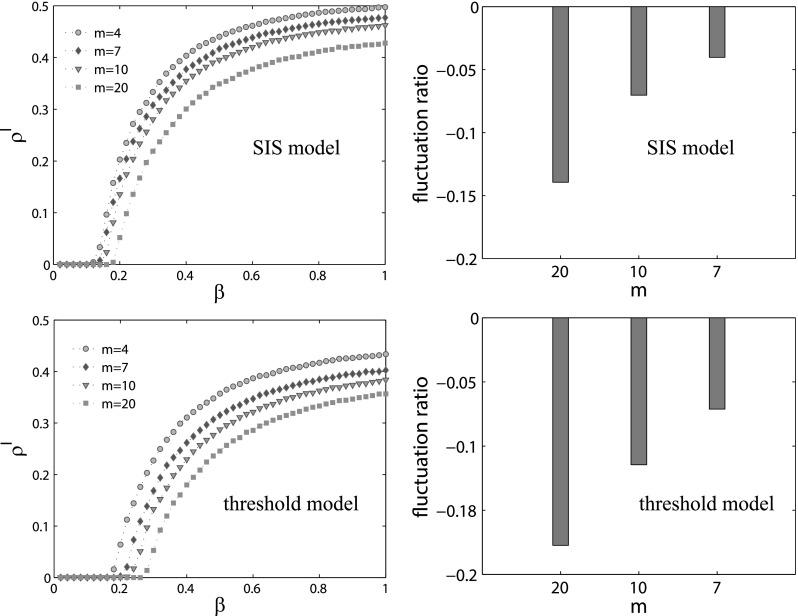
There has been growing interest in exploring the interplay between epidemic spreading with human response, since it is natural for people to take various measures when they become aware of epidemics. As a proper way to describe the multiple connections among people in reality, multiplex network, a set of nodes interacting through multiple sets of edges, has attracted much attention. In this paper, to explore the coupled dynamical processes, a multiplex network with two layers is built. Specifically, the information spreading layer is a time varying network generated by the activity driven model, while the contagion layer is a static network. We extend the microscopic Markov chain approach to derive the epidemic threshold of the model. Compared with extensive Monte Carlo simulations, the method shows high accuracy for the prediction of the epidemic threshold. Besides, taking different spreading models of awareness into consideration, we explored the interplay between epidemic spreading with awareness spreading. The results show that the awareness spreading can not only enhance the epidemic threshold but also reduce the prevalence of epidemics. When the spreading of awareness is defined as susceptible-infected-susceptible model, there exists a critical value where the dynamical process on the awareness layer can control the onset of epidemics; while if it is a threshold model, the epidemic threshold emerges an abrupt transition with the local awareness ratio α approximating 0.5. Moreover, we also find that temporal changes in the topology hinder the spread of awareness which directly affect the epidemic threshold, especially when the awareness layer is threshold model. Given that the threshold model is a widely used model for social contagion, this is an important and meaningful result. Our results could also lead to interesting future research about the different time-scales of structural changes in multiplex networks.
探索流行病传播与人类反应之间的相互作用的兴趣日益浓厚,因为当人们意识到流行病时采取各种措施是很自然的。作为描述现实中人们之间多重联系的一种恰当方式,多重网络,即一组通过多组边相互作用的节点,受到了广泛关注。在本文中,为了探索耦合动力学过程,构建了一个具有两层的多重网络。具体来说,信息传播层是由活动驱动模型生成的时变网络,而传染层是一个静态网络。我们扩展了微观马尔可夫链方法来推导该模型的流行病阈值。与广泛的蒙特卡罗模拟相比,该方法在预测流行病阈值方面显示出高精度。此外,考虑到不同的意识传播模型,我们探索了流行病传播与意识传播之间的相互作用。结果表明,意识传播不仅可以提高流行病阈值,还可以降低流行病的流行程度。当意识传播被定义为易感-感染-易感模型时,存在一个临界值,在该临界值处意识层上的动力学过程可以控制流行病的爆发;而如果它是一个阈值模型,流行病阈值会随着局部意识比率α接近0.5而出现突然转变。此外,我们还发现拓扑结构的时间变化阻碍了意识的传播,这直接影响了流行病阈值,特别是当意识层是阈值模型时。鉴于阈值模型是社会传染中广泛使用的模型,这是一个重要且有意义的结果。我们的结果也可能引发关于多重网络中结构变化的不同时间尺度的有趣未来研究。
 Zotero 插件