McCormack Sarah, Yadav Shruti, Shokal Upasana, Kenney Eric, Cooper Dustin, Eleftherianos Ioannis
Insect Infection and Immunity Laboratory, Department of Biological Sciences, Institute for Biomedical Sciences, The George Washington University, 800 Science and Engineering Hall, 22nd Street NW, Washington, D.C., 20052 USA.
Immun Ageing. 2016 May 1;13:15. doi: 10.1186/s12979-016-0072-1. eCollection 2016.
Molecular and genetic studies in model organisms have recently revealed a dynamic interplay between immunity and ageing mechanisms. In the fruit fly Drosophila melanogaster, inhibition of the insulin/insulin-like growth factor signaling pathway prolongs lifespan, and mutations in the insulin receptor substrate Chico extend the survival of mutant flies against certain bacterial pathogens. Here we investigated the immune phenotypes, immune signaling activation and immune function of chico mutant adult flies against the virulent insect pathogen Photorhabdus luminescens as well as to non-pathogenic Escherichia coli bacteria.
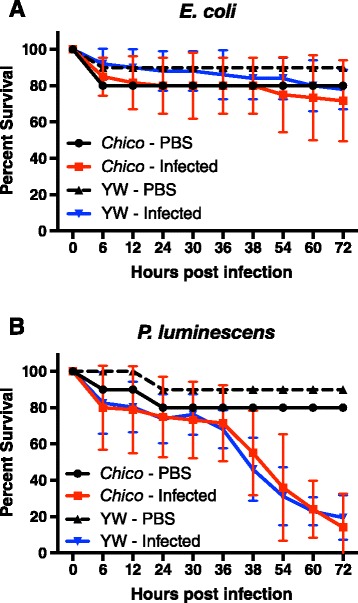
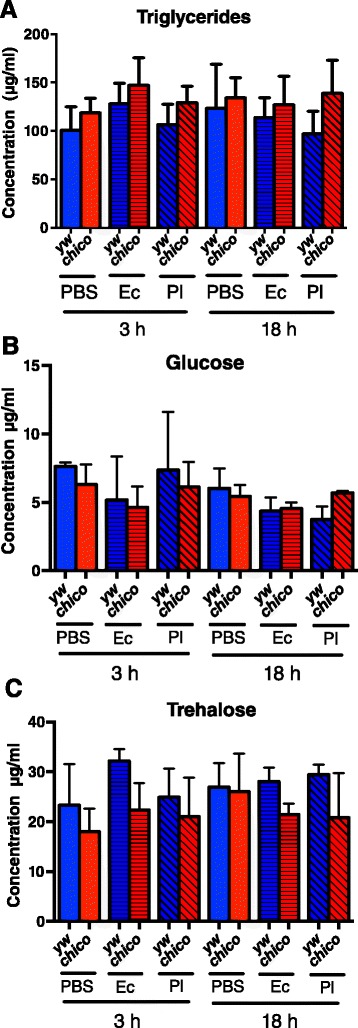
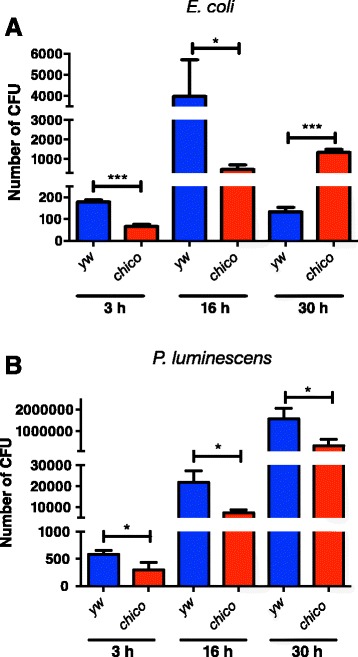
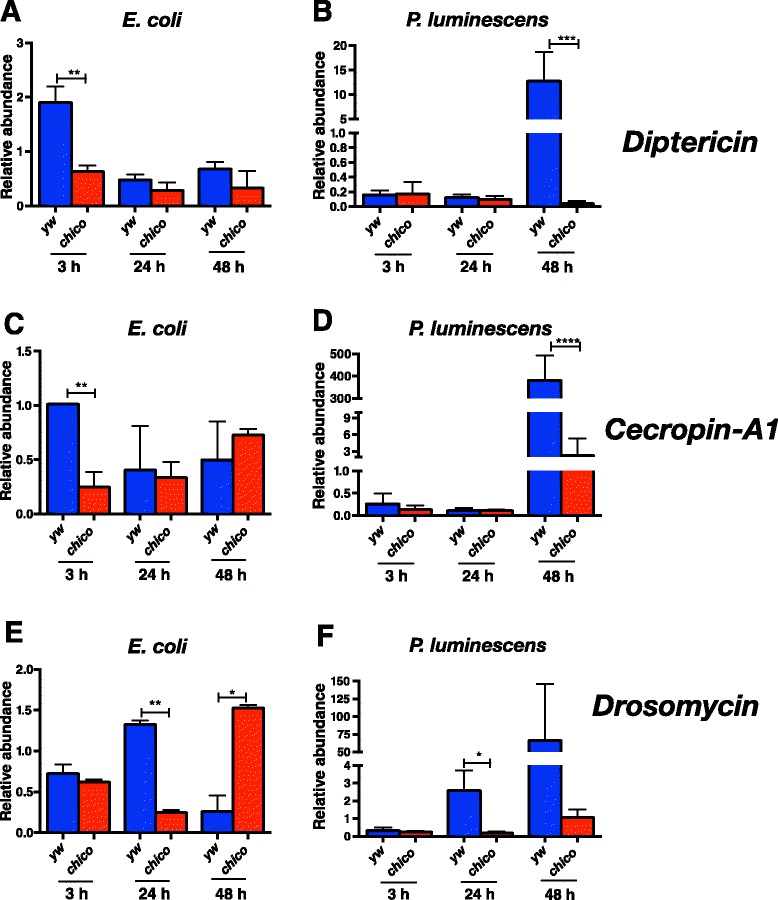
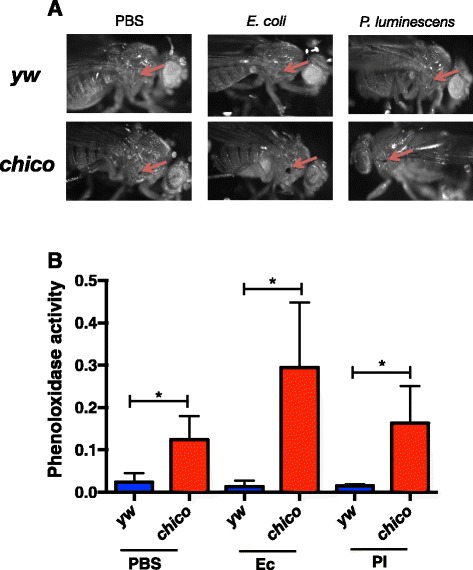
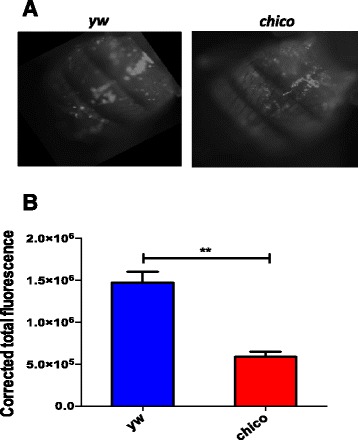
We found that D. melanogaster chico loss-of-function mutant flies were equally able to survive infection by P. luminescens or E. coli compared to their background controls, but they contained fewer numbers of bacterial cells at most time-points after the infection. Analysis of immune signaling pathway activation in flies infected with the pathogenic or the non-pathogenic bacteria showed reduced transcript levels of antimicrobial peptide genes in the chico mutants than in controls. Evaluation of immune function in infected flies revealed increased phenoloxidase activity and melanization response to P. luminescens and E. coli together with reduced phagocytosis of bacteria in the chico mutants. Changes in the antibacterial immune function in the chico mutants was not due to altered metabolic activity.
Our results indicate a novel role for chico in the regulation of the antibacterial immune function in D. melanogaster. Similar studies will further contribute to a better understanding of the interconnection between ageing and immunity and lead to the identification and characterization of the molecular host components that modulate both important biological processes.
最近在模式生物中的分子和遗传学研究揭示了免疫与衰老机制之间的动态相互作用。在果蝇黑腹果蝇中,抑制胰岛素/胰岛素样生长因子信号通路可延长寿命,胰岛素受体底物Chico的突变可延长突变果蝇对某些细菌病原体的存活时间。在这里,我们研究了Chico突变成年果蝇对强毒性昆虫病原体发光杆菌以及非致病性大肠杆菌的免疫表型、免疫信号激活和免疫功能。
我们发现,与背景对照相比,黑腹果蝇Chico功能丧失突变果蝇同样能够在被发光杆菌或大肠杆菌感染后存活,但在感染后的大多数时间点,它们体内的细菌细胞数量较少。对感染致病性或非致病性细菌的果蝇的免疫信号通路激活分析表明,Chico突变体中抗菌肽基因的转录水平低于对照。对感染果蝇的免疫功能评估显示,Chico突变体中对发光杆菌和大肠杆菌的酚氧化酶活性和黑化反应增加,同时细菌的吞噬作用降低。Chico突变体中抗菌免疫功能的变化并非由于代谢活性改变。
我们的结果表明Chico在黑腹果蝇抗菌免疫功能调节中具有新作用。类似的研究将进一步有助于更好地理解衰老与免疫之间的相互联系,并导致鉴定和表征调节这两个重要生物学过程的分子宿主成分。