Özcan Emrah, Çakır Tunahan
Computational Systems Biology Group, Department of Bioengineering, Gebze Technical University Gebze, Turkey.
Front Neurosci. 2016 Apr 18;10:156. doi: 10.3389/fnins.2016.00156. eCollection 2016.
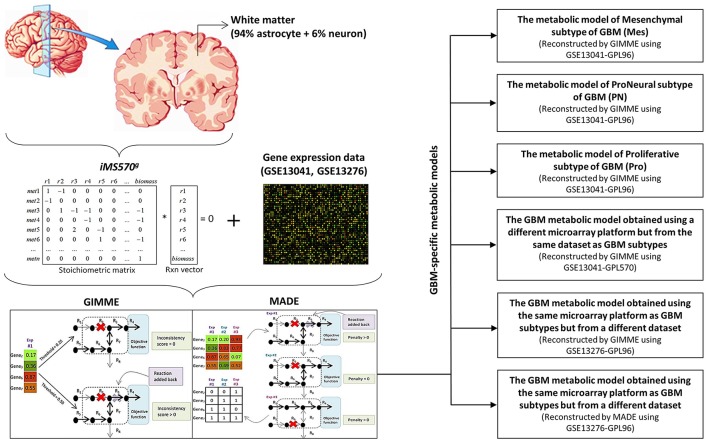
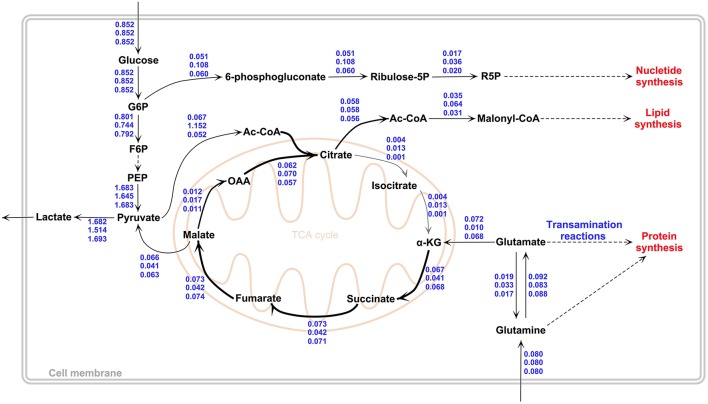
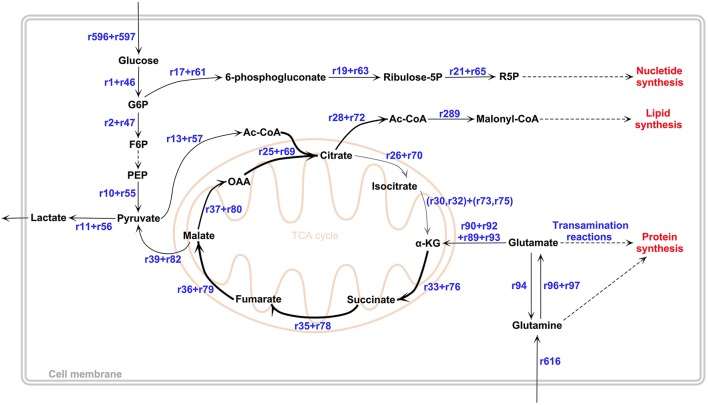
Developments in genome scale metabolic modeling techniques and omics technologies have enabled the reconstruction of context-specific metabolic models. In this study, glioblastoma multiforme (GBM), one of the most common and aggressive malignant brain tumors, is investigated by mapping GBM gene expression data on the growth-implemented brain specific genome-scale metabolic network, and GBM-specific models are generated. The models are used to calculate metabolic flux distributions in the tumor cells. Metabolic phenotypes predicted by the GBM-specific metabolic models reconstructed in this work reflect the general metabolic reprogramming of GBM, reported both in in-vitro and in-vivo experiments. The computed flux profiles quantitatively predict that major sources of the acetyl-CoA and oxaloacetic acid pool used in TCA cycle are pyruvate dehydrogenase from glycolysis and anaplerotic flux from glutaminolysis, respectively. Also, our results, in accordance with recent studies, predict a contribution of oxidative phosphorylation to ATP pool via a slightly active TCA cycle in addition to the major contributor aerobic glycolysis. We verified our results by using different computational methods that incorporate transcriptome data with genome-scale models and by using different transcriptome datasets. Correct predictions of flux distributions in glycolysis, glutaminolysis, TCA cycle and lipid precursor metabolism validate the reconstructed models for further use in future to simulate more specific metabolic patterns for GBM.
基因组规模代谢建模技术和组学技术的发展使得构建特定背景的代谢模型成为可能。在本研究中,通过将多形性胶质母细胞瘤(GBM)基因表达数据映射到生长实现的脑特异性基因组规模代谢网络上,对最常见且侵袭性最强的恶性脑肿瘤之一多形性胶质母细胞瘤进行了研究,并生成了GBM特异性模型。这些模型用于计算肿瘤细胞中的代谢通量分布。在本研究中重建的GBM特异性代谢模型预测的代谢表型反映了GBM在体外和体内实验中均报道的一般代谢重编程。计算得到的通量分布定量预测了三羧酸循环(TCA循环)中使用的乙酰辅酶A和草酰乙酸池的主要来源分别是糖酵解中的丙酮酸脱氢酶和谷氨酰胺分解中的回补通量。此外,我们的结果与最近的研究一致,预测除了主要的有氧糖酵解贡献者外,氧化磷酸化还通过略微活跃的TCA循环对ATP池有贡献。我们通过使用将转录组数据与基因组规模模型相结合的不同计算方法以及使用不同的转录组数据集来验证我们的结果。对糖酵解、谷氨酰胺分解、TCA循环和脂质前体代谢中通量分布的正确预测验证了重建模型,以便未来进一步用于模拟GBM更具体的代谢模式。