Carotta Sebastian
Immune Modulation Department, Boehringer Ingelheim RCV, Vienna, Austria; The Walter and Eliza Hall Institute of Medical Research, Parkville, VIC, Australia.
Front Immunol. 2016 Apr 21;7:152. doi: 10.3389/fimmu.2016.00152. eCollection 2016.
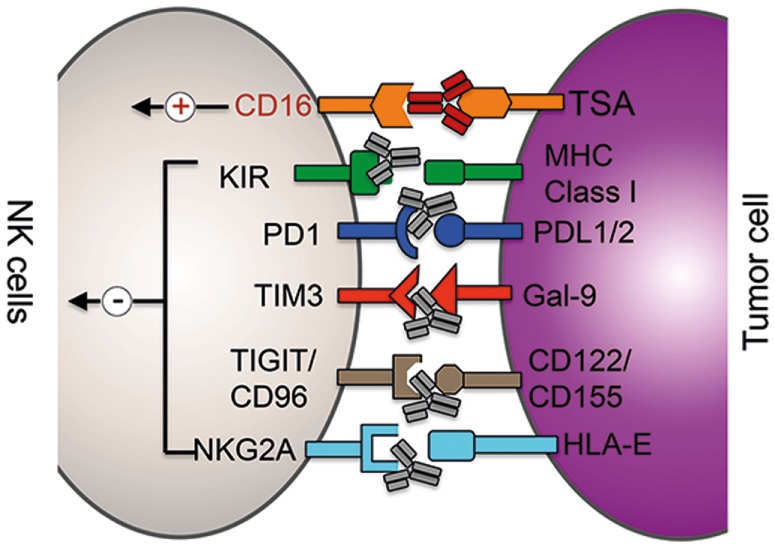
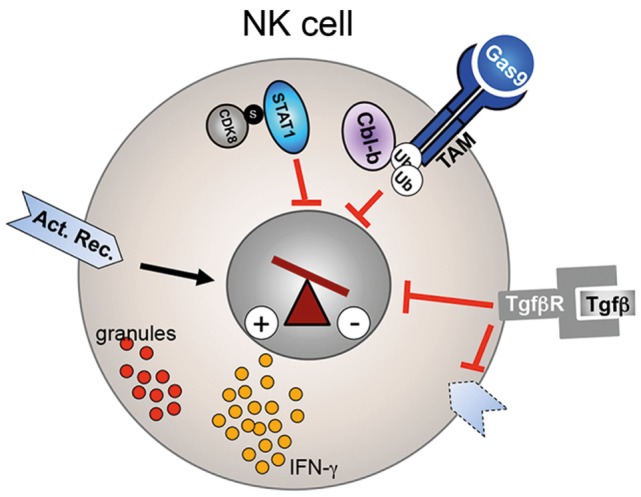
The recent success of checkpoint blockade has highlighted the potential of immunotherapy approaches for cancer treatment. Although the majority of approved immunotherapy drugs target T cell subsets, it is appreciated that other components of the immune system have important roles in tumor immune surveillance as well and thus represent promising additional targets for immunotherapy. Natural killer (NK) cells are the body's first line of defense against infected or transformed cells, as they kill target cells in an antigen-independent manner. Although several studies have clearly demonstrated the active role of NK cells in cancer immune surveillance, only few clinically approved therapies currently exist that harness their potential. Our increased understanding of NK cell biology over the past few years has renewed the interest in NK cell-based anticancer therapies, which has lead to a steady increase of NK cell-based clinical and preclinical trials. Here, the role of NK cells in cancer immune surveillance is summarized, and several novel approaches to enhance NK cell cytotoxicity against cancer are discussed.
检查点阻断疗法最近取得的成功凸显了免疫疗法在癌症治疗中的潜力。尽管大多数已获批的免疫疗法药物靶向T细胞亚群,但人们认识到免疫系统的其他成分在肿瘤免疫监视中也发挥着重要作用,因此是免疫疗法有前景的额外靶点。自然杀伤(NK)细胞是机体抵御感染或转化细胞的第一道防线,因为它们以抗原非依赖的方式杀伤靶细胞。尽管多项研究已清楚证明NK细胞在癌症免疫监视中发挥的积极作用,但目前临床上获批利用其潜力的疗法却很少。在过去几年里,我们对NK细胞生物学的认识不断加深,这重新激发了人们对基于NK细胞的抗癌疗法的兴趣,导致基于NK细胞的临床和临床前试验稳步增加。在此,总结了NK细胞在癌症免疫监视中的作用,并讨论了几种增强NK细胞对癌症细胞毒性的新方法。