Gazave Elodie, Tassone Erica E, Ilut Daniel C, Wingerson Megan, Datema Erwin, Witsenboer Hanneke M A, Davis James B, Grant David, Dyer John M, Jenks Matthew A, Brown Jack, Gore Michael A
Plant Breeding and Genetics Section, School of Integrative Plant Science, Cornell University, Ithaca NY, USA.
Plant Physiology and Genetics Research Unit, U.S. Arid Land Agricultural Research Center, United States Department of Agriculture - Agricultural Research Service, Maricopa AZ, USA.
Front Plant Sci. 2016 Apr 21;7:525. doi: 10.3389/fpls.2016.00525. eCollection 2016.
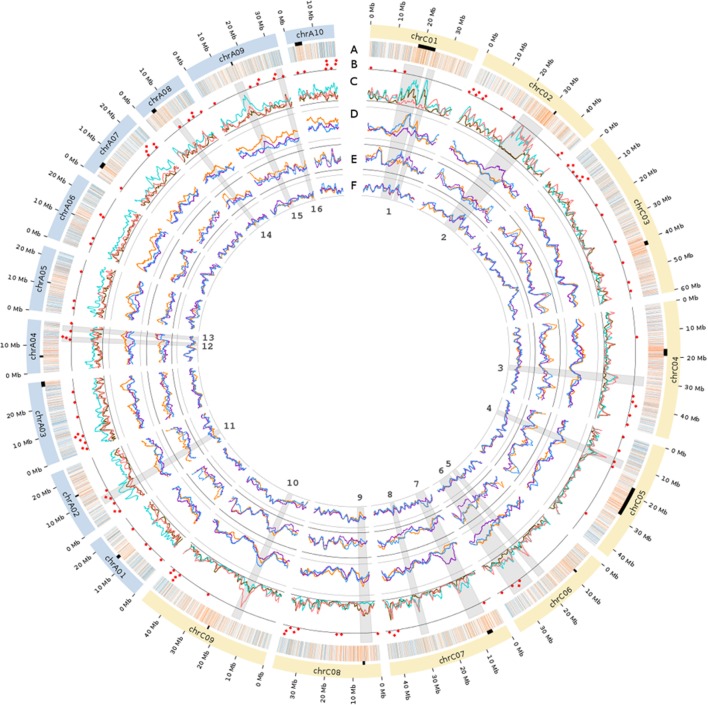
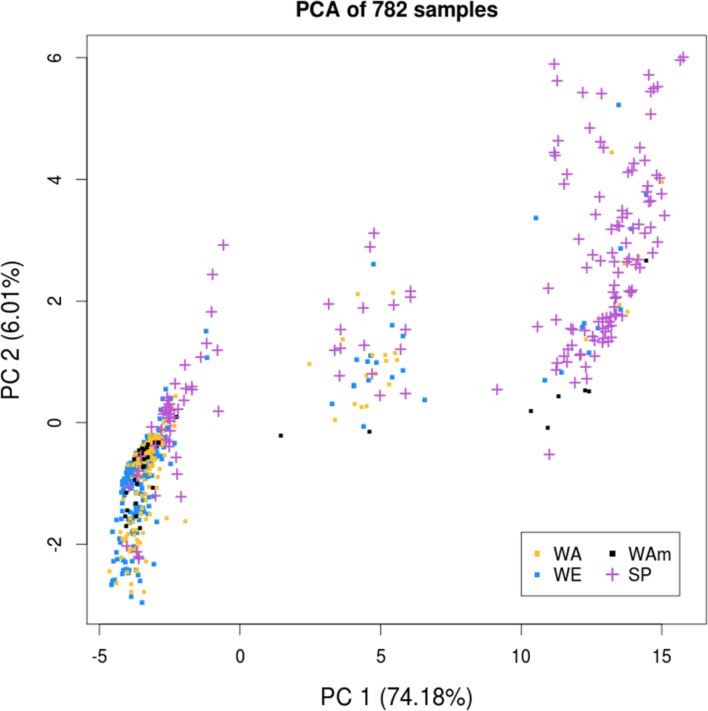
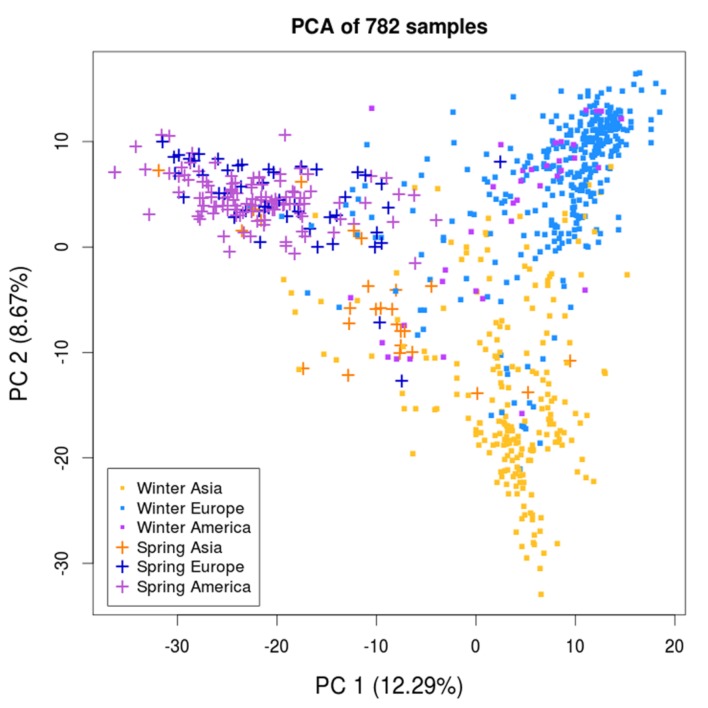
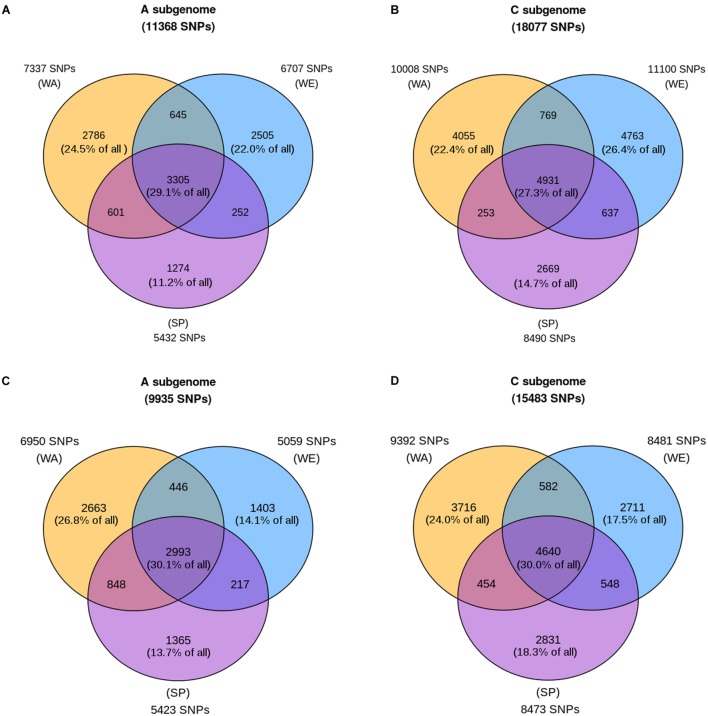
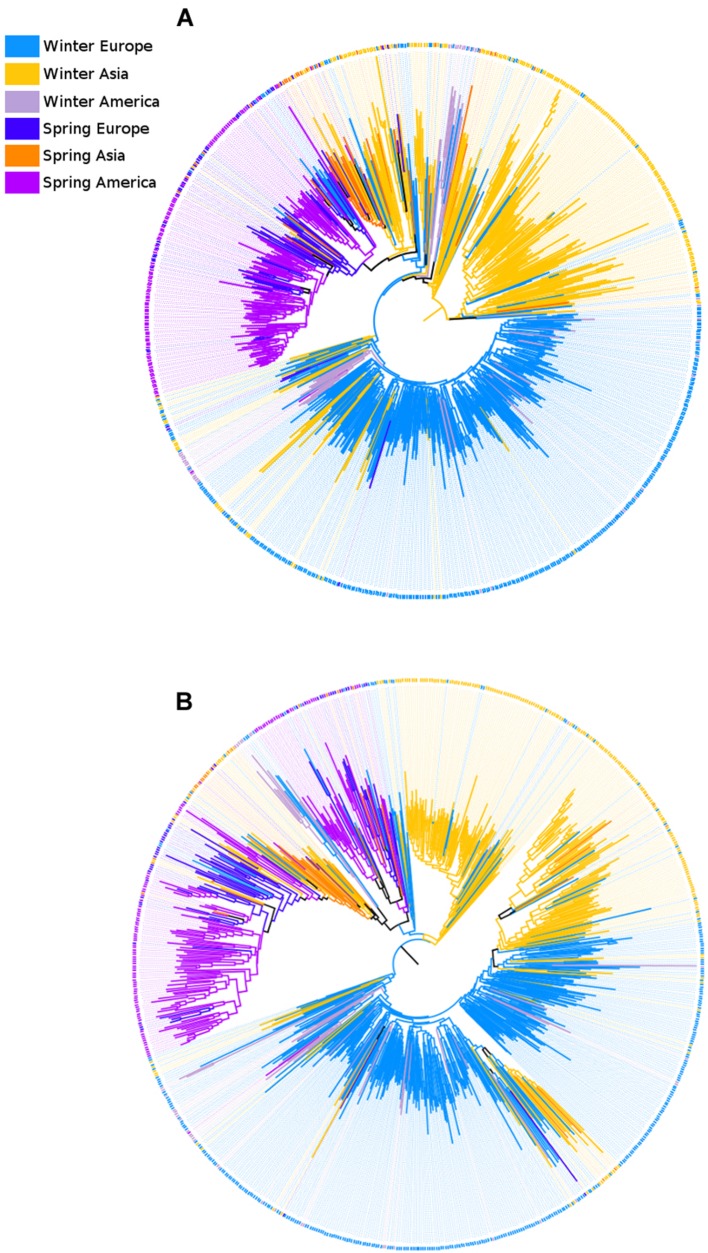
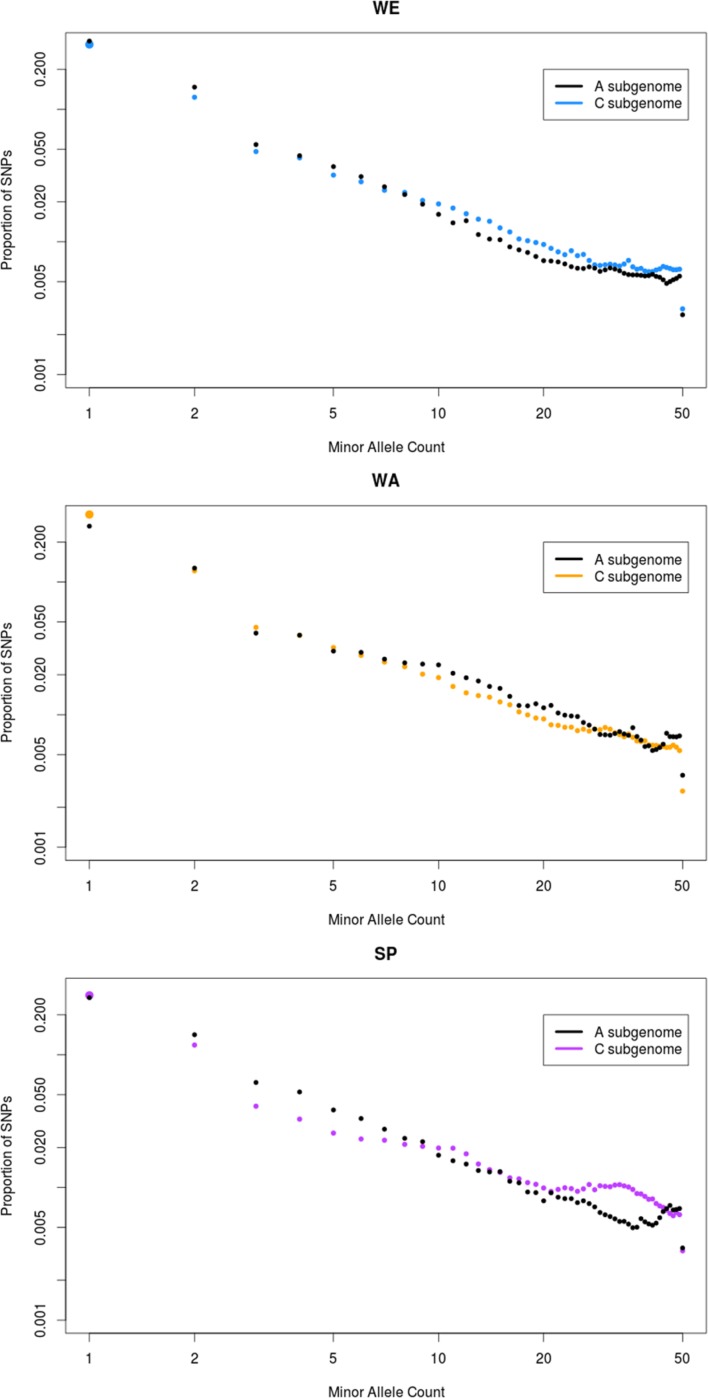
The allotetraploid species Brassica napus L. is a global crop of major economic importance, providing canola oil (seed) and vegetables for human consumption and fodder and meal for livestock feed. Characterizing the genetic diversity present in the extant germplasm pool of B. napus is fundamental to better conserve, manage and utilize the genetic resources of this species. We used sequence-based genotyping to identify and genotype 30,881 SNPs in a diversity panel of 782 B. napus accessions, representing samples of winter and spring growth habits originating from 33 countries across Europe, Asia, and America. We detected strong population structure broadly concordant with growth habit and geography, and identified three major genetic groups: spring (SP), winter Europe (WE), and winter Asia (WA). Subpopulation-specific polymorphism patterns suggest enriched genetic diversity within the WA group and a smaller effective breeding population for the SP group compared to WE. Interestingly, the two subgenomes of B. napus appear to have different geographic origins, with phylogenetic analysis placing WE and WA as basal clades for the other subpopulations in the C and A subgenomes, respectively. Finally, we identified 16 genomic regions where the patterns of diversity differed markedly from the genome-wide average, several of which are suggestive of genomic inversions. The results obtained in this study constitute a valuable resource for worldwide breeding efforts and the genetic dissection and prediction of complex B. napus traits.
异源四倍体物种甘蓝型油菜(Brassica napus L.)是一种具有重要经济意义的全球作物,可提供菜籽油(种子)、供人类食用的蔬菜以及用于牲畜饲料的草料和粕类。表征甘蓝型油菜现存种质库中的遗传多样性是更好地保护、管理和利用该物种遗传资源的基础。我们使用基于序列的基因分型方法,在一个由782份甘蓝型油菜种质组成的多样性群体中鉴定并对30,881个单核苷酸多态性(SNP)进行基因分型,这些种质代表了来自欧洲、亚洲和美洲33个国家的冬性和春性生长习性样本。我们检测到与生长习性和地理分布大致一致的强烈群体结构,并确定了三个主要遗传群体:春性(SP)、欧洲冬性(WE)和亚洲冬性(WA)。亚群体特异性多态性模式表明,与WE相比,WA群体内的遗传多样性丰富,而SP群体的有效育种群体较小。有趣的是,甘蓝型油菜的两个亚基因组似乎有不同的地理起源,系统发育分析分别将WE和WA置于C和A亚基因组中其他亚群体的基部进化枝。最后,我们确定了16个基因组区域,其多样性模式与全基因组平均水平明显不同,其中几个区域提示存在基因组倒位。本研究获得的结果为全球育种工作以及甘蓝型油菜复杂性状的遗传剖析和预测提供了宝贵资源。