Giannopoulos Andreas A, Steigner Michael L, George Elizabeth, Barile Maria, Hunsaker Andetta R, Rybicki Frank J, Mitsouras Dimitris
*Applied Imaging Science Laboratory †Radiology Department, Division of Thoracic Imaging, Brigham and Women's Hospital, Boston, MA ‡Department of Radiology, The University of Ottawa Faculty of Medicine and The Ottawa Hospital Research Institute, Ottawa, ON, Canada.
J Thorac Imaging. 2016 Sep;31(5):253-72. doi: 10.1097/RTI.0000000000000217.
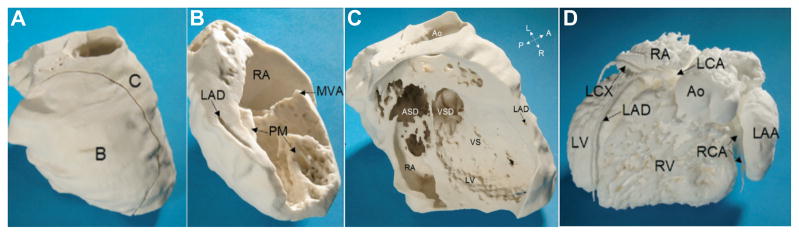
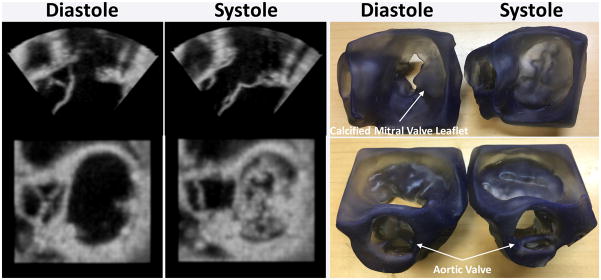
Medical 3-dimensional (3D) printing is emerging as a clinically relevant imaging tool in directing preoperative and intraoperative planning in many surgical specialties and will therefore likely lead to interdisciplinary collaboration between engineers, radiologists, and surgeons. Data from standard imaging modalities such as computed tomography, magnetic resonance imaging, echocardiography, and rotational angiography can be used to fabricate life-sized models of human anatomy and pathology, as well as patient-specific implants and surgical guides. Cardiovascular 3D-printed models can improve diagnosis and allow for advanced preoperative planning. The majority of applications reported involve congenital heart diseases and valvular and great vessels pathologies. Printed models are suitable for planning both surgical and minimally invasive procedures. Added value has been reported toward improving outcomes, minimizing perioperative risk, and developing new procedures such as transcatheter mitral valve replacements. Similarly, thoracic surgeons are using 3D printing to assess invasion of vital structures by tumors and to assist in diagnosis and treatment of upper and lower airway diseases. Anatomic models enable surgeons to assimilate information more quickly than image review, choose the optimal surgical approach, and achieve surgery in a shorter time. Patient-specific 3D-printed implants are beginning to appear and may have significant impact on cosmetic and life-saving procedures in the future. In summary, cardiothoracic 3D printing is rapidly evolving and may be a potential game-changer for surgeons. The imager who is equipped with the tools to apply this new imaging science to cardiothoracic care is thus ideally positioned to innovate in this new emerging imaging modality.
医学三维(3D)打印正在成为一种在许多外科专业中指导术前和术中规划的临床相关成像工具,因此可能会促成工程师、放射科医生和外科医生之间的跨学科合作。来自计算机断层扫描、磁共振成像、超声心动图和旋转血管造影等标准成像模态的数据可用于制作人体解剖结构和病理的实物大小模型,以及针对患者的植入物和手术导板。心血管3D打印模型可改善诊断并有助于进行高级术前规划。报告的大多数应用涉及先天性心脏病以及瓣膜和大血管病变。打印模型适用于规划手术和微创手术。据报道,其在改善治疗效果、将围手术期风险降至最低以及开发诸如经导管二尖瓣置换等新手术方面具有附加价值。同样,胸外科医生正在使用3D打印来评估肿瘤对重要结构的侵犯,并协助诊断和治疗上下气道疾病。解剖模型使外科医生能够比查看图像更快地吸收信息,选择最佳手术方法,并在更短时间内完成手术。针对患者的3D打印植入物开始出现,未来可能会对美容和挽救生命的手术产生重大影响。总之,心胸外科3D打印正在迅速发展,可能会成为外科医生的一个潜在变革因素。因此,配备有将这种新成像科学应用于心胸护理工具的成像专家处于在这种新兴成像模态中进行创新的理想位置。