Sherman Brian J, Baker Nathaniel L, McRae-Clark Aimee L
Department of Psychiatry and Behavioral Sciences, Medical University of South Carolina, Charleston, SC 29425, United States.
Department of Public Health Sciences, Medical University of South Carolina, Charleston, SC 29425, United States.
Addict Behav. 2016 Sep;60:197-202. doi: 10.1016/j.addbeh.2016.04.014. Epub 2016 Apr 22.
Gender differences in cannabis use and cannabis use disorder have been established. Regarding treatment, some evidence suggests that women are less responsive, though the mechanisms are not well understood. Motivation to change and self-efficacy are associated with better outcomes overall, and may help explain gender differences in cannabis use outcomes.
A secondary data analysis of a double-blind placebo controlled trial of buspirone treatment for cannabis dependence (N=175) was conducted. Self-report assessments of motivation to change, self-efficacy, and other clinical correlates were completed at baseline, and cannabis use was measured throughout the study.
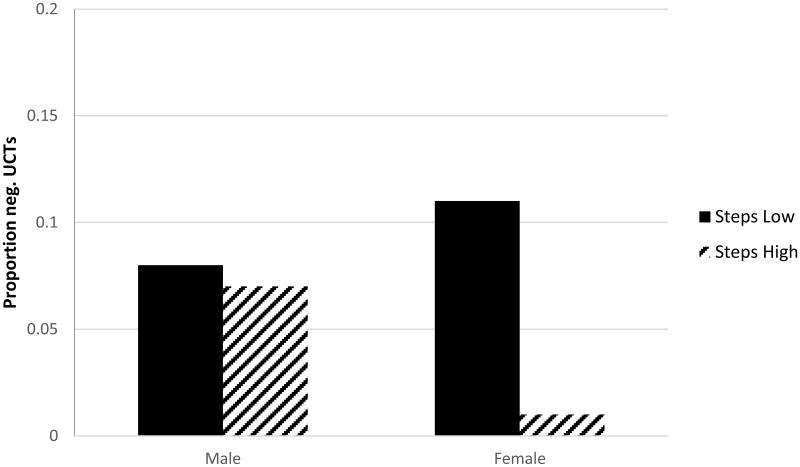
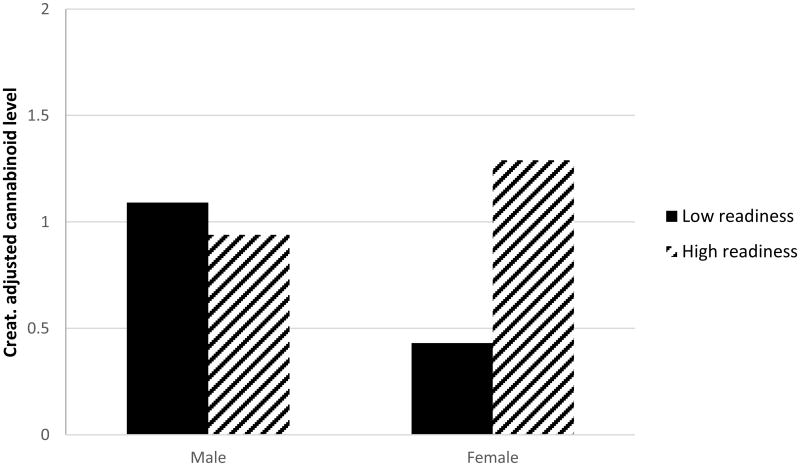
There was a significant interaction between gender and taking steps on abstinence. Counter to hypothesis, higher taking steps reduced likelihood of achieving abstinence among women; there was no association among men. Subsequently, taking steps was associated with self-efficacy and quantity of use among men, and cannabis related problems among women. There was a significant interaction between gender and readiness to change on creatinine adjusted cannabinoid levels. Change readiness was positively associated with cannabinoid levels among women, but not men.
Motivation to change and initiation of change behavior predict worse cannabis outcomes in women. Men and women differ in what motivates change behavior. Social desirability, neurobiology, and treatment type may impact these effects. Gender differences in cannabis use and treatment responsiveness must be considered in future studies.
大麻使用及大麻使用障碍方面的性别差异已得到证实。在治疗方面,一些证据表明女性的反应较差,不过其机制尚不清楚。改变动机和自我效能总体上与更好的治疗结果相关,可能有助于解释大麻使用结果中的性别差异。
对一项关于丁螺环酮治疗大麻依赖的双盲安慰剂对照试验(N = 175)进行二次数据分析。在基线时完成对改变动机、自我效能及其他临床相关因素的自我报告评估,并在整个研究过程中对大麻使用情况进行测量。
性别与采取戒酒措施之间存在显著交互作用。与假设相反,采取更多措施会降低女性实现戒酒的可能性;男性之间则不存在关联。随后,采取措施与男性的自我效能和使用量相关,与女性的大麻相关问题相关。性别与改变意愿对肌酐调整后的大麻素水平存在显著交互作用。改变意愿与女性的大麻素水平呈正相关,但与男性无关。
改变动机和改变行为的启动预示着女性大麻使用结果更差。男性和女性在促使改变行为的因素方面存在差异。社会期望、神经生物学和治疗类型可能会影响这些效应。未来研究必须考虑大麻使用及治疗反应性方面的性别差异。