Department of Pharmacology School of Medicine, Keio University, 35 Shinanomachi, Tokyo 160-8582, Japan.
Graduate School of Environment and Information Sciences, Yokohama National University, Yokohama 240-8501, Japan.
Nat Commun. 2016 May 9;7:11557. doi: 10.1038/ncomms11557.
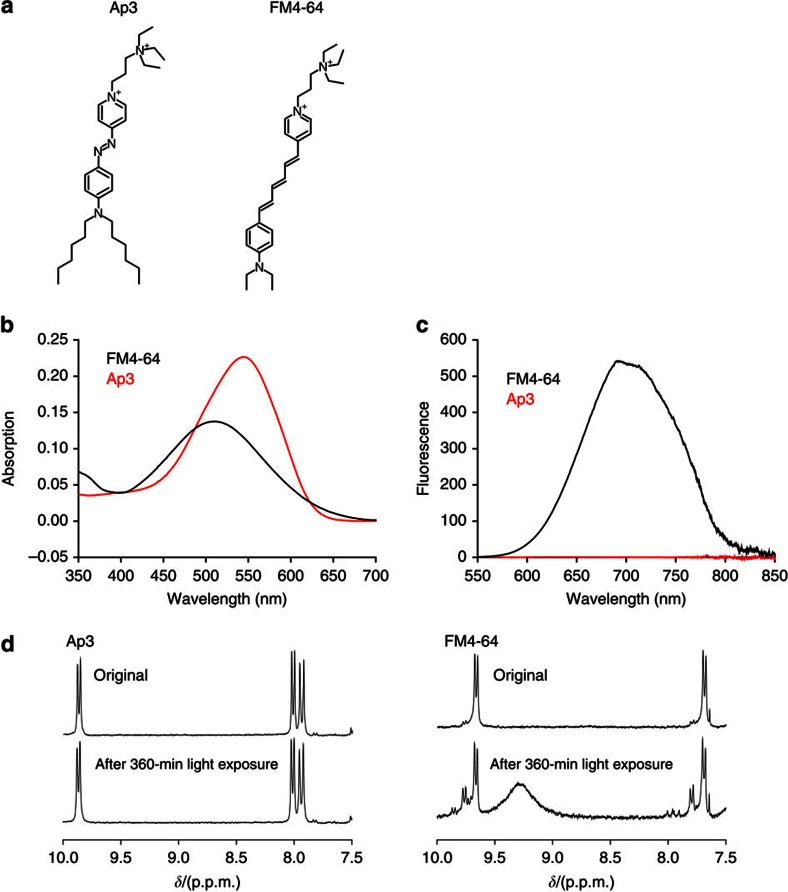
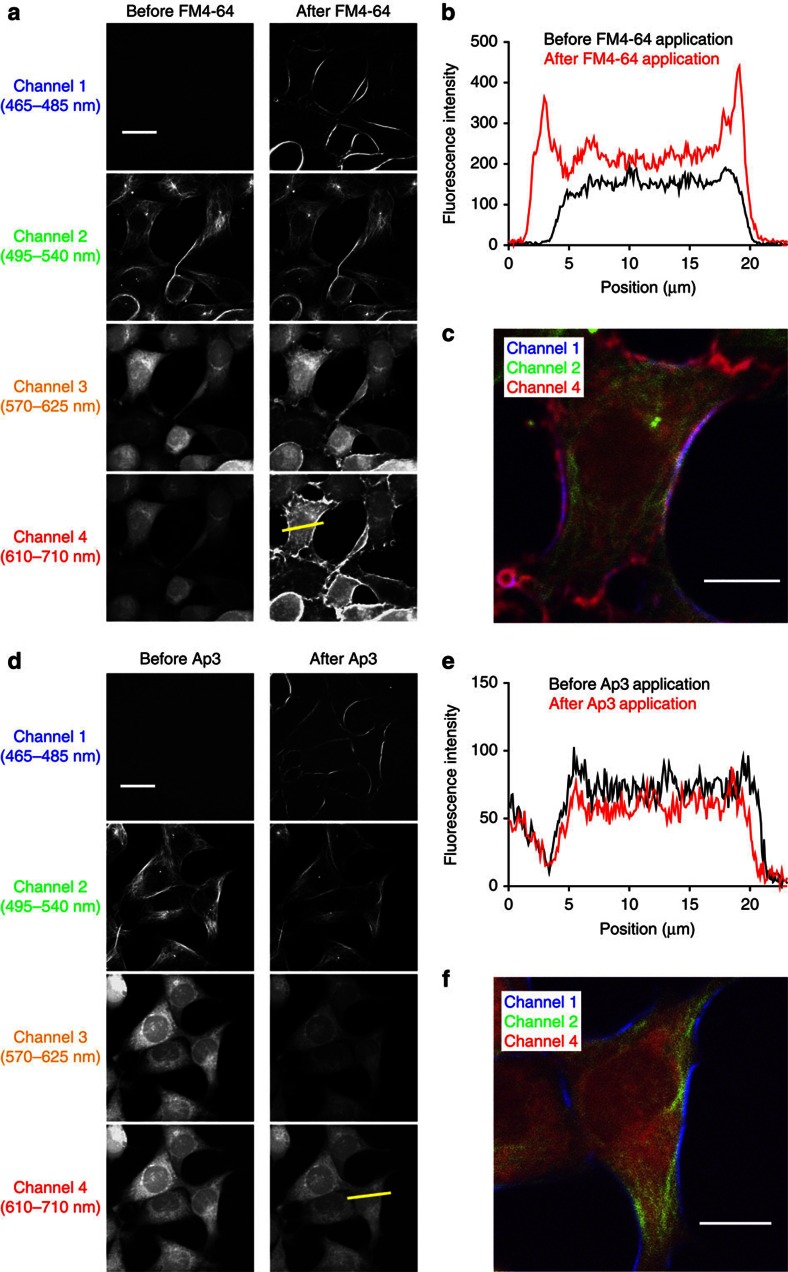
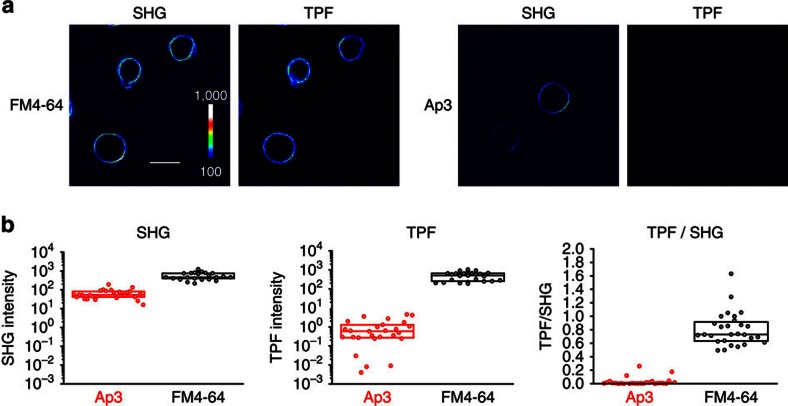
Second harmonic generation (SHG) imaging can be used to visualize unique biological phenomena, but currently available dyes limit its application owing to the strong fluorescent signals that they generate together with SHG. Here we report the first non-fluorescent and membrane potential-sensitive SHG-active organic dye Ap3. Ap3 is photostable and generates SH signals at the plasma membrane with virtually no fluorescent signals, in sharp contrast to the previously used fluorescent dye FM4-64. When tested in neurons, Ap3-SHG shows linear membrane potential sensitivity and fast responses to action potentials, and also shows significantly reduced photodamage compared with FM4-64. The SHG-specific nature of Ap3 allows simultaneous and completely independent imaging of SHG signals and fluorescent signals from various reporter molecules, including markers of cellular organelles and intracellular calcium. Therefore, this SHG-specific dye enables true multimodal two-photon imaging in biological samples.
二次谐波产生(SHG)成像可用于可视化独特的生物现象,但目前可用的染料由于其与 SHG 一起产生的强荧光信号而限制了其应用。在这里,我们报告了第一个非荧光且膜电位敏感的 SHG 活性有机染料 Ap3。Ap3 具有光稳定性,并且在等离子体膜上产生 SH 信号,几乎没有荧光信号,与之前使用的荧光染料 FM4-64 形成鲜明对比。在神经元中进行测试时,Ap3-SHG 显示线性膜电位灵敏度和对动作电位的快速响应,并且与 FM4-64 相比,光损伤明显减少。Ap3 的 SHG 特异性允许来自各种报告分子的 SHG 信号和荧光信号的同时且完全独立的成像,包括细胞细胞器和细胞内钙的标记物。因此,这种 SHG 特异性染料能够在生物样品中实现真正的多模态双光子成像。