Song Yali, Li Xiaoling, Zeng Zhaoyang, Li Qiao, Gong Zhaojian, Liao Qianjin, Li Xiayu, Chen Pan, Xiang Bo, Zhang Wenling, Xiong Fang, Zhou Yanhong, Zhou Ming, Ma Jian, Li Yong, Chen Xiang, Li Guiyuan, Xiong Wei
The Key Laboratory of Carcinogenesis and Cancer Invasion of The Chinese Ministry of Education, Xiangya Hospital, Central South University, Changsha, Hunan, China.
The Key Laboratory of Carcinogenesis of The Chinese Ministry of Health and Cancer Research Institute, Central South University, Changsha, Hunan, China.
Oncotarget. 2016 Jun 14;7(24):36783-36799. doi: 10.18632/oncotarget.9170.
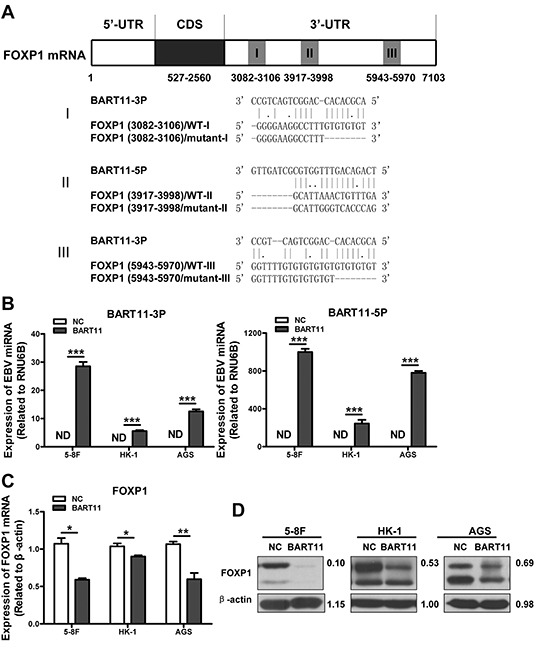
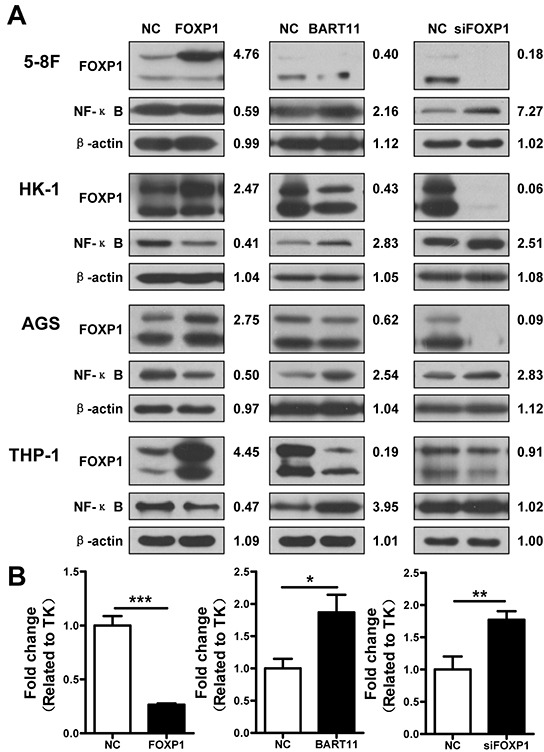
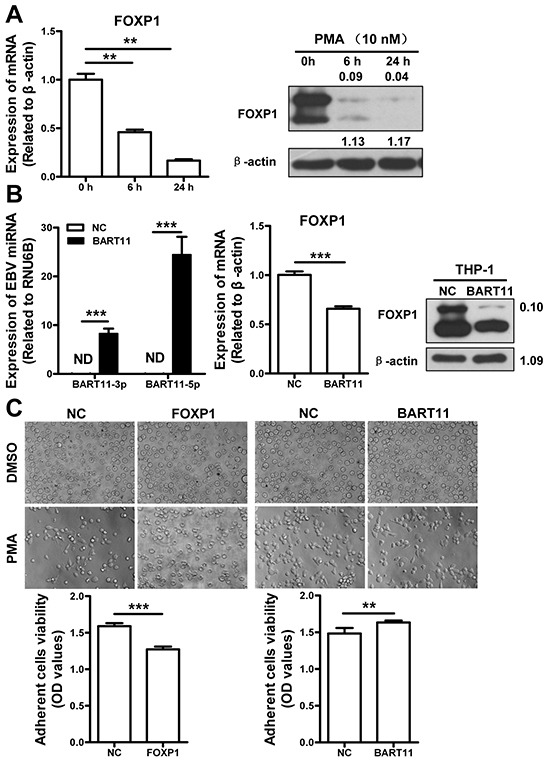
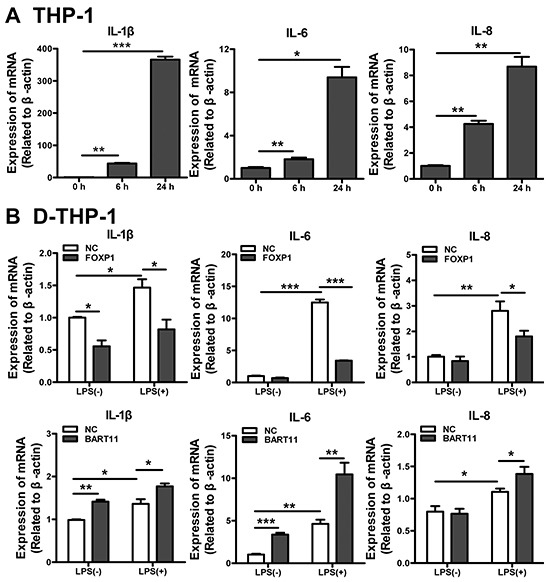
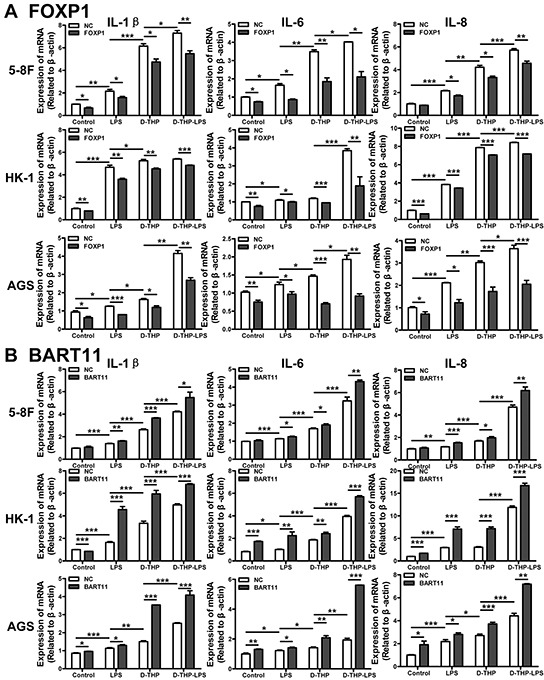
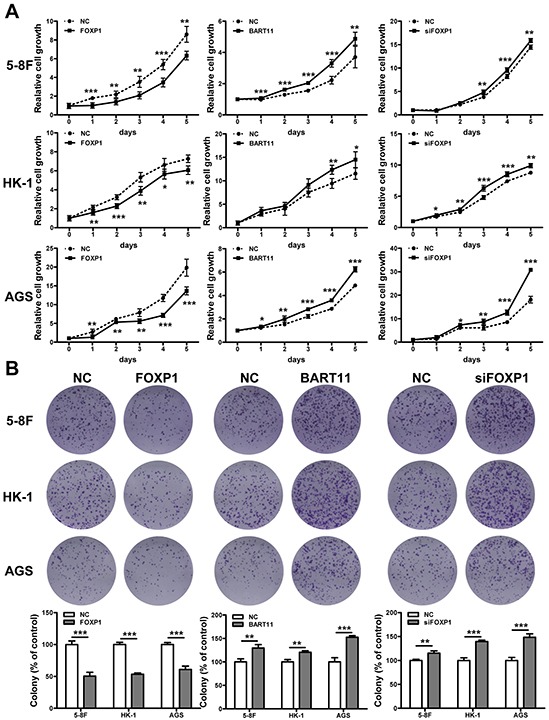
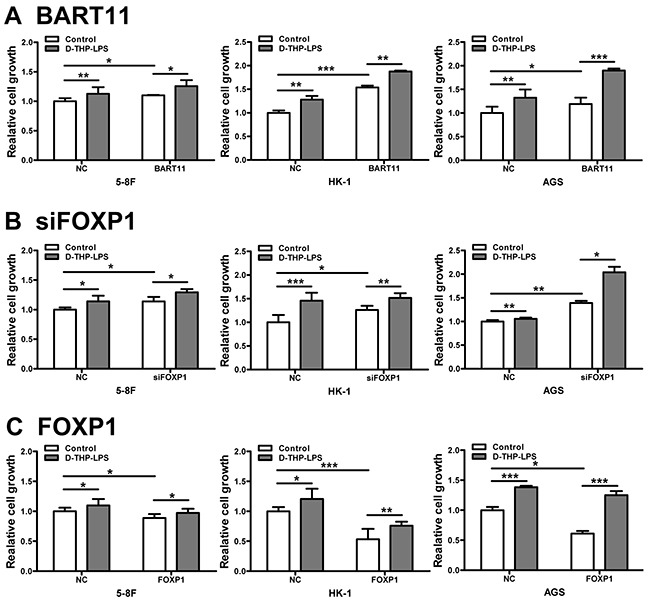
Epstein-Barr virus (EBV) infection and chronic inflammation are closely associated with the development and progression of nasopharyngeal carcinoma (NPC) and gastric cancer (GC), and the infiltration of inflammatory cells, including tumor-associated macrophages (TAMs), is often observed in these cancers. EBV encodes 44 mature micro RNAs (miRNAs), but the roles of only a few EBV-encoded miRNA targets are known in cancer development, and here, our aim was to elucidate the effects of EBV-miR-BART11 on FOXP1 expression, and potential involvement in inflammation-induced carcinogenesis. We constructed an EBV miRNA-dependent gene regulatory network and predicted that EBV-miR-BART11 is able to target forkhead box P1 (FOXP1), a key molecule involved in monocyte to macrophage differentiation. Here, using luciferase reporter assay, we confirmed that EBV-miR-BART11 directly targets the 3'-untranslated region of FOXP1 gene, inhibits FOXP1 induction of TAM differentiation, and the secretion of inflammatory cytokines into the tumor microenvironment, inducing the proliferation of NPC and GC cells. FOXP1 overexpression hindered monocyte differentiation and inhibited NPC and GC cells growth. Our results demonstrated that EBV-miR-BART11 plays a crucial role in the promotion of inflammation-induced NPC and GC carcinogenesis by inhibiting FOXP1 tumor-suppressive effects. We showed a novel EBV-dependent mechanism that may induce the carcinogenesis of NPC and GC, which may help define new potential biomarkers and targets for NPC and GC diagnosis and treatment.
爱泼斯坦-巴尔病毒(EBV)感染与慢性炎症与鼻咽癌(NPC)和胃癌(GC)的发生发展密切相关,在这些癌症中常观察到包括肿瘤相关巨噬细胞(TAM)在内的炎性细胞浸润。EBV编码44种成熟的微小RNA(miRNA),但在癌症发展过程中,只有少数EBV编码的miRNA靶点的作用是已知的,在此,我们的目的是阐明EBV-miR-BART11对FOXP1表达的影响,以及其在炎症诱导致癌作用中的潜在参与情况。我们构建了一个EBV miRNA依赖性基因调控网络,并预测EBV-miR-BART11能够靶向叉头框P1(FOXP1),这是一种参与单核细胞向巨噬细胞分化的关键分子。在此,通过荧光素酶报告基因检测,我们证实EBV-miR-BART11直接靶向FOXP1基因的3'-非翻译区,抑制FOXP1诱导的TAM分化,以及炎性细胞因子向肿瘤微环境中的分泌,从而诱导NPC和GC细胞的增殖。FOXP1过表达阻碍单核细胞分化并抑制NPC和GC细胞生长。我们的结果表明,EBV-miR-BART11通过抑制FOXP1的肿瘤抑制作用,在促进炎症诱导的NPC和GC致癌过程中发挥关键作用。我们展示了一种新的EBV依赖性机制,该机制可能诱导NPC和GC的致癌作用,这可能有助于确定NPC和GC诊断与治疗的新潜在生物标志物和靶点。