Pavlidis I, Dcosta M, Taamneh S, Manser M, Ferris T, Wunderlich R, Akleman E, Tsiamyrtzis P
Computational Physiology Laboratory, University of Houston, Houston, Texas 77204, USA.
Texas AandM Transportation Institute, Texas A and M University System, College Station, Texas 77843, USA.
Sci Rep. 2016 May 12;6:25651. doi: 10.1038/srep25651.
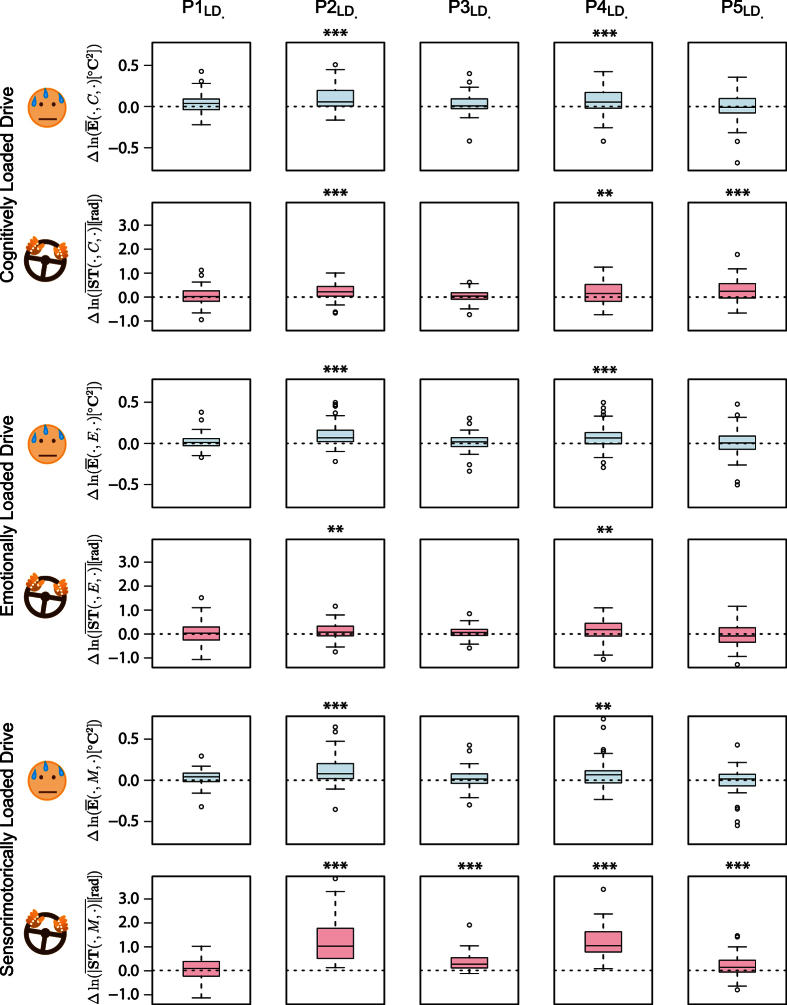
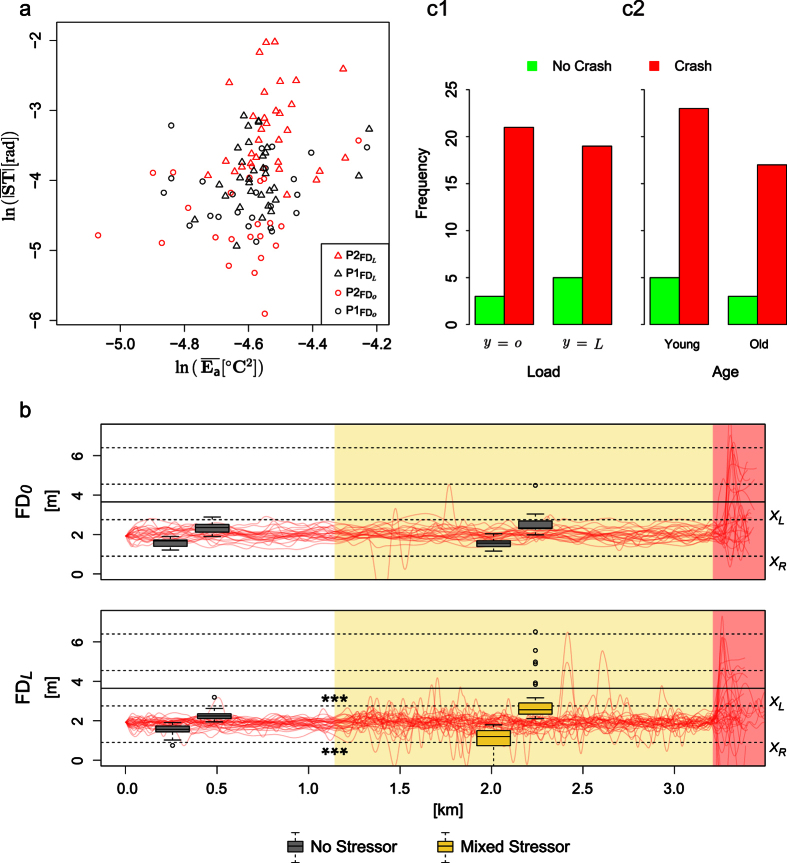
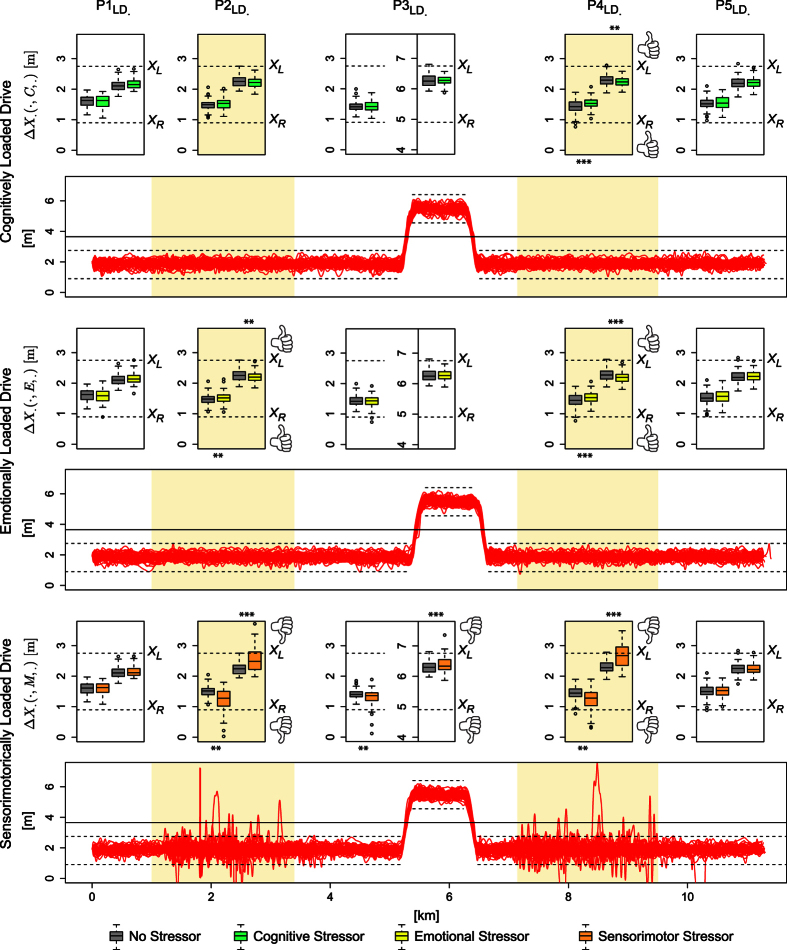
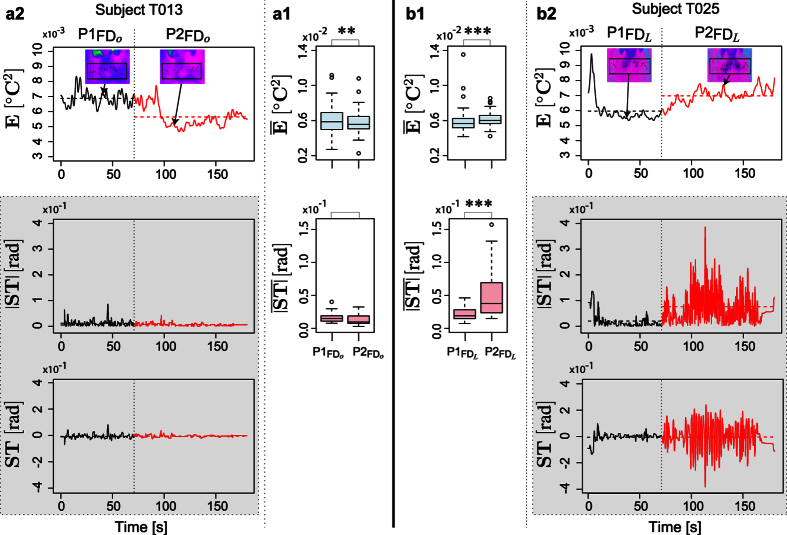
In a simulation experiment we studied the effects of cognitive, emotional, sensorimotor, and mixed stressors on driver arousal and performance with respect to (wrt) baseline. In a sample of n = 59 drivers, balanced in terms of age and gender, we found that all stressors incurred significant increases in mean sympathetic arousal accompanied by significant increases in mean absolute steering. The latter, translated to significantly larger range of lane departures only in the case of sensorimotor and mixed stressors, indicating more dangerous driving wrt baseline. In the case of cognitive or emotional stressors, often a smaller range of lane departures was observed, indicating safer driving wrt baseline. This paradox suggests an effective coping mechanism at work, which compensates erroneous reactions precipitated by cognitive or emotional conflict. This mechanisms' grip slips, however, when the feedback loop is intermittently severed by sensorimotor distractions. Interestingly, mixed stressors did not affect crash rates in startling events, suggesting that the coping mechanism's compensation time scale is above the range of neurophysiological latency.
在一项模拟实验中,我们研究了认知、情绪、感觉运动和混合应激源相对于基线对驾驶员唤醒水平和驾驶表现的影响。在一个由59名年龄和性别均衡的驾驶员组成的样本中,我们发现所有应激源都会导致平均交感神经唤醒水平显著增加,同时平均绝对转向也显著增加。后者仅在感觉运动和混合应激源的情况下转化为显著更大的车道偏离范围,表明相对于基线而言驾驶更危险。在认知或情绪应激源的情况下,通常观察到较小的车道偏离范围,表明相对于基线而言驾驶更安全。这种矛盾表明有一种有效的应对机制在起作用,它可以补偿由认知或情绪冲突引发的错误反应。然而,当反馈回路被感觉运动干扰间歇性切断时,这种机制就会失效。有趣的是,混合应激源在惊变事件中并未影响碰撞率,这表明应对机制的补偿时间尺度高于神经生理潜伏期的范围。