Page Andrew F, Cseke Leland J, Minocha Rakesh, Turlapati Swathi A, Podila Gopi K, Ulanov Alexander, Li Zhong, Minocha Subhash C
Department of Biological Sciences, University of New Hampshire, Durham, NH, 03824, USA.
Department of Biological Sciences, University of Alabama in Huntsville, Huntsville, AL, 35899, USA.
BMC Plant Biol. 2016 May 18;16(1):113. doi: 10.1186/s12870-016-0796-2.
With the increasing interest in metabolic engineering of plants using genetic manipulation and gene editing technologies to enhance growth, nutritional value and environmental adaptation, a major concern is the potential of undesirable broad and distant effects of manipulating the target gene or metabolic step in the resulting plant. A comprehensive transcriptomic and metabolomic analysis of the product may shed some useful light in this regard. The present study used these two techniques with plant cell cultures to analyze the effects of genetic manipulation of a single step in the biosynthesis of polyamines because of their well-known roles in plant growth, development and stress responses.
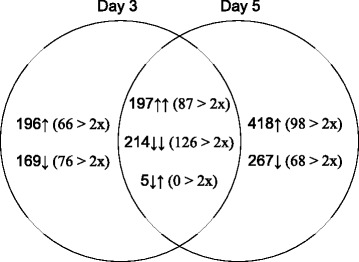
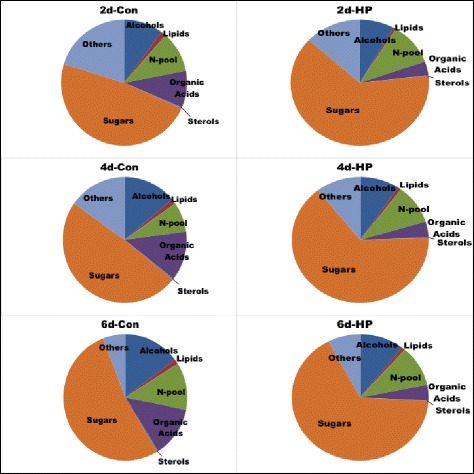
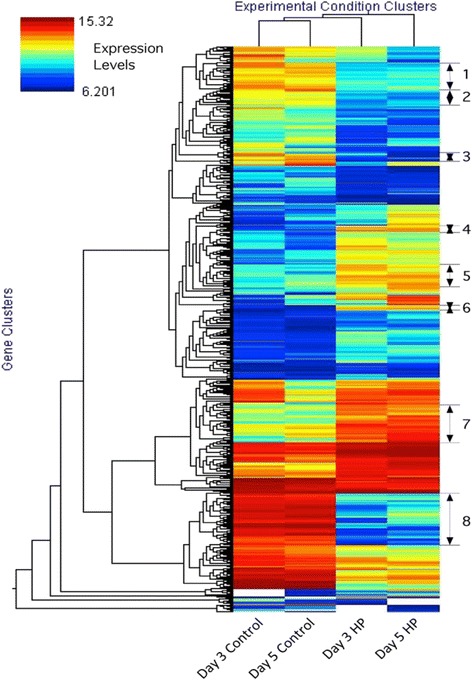
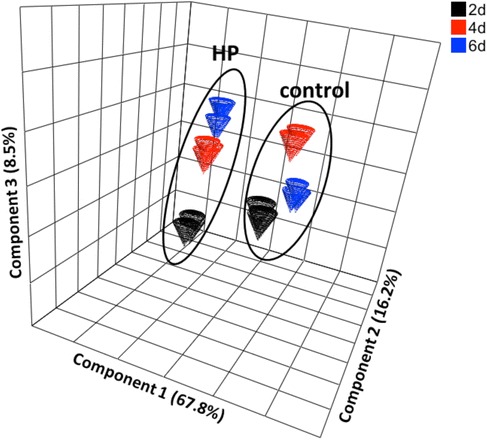
The transcriptomes and metabolomes of a control and a high putrescine (HP) producing cell line of poplar (Populus nigra x maximowiczii) were compared using microarrays and GC/MS. The HP cells expressed an ornithine decarboxylase transgene and accumulated several-fold higher concentrations of putrescine, with only small changes in spermidine and spermine. The results show that up-regulation of a single step in the polyamine biosynthetic pathway (i.e. ornithine → putrescine) altered the expression of a broad spectrum of genes; many of which were involved in transcription, translation, membrane transport, osmoregulation, shock/stress/wounding, and cell wall metabolism. More than half of the 200 detected metabolites were significantly altered (p ≤ 0.05) in the HP cells irrespective of sampling date. The most noteworthy differences were in organic acids, carbohydrates and nitrogen-containing metabolites.
The results provide valuable information about the role of polyamines in regulating nitrogen and carbon use pathways in cell cultures of high putrescine producing transgenic cells of poplar vs. their low putrescine counterparts. The results underscore the complexity of cellular responses to genetic perturbation of a single metabolic step related to nitrogen metabolism in plants. Combined with recent studies from our lab, where we showed that higher putrescine production caused an increased flux of glutamate into ornithine concurrent with enhancement in glutamate production via additional nitrogen and carbon assimilation, the results from this study provide guidance in designing transgenic plants with increased nitrogen use efficiency, especially in plants intended for non-food/feed applications (e.g. increased biomass production for biofuels).
随着利用基因操作和基因编辑技术对植物进行代谢工程改造以促进生长、提高营养价值和增强环境适应性的关注度不断提高,一个主要担忧是在所得植物中操纵目标基因或代谢步骤可能产生不良的广泛和远距离影响。对产物进行全面的转录组学和代谢组学分析可能在这方面提供一些有用的信息。本研究使用这两种技术对植物细胞培养物进行分析,以研究多胺生物合成中单个步骤的基因操作的影响,因为多胺在植物生长、发育和应激反应中具有众所周知的作用。
使用微阵列和气相色谱/质谱联用技术比较了杨树(黑杨×大青杨)对照细胞系和高产腐胺(HP)细胞系的转录组和代谢组。HP细胞表达了鸟氨酸脱羧酶转基因,腐胺积累浓度提高了几倍,而亚精胺和精胺只有少量变化。结果表明,多胺生物合成途径中单个步骤(即鸟氨酸→腐胺)的上调改变了广泛基因的表达;其中许多基因参与转录、翻译、膜运输、渗透调节、休克/应激/损伤和细胞壁代谢。无论采样日期如何,在HP细胞中检测到的200种代谢物中超过一半有显著变化(p≤0.05)。最值得注意的差异在于有机酸、碳水化合物和含氮代谢物。
这些结果提供了关于多胺在杨树高产腐胺转基因细胞系与其低产腐胺对应细胞系的细胞培养物中调节氮和碳利用途径方面作用的有价值信息。结果强调了植物细胞对与氮代谢相关的单个代谢步骤的基因扰动反应的复杂性。结合我们实验室最近的研究,我们发现较高的腐胺产量导致谷氨酸向鸟氨酸的通量增加,同时通过额外的氮和碳同化提高了谷氨酸的产量,本研究结果为设计氮利用效率提高的转基因植物提供了指导,特别是在用于非食品/饲料用途的植物中(例如提高生物量用于生物燃料生产)。