Mahendran Vikneswari, Liu Fang, Riordan Stephen M, Grimm Michael C, Tanaka Mark M, Zhang Li
School of Biotechnology and Biomolecular Sciences, University of New South Wales, Kensington, Sydney, NSW 2052 Australia.
Gastrointestinal and Liver Unit, The Prince of Wales Hospital, Sydney, Australia ; Prince of Wales Clinical School, University of New South Wales, Sydney, NSW 2052 Australia.
Gut Pathog. 2016 May 18;8:18. doi: 10.1186/s13099-016-0101-9. eCollection 2016.
Campylobacter concisus is a Gram-negative bacterium that is associated with inflammatory bowel disease (IBD). Some C. concisus strains carry zonula occludens toxin (zot) gene which has polymorphisms. This study investigated the effects of C. concisus Zot on intestinal epithelial cells and macrophages using cell line models.
Campylobacter concisus zot (808T) gene, a polymorphism that is associated with active IBD, was cloned and expressed in Escherichia coli. The effects of C. concisus Zot on intestinal epithelial barrier were examined using Caco-2 cell model. Apoptosis induced by C. concisus Zot in Caco-2 cells was assessed by measuring the levels of caspase 3/7. The production of pro-inflammatory cytokines induced by C. concisus Zot in HT-29 cells and in THP-1 macrophage-like cells was measured using ELISA kits. Whether exposure to C. concisus Zot can affect the responses of macrophages to E. coli K12 was also investigated.
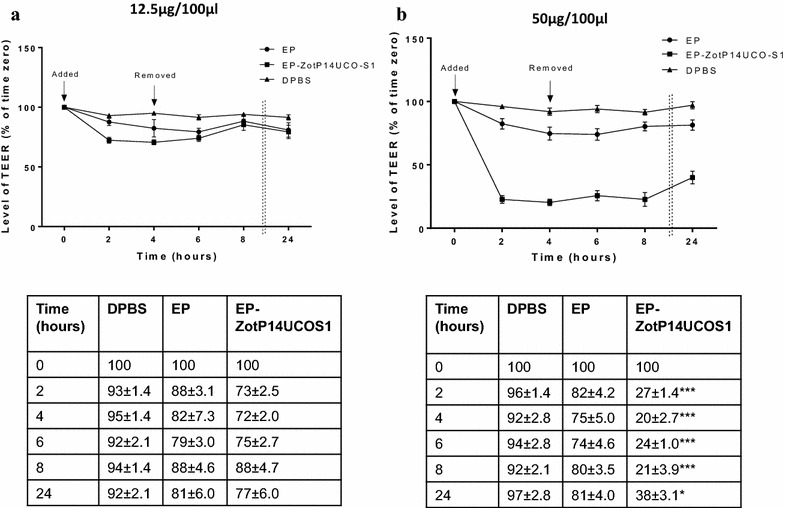
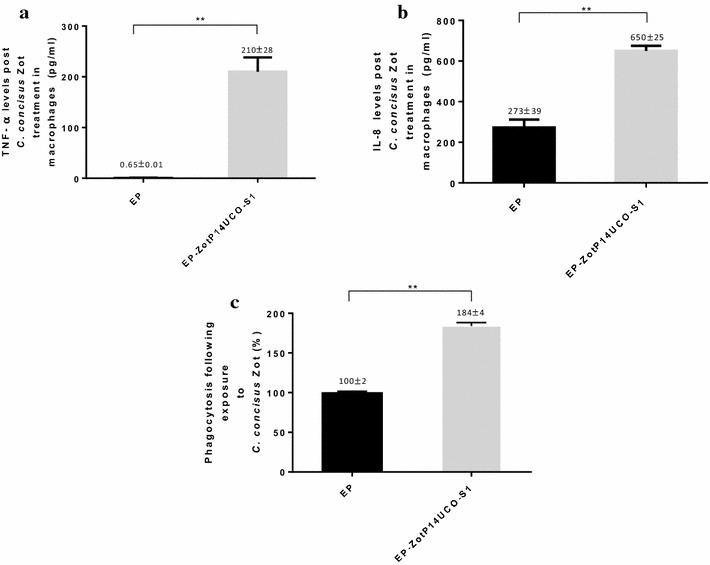
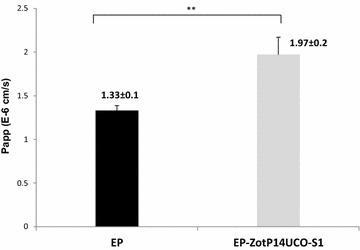
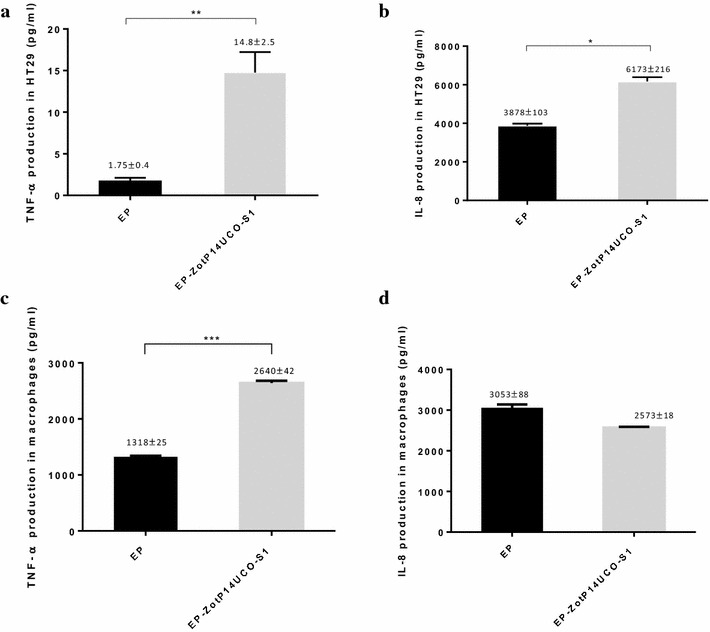
Campylobacter concisus Zot caused prolonged intestinal epithelial barrier damage, induced intestinal epithelial cell apoptosis, induced epithelial production of TNF-α and IL-8 and upregulated TNF-α in THP-1 macrophage-like cells. Pre-exposure to C. concisus Zot significantly enhanced the production of TNF-α and IL-8 as well as phagocytosis by THP-1 macrophage-like cells in response to E. coli K12.
This study suggests that C. concisus Zot may have enteric pathogenic potential by damaging intestinal epithelial barrier, inducing intestinal epithelial and macrophage production of proinflammatory cytokines in particular TNF-α and enhancing the responses of macrophages to other enteric bacterial species.
简明弯曲杆菌是一种革兰氏阴性菌,与炎症性肠病(IBD)相关。一些简明弯曲杆菌菌株携带具有多态性的小带闭合毒素(zot)基因。本研究使用细胞系模型研究了简明弯曲杆菌Zot对肠上皮细胞和巨噬细胞的影响。
将与活动性IBD相关的简明弯曲杆菌zot(808T)基因克隆并在大肠杆菌中表达。使用Caco-2细胞模型检测简明弯曲杆菌Zot对肠上皮屏障的影响。通过测量半胱天冬酶3/7的水平评估简明弯曲杆菌Zot在Caco-2细胞中诱导的凋亡。使用酶联免疫吸附测定试剂盒测量简明弯曲杆菌Zot在HT-29细胞和THP-1巨噬细胞样细胞中诱导的促炎细胞因子的产生。还研究了暴露于简明弯曲杆菌Zot是否会影响巨噬细胞对大肠杆菌K12的反应。
简明弯曲杆菌Zot导致肠上皮屏障损伤延长,诱导肠上皮细胞凋亡,诱导上皮细胞产生TNF-α和IL-8,并上调THP-1巨噬细胞样细胞中的TNF-α。预先暴露于简明弯曲杆菌Zot可显著增强THP-1巨噬细胞样细胞对大肠杆菌K12的反应中TNF-α和IL-8的产生以及吞噬作用。
本研究表明,简明弯曲杆菌Zot可能具有肠道致病潜力,可通过破坏肠上皮屏障、诱导肠上皮细胞和巨噬细胞产生促炎细胞因子,特别是TNF-α,并增强巨噬细胞对其他肠道细菌物种的反应。