Pérez-Reytor Diliana, Pavón Alequis, Lopez-Joven Carmen, Ramírez-Araya Sebastián, Peña-Varas Carlos, Plaza Nicolás, Alegría-Arcos Melissa, Corsini Gino, Jaña Víctor, Pavez Leonardo, Del Pozo Talia, Bastías Roberto, Blondel Carlos J, Ramírez David, García Katherine
Facultad de Ciencias de la Salud, Instituto de Ciencias Biomédicas, Universidad Autónoma de Chile, Santiago, Chile.
Facultad de Ciencias Veterinarias, Instituto de Medicina Preventiva Veterinaria, Universidad Austral de Chile, Valdivia, Chile.
Front Cell Infect Microbiol. 2020 Sep 24;10:482. doi: 10.3389/fcimb.2020.00482. eCollection 2020.
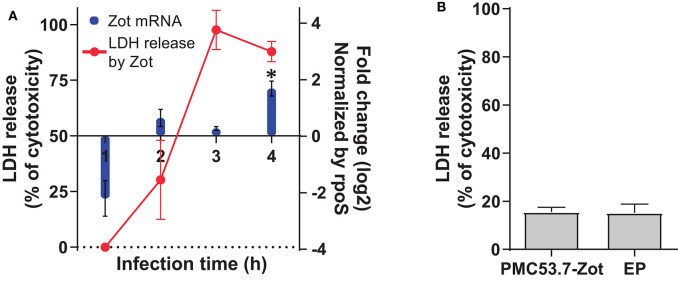
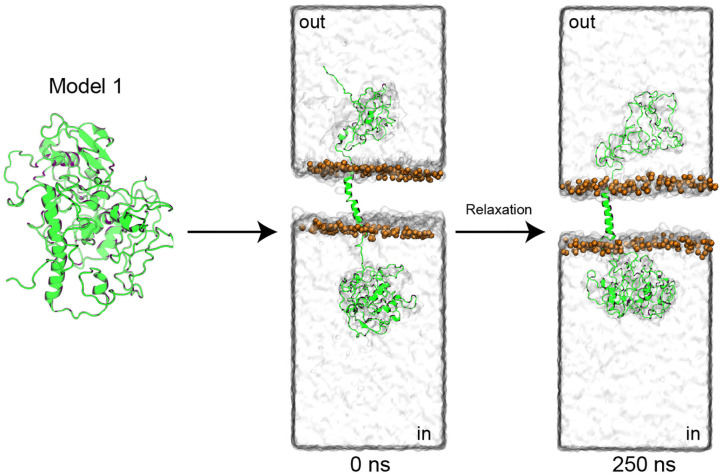
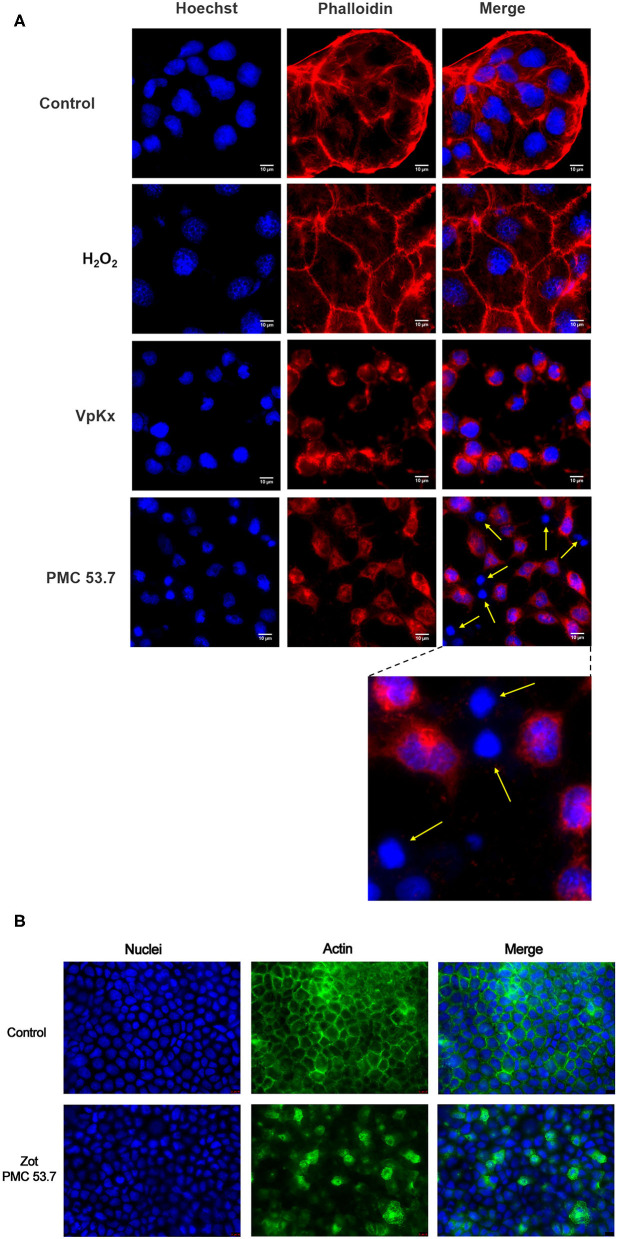
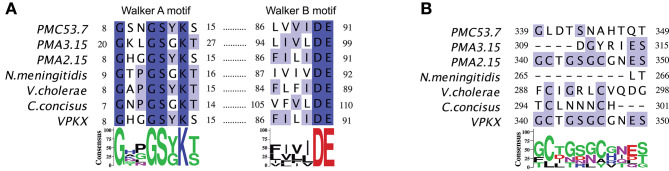
non-toxigenic strains are responsible for about 10% of acute gastroenteritis associated with this species, suggesting they harbor unique virulence factors. toxin (Zot), firstly described in , is a secreted toxin that increases intestinal permeability. Recently, we identified Zot-encoding genes in the genomes of highly cytotoxic Chilean strains, including the non-toxigenic clinical strain PMC53.7. To gain insights into a possible role of Zot in , we analyzed whether it could be responsible for cytotoxicity. However, we observed a barely positive correlation between Caco-2 cell membrane damage and Zot mRNA expression during PMC53.7 infection and non-cytotoxicity induction in response to purified PMC53.7-Zot. Unusually, we observed a particular actin disturbance on cells infected with PMC53.7. Based on this observation, we decided to compare the sequence of PMC53.7-Zot with Zot of human pathogenic species such as , and other strains, using computational tools. The PMC53.7-Zot was compared with other toxins and identified as an endotoxin with conserved motifs in the N-terminus and a variable C-terminal region and without FCIGRL peptide. Notably, the C-terminal diversity among Zots meant that not all of them could be identified as toxins. Structurally, PMC53.7-Zot was modeled as a transmembrane protein. Our results suggested that it has partial 3D structure similarity with -Zot. Probably, the PMC53.7-Zot would affect the actin cytoskeletal, but, in the absence of FCIGRL, the mechanisms of actions must be elucidated.
非产毒菌株约占与该物种相关的急性肠胃炎病例的10%,这表明它们含有独特的毒力因子。毒素(Zot)最早于[具体时间]被描述,是一种可增加肠道通透性的分泌毒素。最近,我们在高细胞毒性智利[菌株名称]菌株的基因组中鉴定出了Zot编码基因,包括非产毒临床菌株PMC53.7。为了深入了解Zot在[相关疾病]中可能发挥的作用,我们分析了它是否可能导致细胞毒性。然而,在PMC53.7感染期间,我们观察到Caco-2细胞膜损伤与Zot mRNA表达之间几乎没有正相关,并且对纯化的PMC53.7-Zot无细胞毒性诱导作用。异常的是,我们在感染PMC53.7的细胞上观察到了特定的肌动蛋白紊乱。基于这一观察结果,我们决定使用计算工具将PMC53.7-Zot的序列与人类致病物种(如[具体物种])以及其他[菌株名称]菌株的Zot进行比较。将PMC53.7-Zot与其他毒素进行比较,鉴定其为一种内毒素,在N端具有保守基序,C端区域可变且无FCIGRL肽。值得注意的是,Zot之间的C端多样性意味着并非所有Zot都能被鉴定为毒素。在结构上,PMC53.7-Zot被建模为一种跨膜蛋白。我们的结果表明,它与[具体物种] -Zot具有部分三维结构相似性。可能,PMC53.7-Zot会影响肌动蛋白细胞骨架,但在没有FCIGRL的情况下,其作用机制必须进一步阐明。