• 文献检索
  • 文档翻译
  • 深度研究
  • 学术资讯
  • Suppr Zotero 插件Zotero 插件
  • 邀请有礼
  • 套餐&价格
  • 历史记录
应用&插件
Suppr Zotero 插件Zotero 插件浏览器插件Mac 客户端Windows 客户端微信小程序
定价
高级版会员购买积分包购买API积分包
服务
文献检索文档翻译深度研究API 文档MCP 服务
关于我们
关于 Suppr公司介绍联系我们用户协议隐私条款
关注我们

Suppr 超能文献

核心技术专利:CN118964589B侵权必究
粤ICP备2023148730 号-1Suppr @ 2026

文献检索

告别复杂PubMed语法,用中文像聊天一样搜索,搜遍4000万医学文献。AI智能推荐,让科研检索更轻松。

立即免费搜索

文件翻译

保留排版,准确专业,支持PDF/Word/PPT等文件格式,支持 12+语言互译。

免费翻译文档

深度研究

AI帮你快速写综述,25分钟生成高质量综述,智能提取关键信息,辅助科研写作。

立即免费体验

现有康复和辅助机器人设备的主观评估措施的系统评价

A Systematic Review on Existing Measures for the Subjective Assessment of Rehabilitation and Assistive Robot Devices.

机构信息

Technological Educational Institute of Athens, Department of Informatics, Agiou Spyridonos, Aigaleo, 12243 Athens, Greece.

出版信息

J Healthc Eng. 2016;2016. doi: 10.1155/2016/1048964.

DOI:10.1155/2016/1048964
PMID:27196802
原文链接:https://pmc.ncbi.nlm.nih.gov/articles/PMC5058569/
Abstract

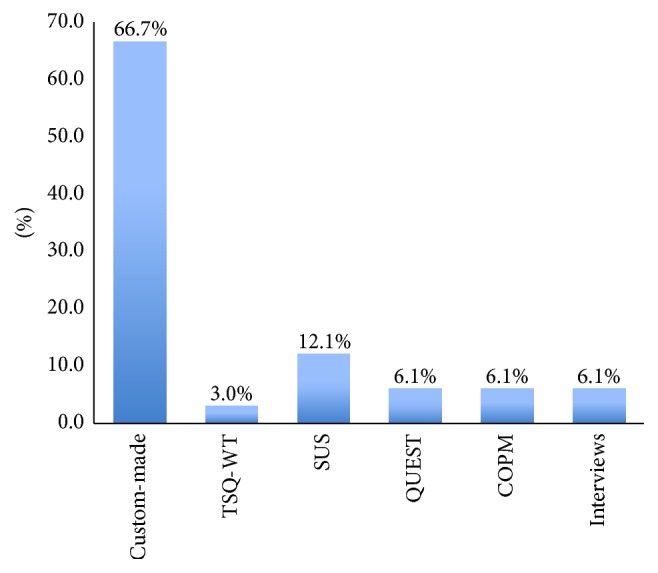
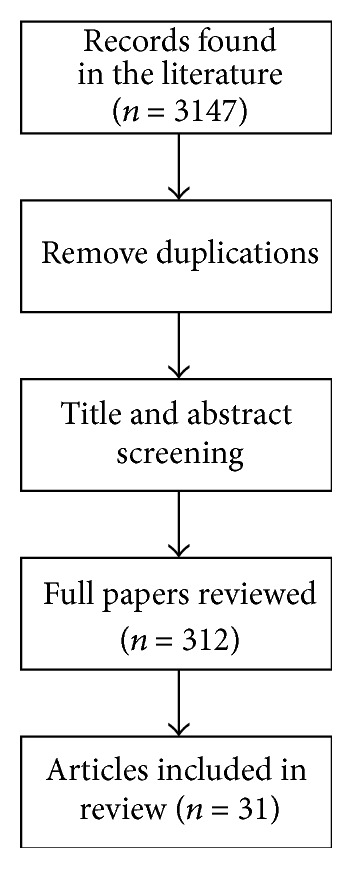
The objective of the current study is to identify and classify outcome measures currently used for the assessment of rehabilitation or assistive robot devices. We conducted a systematic review of the literature using PubMed, MEDLINE, CIRRIE, and Scopus databases for studies that assessed rehabilitation or assistive robot devices from 1980 through January 2016. In all, 31 articles met all inclusion criteria. Tailor-made questionnaires were the most commonly used tool at 66.7%, while the great majority (93.9%) of the studies used nonvalidated instruments. The study reveals the absence of a standard scale which makes it difficult to compare the results from different researchers. There is a great need, therefore, for a valid and reliable instrument to be available for use by the intended end users for the subjective assessment of robot devices. The study concludes by identifying two scales that have been validated in general assistive technology devices and could support the scope of subjective assessment in rehabilitation or assistive robots (however, with limited coverage) and a new one called PYTHEIA, recently published. The latter intends to close the gap and help researchers and developers to evaluate, assess, and produce products that satisfy the real needs of the end users.

摘要

本研究的目的是识别和分类目前用于评估康复或辅助机器人设备的结果测量指标。我们使用 PubMed、MEDLINE、CIRRIE 和 Scopus 数据库对 1980 年至 2016 年 1 月期间评估康复或辅助机器人设备的研究进行了系统综述。共有 31 篇文章符合所有纳入标准。定制问卷是最常用的工具,占 66.7%,而绝大多数(93.9%)研究使用的是非验证工具。研究表明缺乏标准量表,这使得很难比较不同研究人员的结果。因此,非常需要为预期的最终用户提供一种有效且可靠的仪器,以便对机器人设备进行主观评估。研究最后确定了两个已在一般辅助技术设备中验证的量表,它们可以支持康复或辅助机器人的主观评估范围(但覆盖范围有限),以及最近发布的一个新量表称为 PYTHEIA。后者旨在缩小差距,帮助研究人员和开发人员评估、评估和生产满足最终用户实际需求的产品。
https://cdn.ncbi.nlm.nih.gov/pmc/blobs/6d03/5058569/6ee88fdd92fb/JHE2016-1048964.002.jpg
https://cdn.ncbi.nlm.nih.gov/pmc/blobs/6d03/5058569/e7120c3d514a/JHE2016-1048964.001.jpg
https://cdn.ncbi.nlm.nih.gov/pmc/blobs/6d03/5058569/6ee88fdd92fb/JHE2016-1048964.002.jpg
https://cdn.ncbi.nlm.nih.gov/pmc/blobs/6d03/5058569/e7120c3d514a/JHE2016-1048964.001.jpg
https://cdn.ncbi.nlm.nih.gov/pmc/blobs/6d03/5058569/6ee88fdd92fb/JHE2016-1048964.002.jpg

相似文献

1
A Systematic Review on Existing Measures for the Subjective Assessment of Rehabilitation and Assistive Robot Devices.现有康复和辅助机器人设备的主观评估措施的系统评价
J Healthc Eng. 2016;2016. doi: 10.1155/2016/1048964.
2
Assistive devices, hip precautions, environmental modifications and training to prevent dislocation and improve function after hip arthroplasty.辅助设备、髋关节注意事项、环境改造以及预防髋关节置换术后脱位和改善功能的训练。
Cochrane Database Syst Rev. 2016 Jul 4;7(7):CD010815. doi: 10.1002/14651858.CD010815.pub2.
3
Comparison of the effectiveness of inhaler devices in asthma and chronic obstructive airways disease: a systematic review of the literature.吸入装置在哮喘和慢性阻塞性气道疾病中的有效性比较:文献系统评价
Health Technol Assess. 2001;5(26):1-149. doi: 10.3310/hta5260.
4
Eliciting adverse effects data from participants in clinical trials.从临床试验参与者中获取不良反应数据。
Cochrane Database Syst Rev. 2018 Jan 16;1(1):MR000039. doi: 10.1002/14651858.MR000039.pub2.
5
The educational effects of portfolios on undergraduate student learning: a Best Evidence Medical Education (BEME) systematic review. BEME Guide No. 11.档案袋对本科学生学习的教育效果:最佳证据医学教育(BEME)系统评价。BEME指南第11号。
Med Teach. 2009 Apr;31(4):282-98. doi: 10.1080/01421590902889897.
6
Assistive technology for memory support in dementia.用于痴呆症记忆支持的辅助技术。
Cochrane Database Syst Rev. 2017 Jun 11;6(6):CD009627. doi: 10.1002/14651858.CD009627.pub2.
7
The clinical effectiveness and cost-effectiveness of enzyme replacement therapy for Gaucher's disease: a systematic review.戈谢病酶替代疗法的临床疗效和成本效益:一项系统评价。
Health Technol Assess. 2006 Jul;10(24):iii-iv, ix-136. doi: 10.3310/hta10240.
8
Effectiveness of voice rehabilitation on vocalisation in postlaryngectomy patients: a systematic review.喉切除术后患者的嗓音康复对发声效果的影响:系统评价。
Int J Evid Based Healthc. 2010 Dec;8(4):256-8. doi: 10.1111/j.1744-1609.2010.00177.x.
9
Behavioral interventions to reduce risk for sexual transmission of HIV among men who have sex with men.降低男男性行为者中艾滋病毒性传播风险的行为干预措施。
Cochrane Database Syst Rev. 2008 Jul 16(3):CD001230. doi: 10.1002/14651858.CD001230.pub2.
10
Antidepressants for pain management in adults with chronic pain: a network meta-analysis.抗抑郁药治疗成人慢性疼痛的疼痛管理:一项网络荟萃分析。
Health Technol Assess. 2024 Oct;28(62):1-155. doi: 10.3310/MKRT2948.

引用本文的文献

1
Design and validation of a novel online platform to support the usability evaluation of wearable robotic devices.一种支持可穿戴机器人设备可用性评估的新型在线平台的设计与验证。
Wearable Technol. 2023 Jan 24;4:e3. doi: 10.1017/wtc.2022.31. eCollection 2023.
2
Towards a validated glossary of usability attributes for the evaluation of wearable robotic devices.面向可穿戴机器人设备评估的可用性属性验证词汇表。
J Neuroeng Rehabil. 2024 Feb 28;21(1):30. doi: 10.1186/s12984-024-01312-1.
3
A qualitative study to elicit user requirements for lower limb wearable exoskeletons for gait rehabilitation in spinal cord injury.

本文引用的文献

1
Translation and validation of the assistive technology device predisposition assessment in Greek in order to assess satisfaction with use of the selected assistive device.对希腊语版辅助技术设备易感性评估进行翻译和验证,以评估对所选辅助设备使用的满意度。
Disabil Rehabil Assist Technol. 2017 Jul;12(5):535-542. doi: 10.3109/17483107.2016.1161088. Epub 2016 Apr 6.
2
Validation of the Greek version of the device subscale of the Quebec User Evaluation of Satisfaction with Assistive Technology 2.0 (QUEST 2.0).魁北克辅助技术满意度用户评估2.0(QUEST 2.0)设备子量表希腊语版本的验证。
Assist Technol. 2016 Fall;28(3):152-8. doi: 10.1080/10400435.2015.1131758.
3
一项关于脊髓损伤患者步态康复用下肢可穿戴外骨骼用户需求的定性研究。
J Neuroeng Rehabil. 2023 Oct 17;20(1):138. doi: 10.1186/s12984-023-01264-y.
4
Pain Management Mobile Applications: A Systematic Review of Commercial and Research Efforts.疼痛管理移动应用程序:商业和研究努力的系统评价。
Sensors (Basel). 2023 Aug 5;23(15):6965. doi: 10.3390/s23156965.
5
Robotic arm training in neurorehabilitation enhanced by augmented reality - a usability and feasibility study.神经康复中增强现实辅助的机械臂训练 - 一项可用性和可行性研究。
J Neuroeng Rehabil. 2023 Aug 12;20(1):105. doi: 10.1186/s12984-023-01225-5.
6
Satisfaction analysis of overground gait exoskeletons in people with neurological pathology. a systematic review.地面行走外骨骼在神经病理患者中的满意度分析。系统评价。
J Neuroeng Rehabil. 2023 Apr 18;20(1):47. doi: 10.1186/s12984-023-01161-4.
7
Hand rehabilitation based on the RobHand exoskeleton in stroke patients: A case series study.基于RobHand外骨骼的中风患者手部康复:一项病例系列研究。
Front Robot AI. 2023 Mar 22;10:1146018. doi: 10.3389/frobt.2023.1146018. eCollection 2023.
8
Technology Assisted Rehabilitation Patient Perception Questionnaire (TARPP-Q): development and implementation of an instrument to evaluate patients' perception during training.技术辅助康复患者感知问卷(TARPP-Q):一种评估患者训练期间感知的工具的开发和实施。
J Neuroeng Rehabil. 2023 Mar 24;20(1):35. doi: 10.1186/s12984-023-01146-3.
9
Effect of immersive visualization technologies on cognitive load, motivation, usability, and embodiment.沉浸式可视化技术对认知负荷、动机、可用性和具身性的影响。
Virtual Real. 2023;27(1):307-331. doi: 10.1007/s10055-021-00565-8. Epub 2021 Aug 16.
10
Human Factor Engineering Research for Rehabilitation Robots: A Systematic Review.康复机器人的人为因素工程研究:系统评价。
Comput Intell Neurosci. 2023 Feb 6;2023:2052231. doi: 10.1155/2023/2052231. eCollection 2023.
Factors Predicting the Effects of Hybrid Assistive Limb Robot Suit during the Acute Phase of Central Nervous System Injury.
预测中枢神经系统损伤急性期混合辅助肢体机器人套装效果的因素。
Neurol Med Chir (Tokyo). 2016;56(1):33-7. doi: 10.2176/nmc.oa.2015-0178. Epub 2015 Nov 5.
4
Design and pilot validation of A-gear: a novel wearable dynamic arm support.A 型护具的设计与初步验证:一种新型可穿戴式动态手臂支撑装置
J Neuroeng Rehabil. 2015 Sep 18;12:83. doi: 10.1186/s12984-015-0072-y.
5
The H2 robotic exoskeleton for gait rehabilitation after stroke: early findings from a clinical study.用于中风后步态康复的H2机器人外骨骼:一项临床研究的早期结果
J Neuroeng Rehabil. 2015 Jun 17;12:54. doi: 10.1186/s12984-015-0048-y.
6
Evaluation by Expert Dancers of a Robot That Performs Partnered Stepping via Haptic Interaction.专业舞者对通过触觉交互进行双人舞步表演的机器人的评估。
PLoS One. 2015 May 20;10(5):e0125179. doi: 10.1371/journal.pone.0125179. eCollection 2015.
7
Design and user evaluation of a wheelchair mounted robotic assisted transfer device.一种轮椅安装式机器人辅助转移装置的设计与用户评估
Biomed Res Int. 2015;2015:198476. doi: 10.1155/2015/198476. Epub 2015 Feb 22.
8
Memory and accurate processing brain rehabilitation for the elderly: LEGO robot and iPad case study.老年人记忆与精确处理能力的脑部康复:乐高机器人与iPad案例研究
Biomed Mater Eng. 2014;24(6):3549-56. doi: 10.3233/BME-141181.
9
Patient-specific determinants of responsiveness to robot-enhanced treadmill therapy in children and adolescents with cerebral palsy.脑瘫儿童和青少年对机器人辅助跑步机治疗反应的个体特异性决定因素。
Dev Med Child Neurol. 2014 Dec;56(12):1172-1179. doi: 10.1111/dmcn.12564. Epub 2014 Aug 25.
10
Acceptance of an assistive robot in older adults: a mixed-method study of human-robot interaction over a 1-month period in the Living Lab setting.老年人对辅助机器人的接受度:在生活实验室环境中进行为期 1 个月的人机交互混合方法研究。
Clin Interv Aging. 2014 May 8;9:801-11. doi: 10.2147/CIA.S56435. eCollection 2014.