Jahani Meysam, Mahdavi Mahdi
Department of Technology and Engineering, Qom University, Qom, Iran.
Department of Health Services Management and Organizations, Institute of Health Policy and Management, Erasmus University Rotterdam, Rotterdam, The Netherlands.
Healthc Inform Res. 2016 Apr;22(2):95-100. doi: 10.4258/hir.2016.22.2.95. Epub 2016 Apr 30.
This study develops neural network models to improve the prediction of diabetes using clinical and lifestyle characteristics. Prediction models were developed using a combination of approaches and concepts.
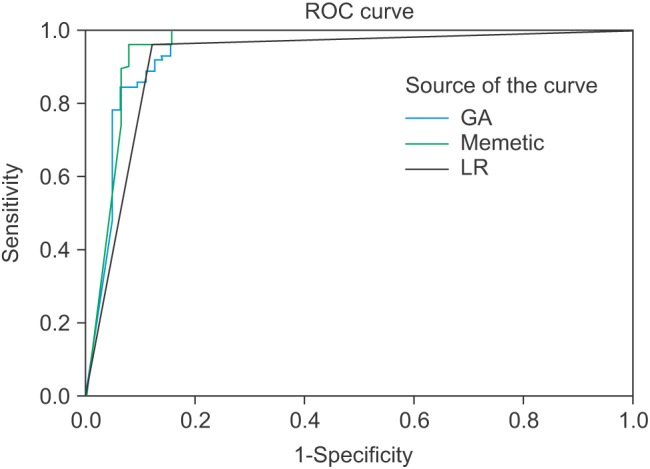
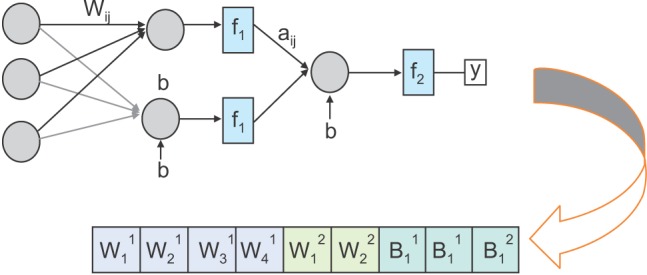
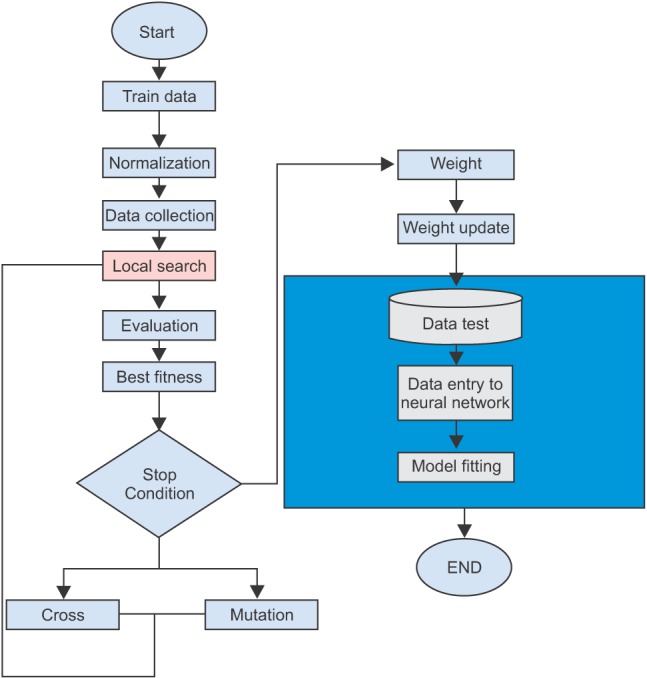
We used memetic algorithms to update weights and to improve prediction accuracy of models. In the first step, the optimum amount for neural network parameters such as momentum rate, transfer function, and error function were obtained through trial and error and based on the results of previous studies. In the second step, optimum parameters were applied to memetic algorithms in order to improve the accuracy of prediction. This preliminary analysis showed that the accuracy of neural networks is 88%. In the third step, the accuracy of neural network models was improved using a memetic algorithm and resulted model was compared with a logistic regression model using a confusion matrix and receiver operating characteristic curve (ROC).
The memetic algorithm improved the accuracy from 88.0% to 93.2%. We also found that memetic algorithm had a higher accuracy than the model from the genetic algorithm and a regression model. Among models, the regression model has the least accuracy. For the memetic algorithm model the amount of sensitivity, specificity, positive predictive value, negative predictive value, and ROC are 96.2, 95.3, 93.8, 92.4, and 0.958 respectively.
The results of this study provide a basis to design a Decision Support System for risk management and planning of care for individuals at risk of diabetes.
本研究开发神经网络模型,以利用临床和生活方式特征改进对糖尿病的预测。使用多种方法和概念开发预测模型。
我们使用混合算法更新权重并提高模型的预测准确性。第一步,通过反复试验并基于先前研究的结果,获得神经网络参数(如动量率、传递函数和误差函数)的最佳值。第二步,将最佳参数应用于混合算法以提高预测准确性。这一初步分析表明神经网络的准确率为88%。第三步,使用混合算法提高神经网络模型的准确性,并使用混淆矩阵和受试者工作特征曲线(ROC)将所得模型与逻辑回归模型进行比较。
混合算法将准确率从88.0%提高到了93.2%。我们还发现混合算法比遗传算法模型和回归模型具有更高的准确率。在这些模型中,回归模型的准确率最低。对于混合算法模型,灵敏度、特异度、阳性预测值、阴性预测值和ROC分别为96.2、95.3、93.8、92.4和0.958。
本研究结果为设计一个针对糖尿病风险个体的风险管理和护理规划决策支持系统提供了依据。