Wang Chuan-Hong, Yu Jian, Cai Yu-Xiang, Zhu Pan-Pan, Liu Chang-Ying, Zhao Ai-Chun, Lü Rui-Hua, Li Meng-Jiao, Xu Feng-Xiang, Yu Mao-De
State Key Laboratory of Silkworm Genome Biology/College of Biotechnology, Southwest University, Chongqing, 400716, China.
PLoS One. 2016 May 23;11(5):e0155814. doi: 10.1371/journal.pone.0155814. eCollection 2016.
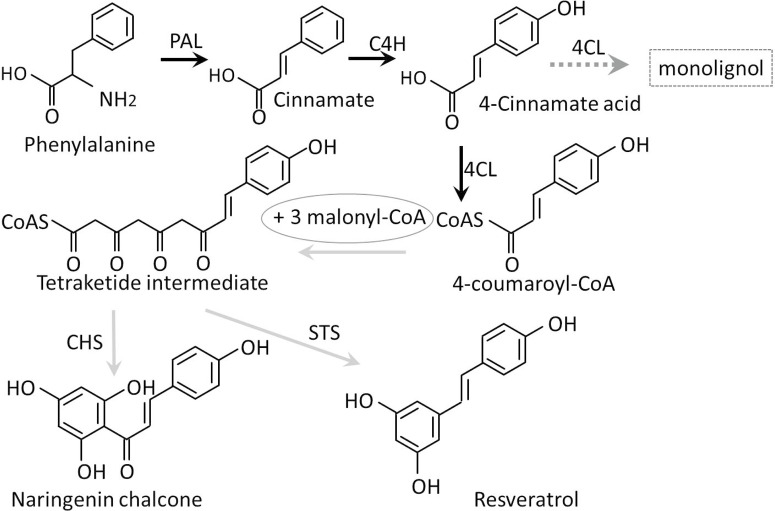
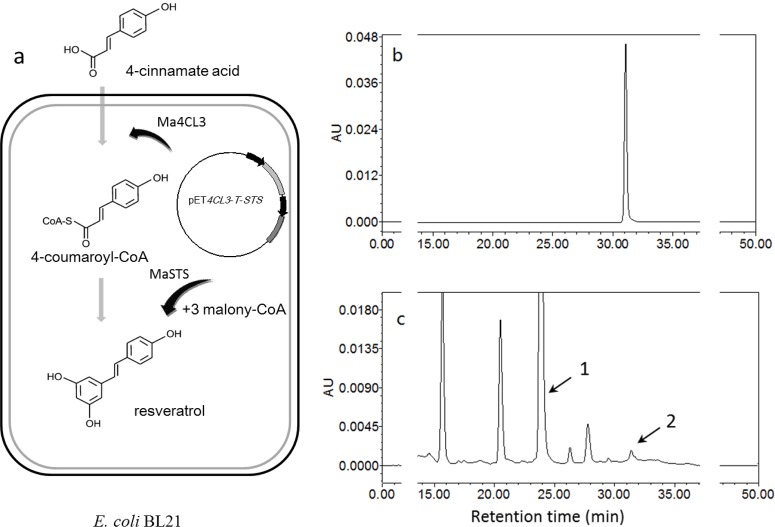
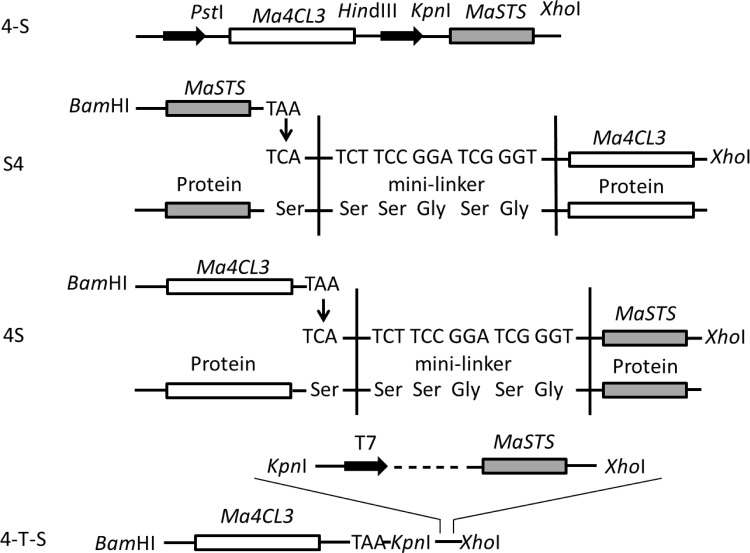
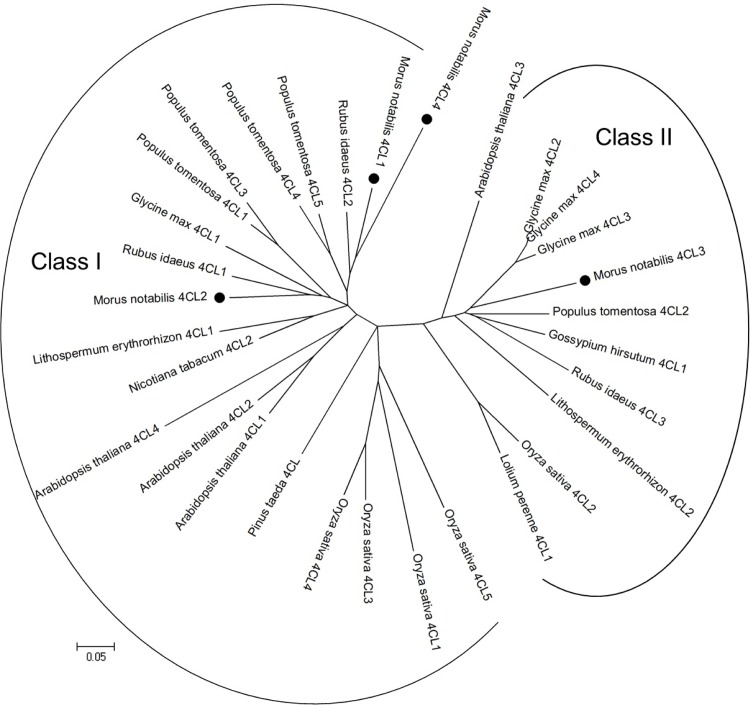
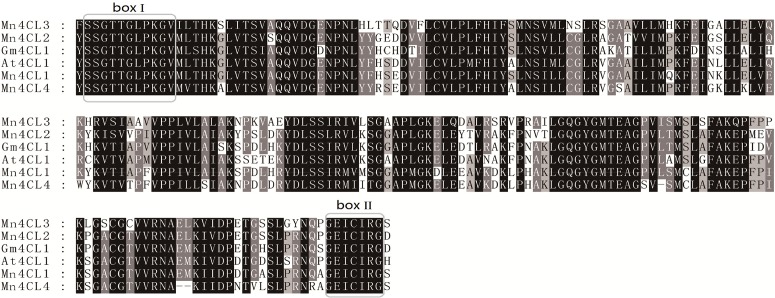
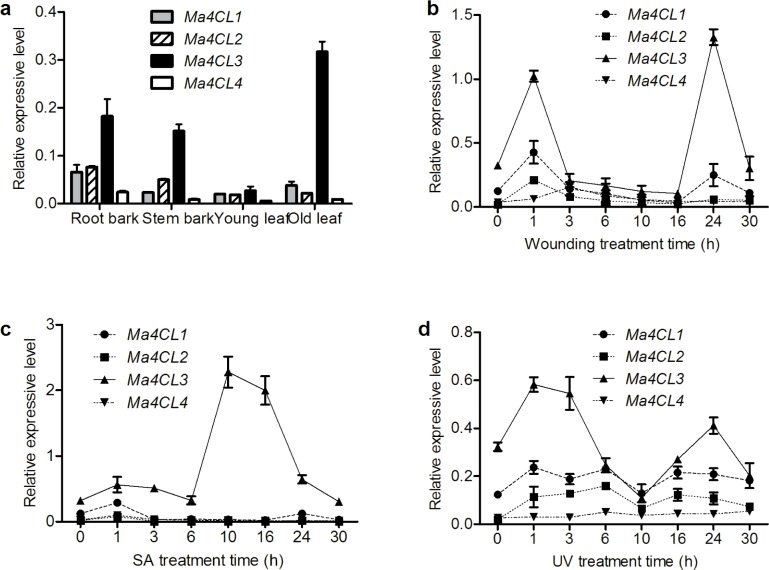
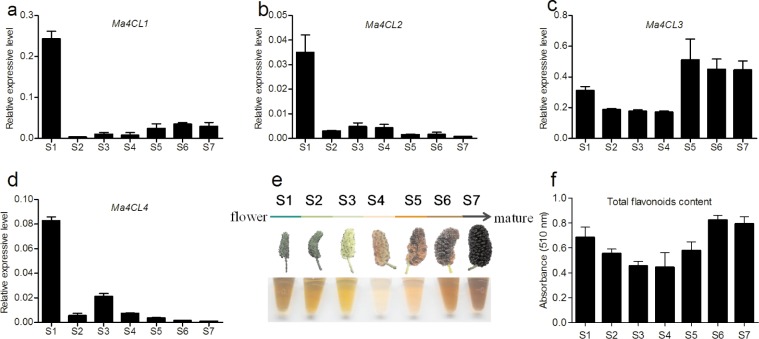
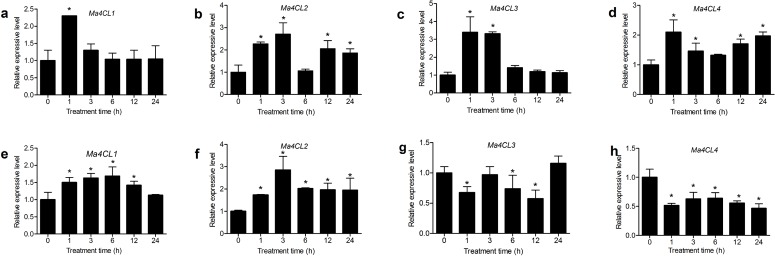
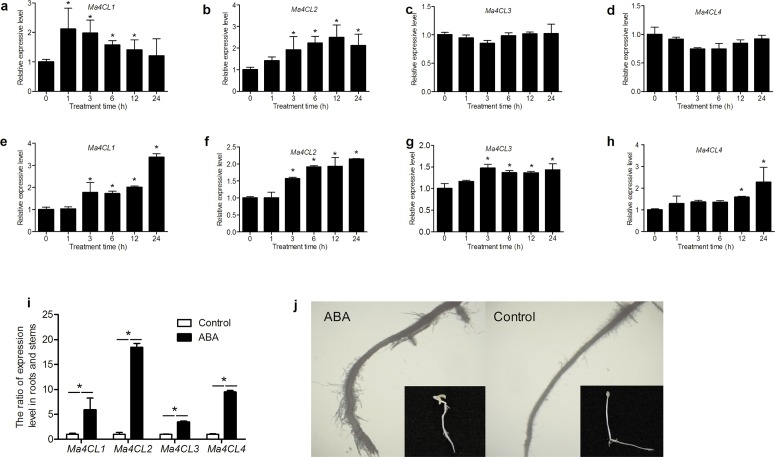
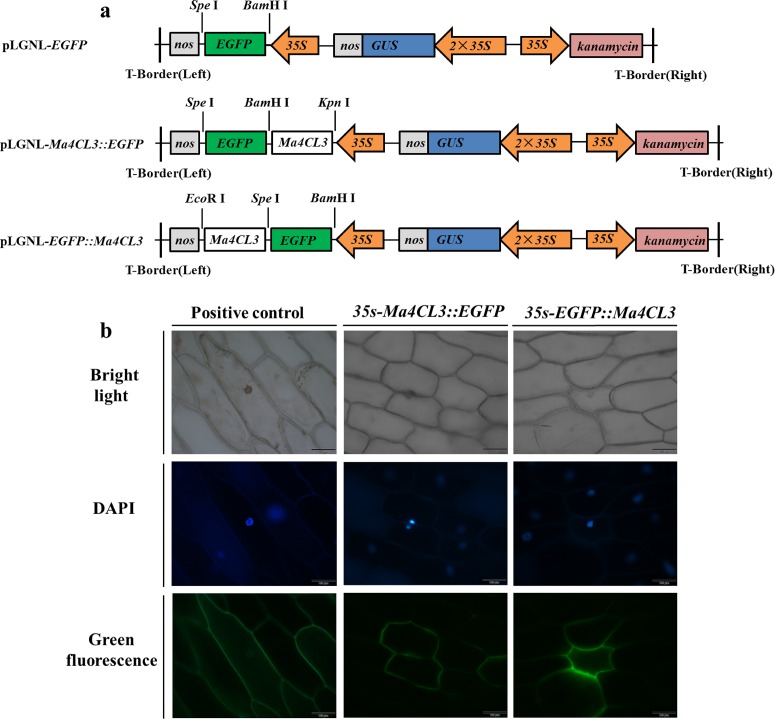
A small, multigene family encodes 4-coumarate:CoA ligases (4CLs) that catalyze the ligation of CoA to hydroxycinnamic acids, a branch point directing metabolites to flavonoid or monolignol pathways. In this study, we characterized four 4CL genes from M. notabilis Genome Database, and cloned four Ma4CL genes from M. atropurpurea cv. Jialing No.40. A tissue-specific expression analysis indicated that Ma4CL3 was expressed at higher levels than the other genes, and that Ma4CL3 was strongly expressed in root bark, stem bark, and old leaves. Additionally, the expression pattern of Ma4CL3 was similar to the trend of the total flavonoid content throughout fruit development. A phylogenetic analysis suggested that Mn4CL1, Mn4CL2, and Mn4CL4 belong to class I 4CLs, and Mn4CL3 belongs to class II 4CLs. Ma4CL genes responded differently to a series of stresses. Ma4CL3 expression was higher than that of the other Ma4CL genes following wounding, salicylic acid, and ultraviolet treatments. An in vitro enzyme assay indicated that 4-coumarate acid was the best substrate among cinnamic acid, 4-coumarate acid, and caffeate acid, but no catalytic activity to sinapate acid and ferulate acid. The results of subcellular localization experiments showed that Ma4CL3 localized to the cytomembrane, where it activated transcription. We used different vectors and strategies to fuse Ma4CL3 with stilbene synthase (STS) to construct four Ma4CL-MaSTS co-expression systems to generate resveratrol. The results indicated that only a transcriptional fusion vector, pET-Ma4CL3-T-MaSTS, which utilized a T7 promoter and lac operator for the expression of MaSTS, could synthesize resveratrol.
一个小的多基因家族编码4-香豆酸:CoA连接酶(4CLs),该酶催化CoA与羟基肉桂酸的连接,这是一个将代谢物导向类黄酮或单木质素途径的分支点。在本研究中,我们从紫花苜蓿基因组数据库中鉴定了4个4CL基因,并从紫花苜蓿品种嘉陵40号中克隆了4个Ma4CL基因。组织特异性表达分析表明,Ma4CL3的表达水平高于其他基因,且在根皮、茎皮和老叶中强烈表达。此外,Ma4CL3的表达模式与果实发育过程中总黄酮含量的变化趋势相似。系统发育分析表明,Mn4CL1、Mn4CL2和Mn4CL4属于I类4CLs,而Mn4CL3属于II类4CLs。Ma4CL基因对一系列胁迫的反应不同。在伤口、水杨酸和紫外线处理后,Ma4CL3的表达高于其他Ma4CL基因。体外酶活性测定表明,在肉桂酸、4-香豆酸和咖啡酸中,4-香豆酸是最佳底物,但对芥子酸和阿魏酸无催化活性。亚细胞定位实验结果表明,Ma4CL3定位于细胞膜,在那里它激活转录。我们使用不同的载体和策略将Ma4CL3与芪合酶(STS)融合,构建了4个Ma4CL-MaSTS共表达系统以生成白藜芦醇。结果表明,只有利用T7启动子和lac操纵子表达MaSTS的转录融合载体pET-Ma4CL3-T-MaSTS能够合成白藜芦醇。