Chiliveri Swarupa Rani, Koti Sravanthi, Linga Venkateswar Rao
Department of Microbiology, Osmania University, Hyderabad, Telangana State 500007 India.
Springerplus. 2016 May 4;5:559. doi: 10.1186/s40064-016-2173-x. eCollection 2016.
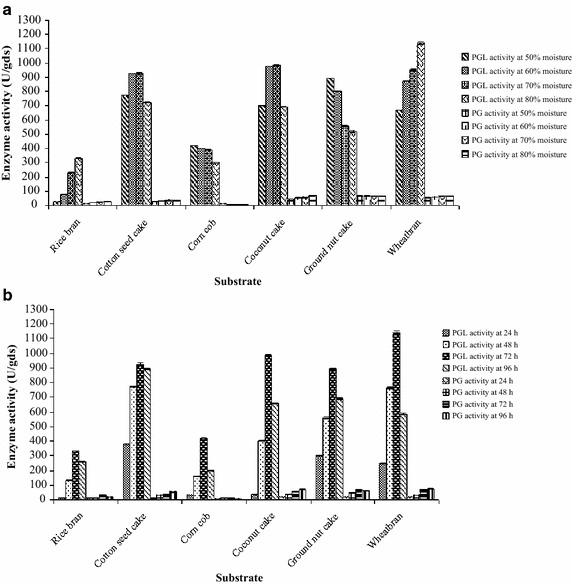
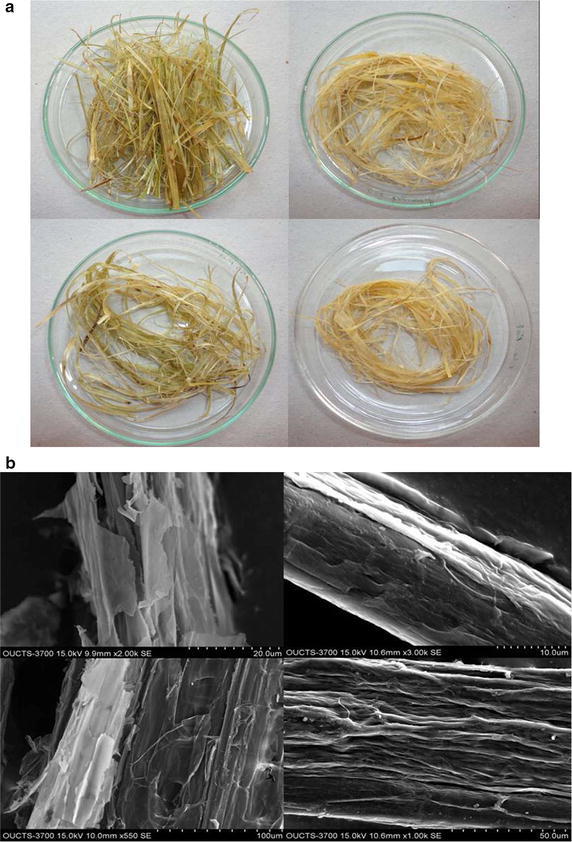
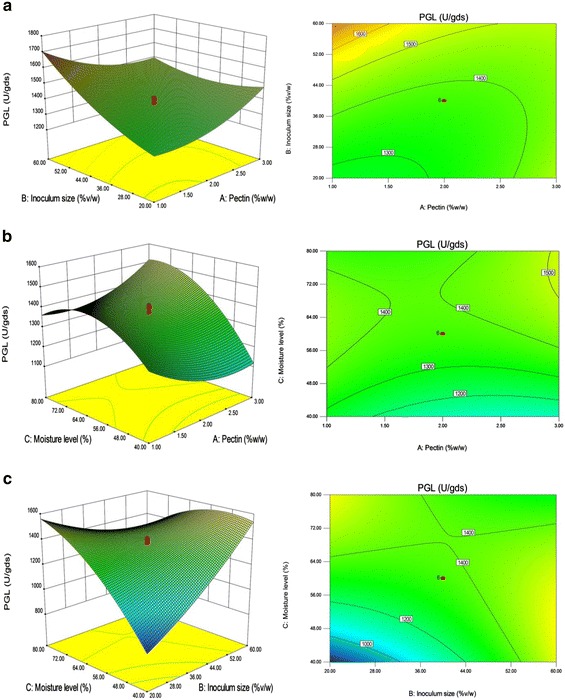
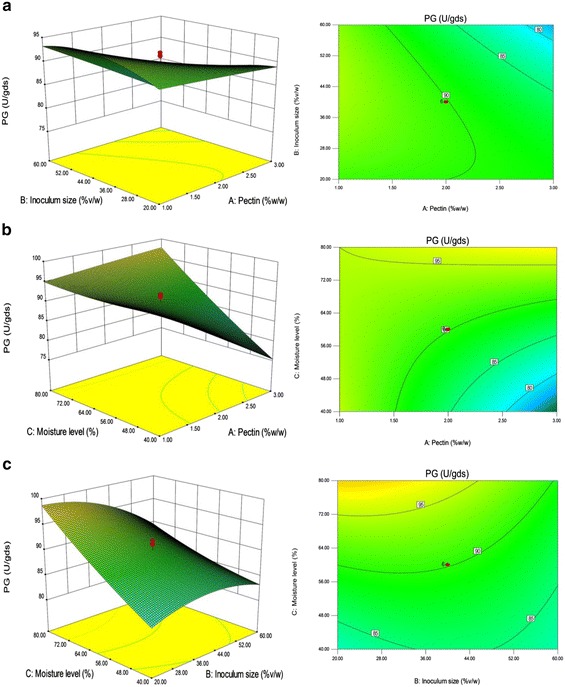
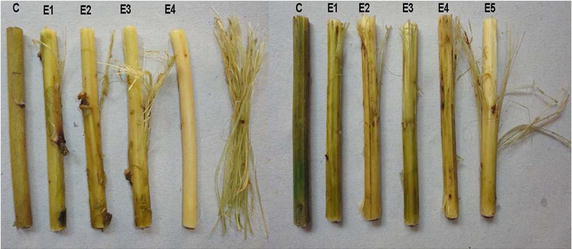
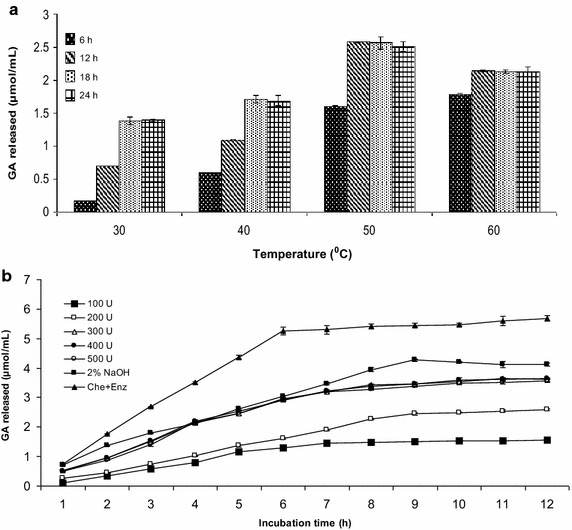
The present study demonstrated the simultaneous production and optimization of pectinolytic enzymes (pectate lyase and polygalacturonase) under SSF from Bacillus tequilensis SV11-UV37 using wheat bran as a substrate, which is commercially viable and cost-effective. Optimization by one variable-at-a-time-approach showed a maximum yield of pectate lyase (1371.25 U/gds) and polygalacturonase (85.45 U/gds) with wheat bran using 80 % (v/w) moisture, 0.7 mm particle size, 20 % (v/w) inoculum, 1 % (w/w) pectin at 37 °C, pH 6 and 72 h of incubation. In addition, optimization using central composite design achieved 1.6-fold improvement in both pectate lyase (1828.13 U/gds) and polygalacturonase (105.55 U/gds) yield at optimum levels of pectin (3 %, w/w), inoculum size (20 %, v/w) and moisture level (80 %, v/w). Further, Retting studies concluded that the enzyme mixture was efficient in separating the whole fiber from kenaf and part (>75 %) from sunn hemp. In degumming of sunn hemp fibers, amount of galacturonic acid released and percentage weight loss was higher in successive alkali and enzymatic treatment than their independent treatments. The scanning electron microscopic analysis also confirmed that alkali followed by enzymatic treatment effectively removed non-cellulosic gummy material from the fiber; hence, this enzyme mixture may find feasible applications in the fiber and textile industry.
本研究表明,以麦麸为底物,在固态发酵条件下,来自龙舌兰芽孢杆菌SV11-UV37的果胶分解酶(果胶酸裂解酶和聚半乳糖醛酸酶)能够同时产生并得到优化,这在商业上是可行的且具有成本效益。采用一次一个变量的方法进行优化,结果显示,在37℃、pH 6条件下培养72小时,使用80%(v/w)的水分、0.7毫米的颗粒大小、20%(v/w)的接种量、1%(w/w)的果胶时,麦麸产生的果胶酸裂解酶(1371.25 U/gds)和聚半乳糖醛酸酶(85.45 U/gds)产量最高。此外,使用中心复合设计进行优化,在果胶(3%,w/w)、接种量(20%,v/w)和水分含量(80%,v/w)的最佳水平下,果胶酸裂解酶(1828.13 U/gds)和聚半乳糖醛酸酶(105.55 U/gds)的产量均提高了1.6倍。此外,脱胶研究得出结论,该酶混合物能有效地从红麻中分离出整根纤维,并从槿麻中分离出超过75%的部分。在槿麻纤维脱胶过程中,连续进行碱处理和酶处理时释放的半乳糖醛酸量和失重百分比高于单独处理。扫描电子显微镜分析也证实,碱处理后再进行酶处理能有效去除纤维中的非纤维素粘性物质;因此,这种酶混合物可能在纤维和纺织工业中找到可行的应用。